

The Neurobiology of Peak Performance: Wiring Your Brain for Success
Golden Hook & Introduction
SECTION
Nova: What if I told you that trying harder, pushing through, and sacrificing sleep might not just be inefficient, but actively making you intelligent and?
Atlas: Whoa. Less intelligent and slower? That’s going to hit hard for anyone out there, like me, who sometimes feels like the only way to get ahead is to out-grind everyone else. It’s the mantra of the disciplined, right? Push, push, push.
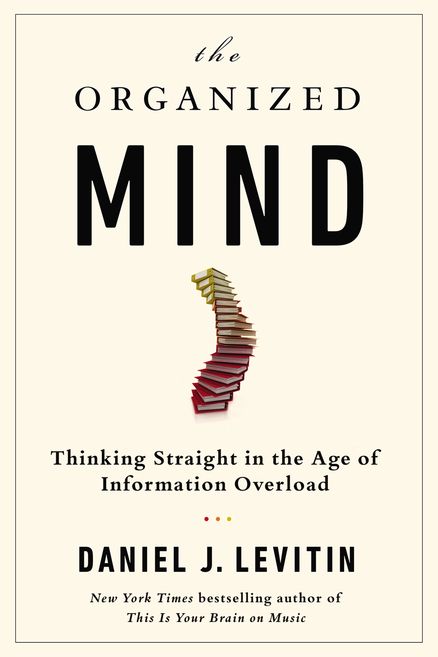
Nova: Absolutely! And that’s precisely what we’re dissecting today. We’re diving deep into the neurobiology of peak performance, drawing incredible insights from two titans in their fields. First, neuroscientist Daniel Levitin, whose book “The Organized Mind” is a masterclass in understanding how our brains are wired for organization, and crucially, how they get overwhelmed.
Atlas: Levitin, okay, I’ve heard that name. So he’s about managing the mental clutter?
Nova: Exactly. And then, we pair that with the groundbreaking work of sleep scientist Matthew Walker and his book, “Why We Sleep.” This isn't just a book; it’s a global phenomenon. Walker’s research into the profound, non-negotiable impact of sleep on aspect of our physical and mental health has been so compelling, it’s actually influenced public health policies around the world. He’s shown us that sleep isn't just rest; it’s active brainwork.
Atlas: So, we’re talking about the science behind not just working hard, but working and recovering. For anyone who’s ever pulled an all-nighter for an exam or pushed through a workout feeling totally drained, this is going to be eye-opening.
Nova: Precisely. It’s about wiring your brain for success, not just burning it out.
Cognitive Architecture: Optimizing Your Brain's Operating System
SECTION
Nova: Let’s start with Levitin’s core premise: our brains are magnificent, complex machines, but they have limits. He explains that we have these incredible attentional filters, but in our age of information overload, they’re constantly getting jammed. Think of your brain not just as a hard drive, but as a sophisticated filing system. If you just dump everything in one giant folder, finding anything becomes a nightmare.
Atlas: That makes perfect sense. I imagine a lot of our listeners, especially students trying to juggle classes, assignments, and maybe a sport, feel like their brain’s filing system is just one giant, chaotic "miscellaneous" folder. So, when I’m trying to study for three different exams with notifications buzzing on my phone, my brain isn’t just multi-tasking, it’s actually efficient?
Nova: Dramatically less efficient. Levitin would tell you that what feels like multitasking is actually rapid context-switching. Every time you shift your attention from your textbook to a notification and back, your brain incurs a "switching cost." It’s like an air traffic controller trying to manage three different planes on the same runway at the exact same moment. It’s not just slower; it’s prone to errors and immense cognitive fatigue. Your attentional filter gets overwhelmed, and decision-making suffers.
Atlas: That sounds rough. So, how do we fix this? What’s one thing I can do to streamline my study routine, beyond just turning off my phone, which let’s be honest, is easier said than done sometimes?
Nova: One of Levitin’s most powerful insights is about externalizing memory and decision-making. He argues that our brains are not designed to be perfect storage devices for every single detail. Instead, they excel at higher-level processing, pattern recognition, and creativity. So, if you offload routine tasks, appointments, or even your to-do list onto a reliable external system—a calendar, a dedicated notebook, a specific app—you free up valuable cognitive resources.
Atlas: So, it’s like having a trusted assistant for your brain, so it can focus on the big stuff.
Nova: Exactly! It’s about creating a system that your brain implicitly trusts, so it doesn't have to constantly hold onto those pieces of information. This frees up your working memory, reduces anxiety, and allows for deeper focus. Athletes do this instinctively: they have pre-game rituals, specific training schedules, and routines that minimize the need for on-the-spot decisions, allowing their focus to remain on performance.
Atlas: That makes a lot of sense. Like a pre-game ritual that’s always the same, so your brain doesn’t have to think about it, and you can just… perform.
Nova: Precisely. It conserves that precious decision-making energy and attention. Levitin shows us that by consciously designing external systems, we’re not just being organized; we’re literally optimizing our brain’s operating system for peak performance.
The Unseen Architect: Sleep as the Foundation of Peak Performance
SECTION
Nova: Speaking of freeing up cognitive load and optimizing performance, what if I told you the single most powerful thing you can do for your brain isn’t while you’re awake and actively trying, but while you’re completely unconscious?
Atlas: You mean sleep? But I thought sleep was for, you know, lazy people. Honestly, as an athlete, I'm often told to "grind hard, sleep less," that sleep is a luxury, not a necessity, especially when you’re trying to build strength or learn new skills.
Nova: That, Atlas, is one of the most dangerous myths perpetuated in our culture, and Matthew Walker systematically dismantles it in "Why We Sleep." He argues that sleep isn't passive rest; it's an incredibly active and non-negotiable period of intense work for your brain and body. Think of it as your brain’s night shift, its janitorial service, its data processing center, and its repair shop, all rolled into one.
Atlas: Okay, a night shift for my brain. I like that analogy. But what does it actually? I thought I just, you know, shut down.
Nova: Far from it. During deep sleep, your brain literally cleans itself. It flushes out metabolic waste products, including amyloid-beta, which is linked to Alzheimer's. This is the glymphatic system at work. More importantly for our listeners, sleep is absolutely critical for memory consolidation. That all-nighter you mentioned earlier? Walker's research shows it’s counterproductive. You might temporarily cram information, but without subsequent sleep, your brain can't effectively transfer that new learning from its short-term holding area to long-term storage.
Atlas: So, pulling an all-nighter for an exam actually makes me what I just learned, and hurts my next day's workout because my muscles didn’t repair? That’s a double whammy!
Nova: It is. For learning, sleep is like hitting the "save" button on your computer. For athletic recovery, it’s when your body releases growth hormones, repairs muscle tissue, and replenishes energy stores. Chronic sleep deprivation, even just an hour or two less than optimal, impairs your cognitive function, reaction time, emotional regulation, and even your immune system. Walker emphasizes that your brain cannot "catch up" on lost sleep; the deficits accumulate.
Atlas: So, it’s not just about feeling tired; it’s about actual physical and mental degradation. That’s a powerful argument for prioritizing it. What’s one concrete step Walker suggests that can really make a difference, especially for someone who, like many, studies online and then wants to unwind with a show?
Nova: Walker is a huge advocate for a consistent "digital detox" before bed. Blue light emitted from screens—phones, tablets, computers, even some TVs—suppresses melatonin production, the hormone that signals to your body it’s time to sleep. He recommends at least an hour, ideally two, of screen-free time before you plan to go to sleep. Instead, read a physical book, listen to music, meditate, or simply reflect. Creating a "sleep sanctuary"—a cool, dark, quiet room—and sticking to a consistent sleep schedule, even on weekends, profoundly impacts the quality and restorative power of your sleep.
Synthesis & Takeaways
SECTION
Nova: It’s fascinating how both Levitin and Walker, from their distinct neuroscientific perspectives, converge on a similar truth: our brains are incredibly powerful, but they have non-negotiable needs and operating principles. Effective cognitive management and quality sleep aren't just good habits; they are fundamental prerequisites for sustained peak performance and personal growth.
Atlas: It sounds like success isn't just about brute force or raw effort, but about intelligent design—designing our days and nights to truly support our brain and body. It's about optimizing the system, not just pushing the engine harder.
Nova: Absolutely. Understanding this neurobiology empowers us. It means we’re not just passively reacting to information overload or fatigue; we’re intentionally wiring our brains for greater focus, better learning, and faster recovery. It’s about being proactive in creating the conditions for our own success.
Atlas: That’s a really hopeful way to look at it, shifting from a mindset of just trying to "cope" to actively "optimizing." If there’s one tiny step for our listeners, that brings both these ideas together, what would it be?
Nova: I would say, implement a consistent 30-minute "wind-down" routine every evening. During that time, put away all screens, do a quick mental "brain dump" onto a to-do list for the next day as Levitin would suggest, and then engage in a calming activity. This combines externalizing your mental clutter, preparing for quality sleep, and creating a clear boundary between your active day and restorative night. It’s a small change with massive neurobiological dividends.
Atlas: That’s incredibly practical and powerful. It’s not just about managing time; it’s about managing your brain’s energy and capacity. Thank you, Nova, for shedding light on these crucial insights.
Nova: My pleasure, Atlas. It’s all about embracing the journey of discovery, where every question leads to deeper understanding.
Atlas: This is Aibrary. Congratulations on your growth!