

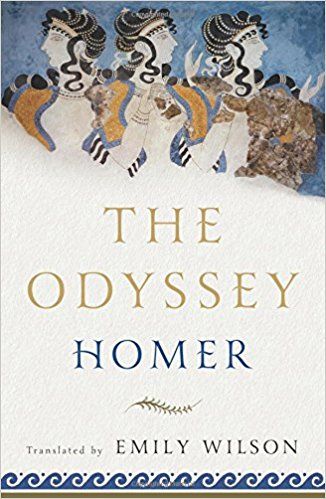
The Mind's Odyssey: Strategic Adaptability and the Long Journey Home
Golden Hook & Introduction
SECTION
Nova: Imagine being trapped in a pitch-black cave with a one-eyed giant who has just eaten your best friends for dinner. You can't fight your way out because the giant is the only one strong enough to move the massive boulder blocking the exit. What do you do? This is the ultimate test of metis—cunning intelligence over brute force. Today, we are diving into Homer's epic masterpiece, The Odyssey, but we are not looking at it as a dusty old school text. We are exploring it as a masterclass in strategic adaptability, cognitive resilience, and systemic learning. Today, we'll tackle this epic from two different angles. First, we'll dissect the cognitive architecture of survival through Odysseus's most famous mind games. And second, we'll explore the educational journey of identity reconstruction, examining how mentorship and intellectual humility turn a chaotic wanderer into a true leader. Joining me today is Dr. Zen, a world-class educational researcher and a master of analytical thinking. Zen, it is so wonderful to have you here with us.
Zen: It is an absolute pleasure to be here, Nova. You know, as a researcher, I spend a lot of time looking at how people learn, adapt, and solve complex problems. When we look at The Odyssey, we aren't just looking at monsters and gods. We are looking at a highly sophisticated cognitive map. It is a story about how human beings navigate uncertainty, manage cognitive load, and restructure their own identities when their environment completely changes. I am really excited to break this down with you.
Nova: Oh, I love that framing! A cognitive map. That is exactly what it is. We often think of Odysseus as this classic action hero, but his real superpower isn't his physical strength. It is his mind. He is the man of twists and turns, both in his travels and in his thinking. So, let's dive right into our first core topic, which is this fascinating tension between metis—cunning, strategic intelligence—and bie, which is raw, physical force.
Deep Dive into Core Topic 1
SECTION
Nova: To really understand this, we have to go back to that terrifying cave of the Cyclops, Polyphemus. Odysseus and his men land on this island, and out of sheer curiosity, they wander into this giant cave. But when the giant returns, he seals the entrance with a stone so massive that twenty-two strong wagons couldn't budge it. And then, without hesitation, he grabs two of Odysseus's men, dashes their brains out, and eats them. It is a brutal, hopeless situation. Zen, if Odysseus had relied on raw force—on bie—what would have happened?
Zen: Well, he actually tells us that his first instinct was to draw his sharp sword and stab the giant in the chest. But then, his analytical mind kicked in. He realized that if he killed the giant, they would all perish anyway, because they would be permanently sealed inside that tomb. The boulder was too heavy. This is a classic example of resisting the immediate, emotional response in favor of long-term strategic calculation. In cognitive science, we call this inhibitory control. He had to suppress his survival instinct to actually survive.
Nova: That is so true! He had to play the long game. So instead of attacking, he waits. He devises a plan that relies entirely on information asymmetry and cognitive framing. First, he offers the giant this incredibly potent, unwatered wine. Polyphemus drinks it, gets completely drunk, and asks Odysseus for his name. And this is where the magic happens. Odysseus doesn't say, I am the great king of Ithaca. He says, My name is Nobody. Zen, why is that linguistic choice so brilliant?
Zen: It is a masterstroke of systemic hacking. Odysseus anticipates the giant's communication network. When Odysseus and his men later blind the giant with a heated, sharpened olive branch, Polyphemus screams out in agony. His fellow Cyclopes gather outside the cave and ask, Who is hurting you, Polyphemus? And the giant bellows, Nobody is killing me by fraud or force! So, the other giants basically say, Well, if nobody is hurting you, it must be a plague from the gods, so we can't help you. And they walk away. Odysseus literally hacked the language system of his enemies to isolate his opponent. He used the giant's own social network against him.
Nova: It is just brilliant! And then, of course, there is the escape itself. They can't just walk out when the giant opens the cave to let his sheep out, because the giant is feeling around in the dark to catch them. So, Odysseus binds the giant's thick-fleeced rams together in groups of three, and has his men cling to the bellies of the middle sheep. He himself clings to the wool of the lead ram. The giant feels the backs of the sheep as they pass, but never thinks to check underneath. They escape by literally hiding in the blind spot of the giant's sensory system.
Zen: Exactly. It is a perfect demonstration of lateral thinking. Odysseus doesn't try to overpower the obstacle; he analyzes the constraints of the obstacle's perception and finds the gap. But, Nova, there is a massive twist at the end of this story that we have to talk about. It is the ultimate warning about the danger of ego. Once they get back to their ship and are sailing away, Odysseus just cannot help himself. He shouts back to the shore, Cyclops, if anyone asks who blinded you, tell them it was Odysseus, raider of cities, son of Laertes!
Nova: Oh, the ego! It gets him every time, doesn't it?
Zen: It really does. And the consequences are catastrophic. Polyphemus is the son of Poseidon, the god of the sea. Armed with Odysseus's real name, the giant prays to his father to curse Odysseus. He asks that Odysseus never reach home, or if he does, let it be after many years, having lost all his companions, on a foreign ship, to find disaster at home. And Poseidon hears him. That single act of pride, of wanting his brand recognized, costs Odysseus ten years of his life and the lives of every single one of his men.
Nova: That is such a powerful lesson. It is like he solved the immediate, complex problem with perfect cognitive strategy, but then let his emotional need for recognition ruin the entire outcome.
Zen: Yes, in research, we see this all the time. You can design the most brilliant, objective study, but if you let your personal bias or your desire for a specific, flashy headline dictate how you present the data, you compromise the entire project. Odysseus's name was his brand, his identity as an epic hero. But in that moment, his desire to be known overrode his strategic intelligence. He forgot that sometimes, to survive, you have to remain Nobody.
Deep Dive into Core Topic 2
SECTION
Nova: That transition from needing to be a glorious hero to understanding the power of being Nobody is actually the perfect bridge to our second core topic: the pedagogy of the journey, and how we reconstruct our identity through mentorship and humility. You know, it is so interesting that the first four books of The Odyssey aren't actually about Odysseus at all. They are about his son, Telemachus, who is growing up in a house overrun by vulgar suitors trying to marry his mother and steal his inheritance. We call this section the Telemachy. Why do you think Homer starts the epic with the son's education rather than the father's adventures?
Zen: It is a brilliant narrative and pedagogical choice. The Telemachy is essentially a case study in developmental psychology and cognitive apprenticeship. Telemachus is passive, overwhelmed, and lacking agency. He is stuck. And then, the goddess Athena descends. But she doesn't just wave a magic wand and fix his problems. She disguises herself as Mentor, an old family friend. This is where our modern word mentor comes from. Athena, as Mentor, uses a technique we call scaffolding in education. She doesn't do the work for him. She asks him guiding questions, pushes him to take his first risks, and accompanies him on a journey to visit old kings like Nestor and Menelaus to gather news of his father.
Nova: I love that concept of scaffolding. It is like she is building a temporary support structure so he can grow into his own strength.
Zen: Precisely. She forces him to speak in public, to negotiate with kings, and to step out of his comfort zone. By the time Odysseus finally returns to Ithaca, Telemachus is no longer a helpless boy; he is a competent co-strategist. He has developed the cognitive tools and the emotional maturity to stand alongside his father. It is a beautiful reminder that true mentorship isn't about giving answers; it is about structuring experiences that allow the learner to discover their own agency.
Nova: And speaking of Odysseus's return, his own learning journey is just as profound. When he finally lands on Ithaca after twenty years, he doesn't march into his palace with his sword drawn, demanding his throne back. Athena disguises him as a filthy, old beggar. He has to enter his own home in the lowest social position imaginable. He is insulted, kicked, and has stools thrown at him by the suitors. Zen, as an analyst, how do you read this choice to have the great hero return as a beggar?
Zen: This is the ultimate test of identity reconstruction and intellectual humility. To reclaim his kingdom, Odysseus must first become completely invisible within it. He has to gather data. He sits in his own hall, observing the suitors, identifying who is loyal and who is corrupt, mapping the entire system from the bottom up. If he had entered as a king, the suitors would have banded together and killed him instantly. By adopting the persona of a beggar, he bypasses their defenses.
Nova: It is like the ultimate undercover research project! He is collecting qualitative data on his own palace.
Zen: Exactly! He is conducting an ethnographic study of his own home. But think about the emotional discipline that requires. He has to watch these arrogant men waste his wealth and mistreat his loyal servants, and he cannot react. He has to suppress his ego entirely. The man who once lost ten years of his life because he couldn't resist shouting his name to the Cyclops has now learned the ultimate lesson of metis. He can sit quietly, take the blows, and wait for the perfect moment to strike. His identity is no longer tied to immediate external validation; it is tied to his long-term systemic goal.
Nova: That is such a beautiful evolution. He went from a hero who demanded that the world know his name, to a wise leader who understood that true power lies in restraint, observation, and adaptability.
Synthesis & Takeaways
SECTION
Zen: It really is a complete cognitive restructuring. The physical journey across the Mediterranean, with all its monsters and detours, was actually an internal journey. The obstacles weren't just external threats; they were mirrors reflecting his own psychological limitations. He had to conquer his pride, his impatience, and his reliance on brute force before he was intellectually and emotionally equipped to rule his kingdom again.
Nova: This has been such an eye-opening conversation, Zen. We started with a giant in a cave and ended with a profound lesson on human growth and strategic patience. If you had to leave our listeners with one actionable takeaway from Odysseus's journey, especially for those navigating their own complex professional or personal seas, what would it be?
Zen: I would say, embrace the power of being Nobody. In our modern culture, we are constantly pressured to shout our names from the ship, to build our personal brands, and to demand immediate recognition. But true strategic adaptability—true metis—requires us to sometimes step back, quiet our egos, and become observers. When you face a massive, seemingly immovable obstacle, don't try to brute-force your way through it. Take a step back. Analyze the constraints of the system. Seek out mentors who will scaffold your learning, and be willing to shed your old identity to grow into the person who can actually reach the destination. The detour isn't a distraction from the journey; the detour is the journey.
Nova: The detour is the journey. What a perfect note to end on. Zen, thank you so much for sharing your incredible insights with us today. You have given us a completely new way to read this ancient epic.
Zen: Thank you, Nova. It was an absolute pleasure.
Nova: And to all our listeners out there, thank you for joining us on this intellectual voyage. Until next time, keep navigating, keep learning, and remember that sometimes, the smartest way forward is to take the long way home. We'll see you in the next episode!