

The 'Hero's Journey' Trap: Reclaiming Your Resilience and Trusting Your Gut
Golden Hook & Introduction
SECTION
Nova: What if the very thing you chase, the relentless pursuit of more data, more analysis, more optimization, is actually the thing holding you back from your best decisions?
Atlas: Whoa, Nova. Hold on. For a lot of our listeners who are strategists, builders, visionaries—the ones who live and breathe numbers and efficiency—that sounds almost heretical. How can information possibly be a bad thing?
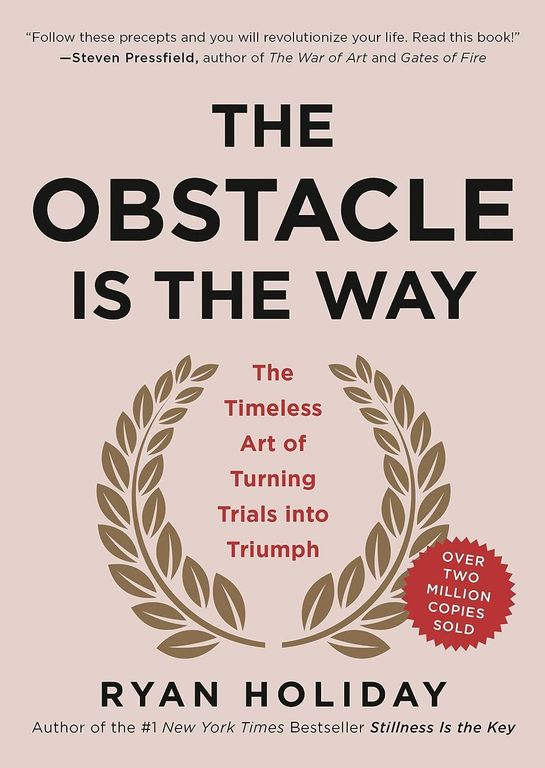
Nova: It’s not necessarily bad, Atlas, but it can create a blind spot. Today, we're diving into a fascinating concept we're calling 'The Hero's Journey Trap,' and we'll explore how to reclaim our resilience and trust our gut, drawing heavily from Ryan Holiday's widely acclaimed book,. Holiday, a former marketing director who's become a modern Stoic evangelist, has truly made ancient philosophy actionable for today's leaders, and his work has become a go-to for countless entrepreneurs and athletes seeking mental fortitude.
Atlas: Right, I've seen that book everywhere. So, what's this 'Hero's Journey Trap' you're talking about, and how does Holiday's work help us escape it?
Nova: Well, it's about the seductive nature of endless optimization. We're conditioned to believe that every problem has a data-driven solution, that every decision can be perfected through more analysis. But what if that relentless drive, that constant tweaking, actually makes us overlook the power of our own inner compass?
The 'Hero's Journey' Trap: Over-optimization vs. Intuition
SECTION
Nova: Imagine a brilliant tech CEO, let's call her Sarah. She's built a powerhouse company, but lately, she's drowning. Every single product decision, from a new feature to the color of a button, has to go through endless A/B tests, focus groups, and data analysis. She's got a mountain of data for every tiny choice.
Atlas: I can relate to that. For someone who optimizes, that sounds like due diligence. You want to make sure you're making the best possible choice for the user, right?
Nova: Exactly, and that's the insidious part of the trap. Sarah started with good intentions, wanting to be data-informed. But now, she's so bogged down in optimizing individual pixels that she's lost sight of the grand vision. Her gut tells her the market is shifting, that a radical new product is needed, but the data on incremental improvements keeps pulling her back.
Atlas: So basically, she's paralyzed by analysis. The data, instead of being a tool, has become a cage preventing her from making a bold, intuitive leap.
Nova: That’s a perfect way to put it. The trap isn't the data itself; it’s the that prevents decisive action and erodes trust in one's own judgment. It's like a chef endlessly measuring every ingredient down to the milligram instead of trusting their palate and experience to create a truly great dish.
Atlas: I get that. It makes me wonder, how do you even know when you've crossed that line from informed to paralyzed? For our listeners who are constantly analyzing numbers, where’s the practical threshold?
Nova: That's the million-dollar question, isn't it? It's when the pursuit of certainty outweighs the need for speed and conviction. When you find yourself delaying decisions, second-guessing strong internal signals, or endlessly seeking even when the picture is largely clear. The data becomes a crutch, preventing us from developing that 'inner compass' you mentioned earlier.
Stoic Resilience as a Foundation for Trusting Your Gut
SECTION
Nova: And that 'inner compass' is where Stoicism, as popularized by Ryan Holiday, becomes incredibly powerful. It’s not just about enduring hardship; it’s about building the resilience to that gut feeling, even when the data is ambiguous or contradictory.
Atlas: Hold on, 'controlling perceptions'? For a pragmatic builder or visionary, that sounds a bit too abstract, a bit like wishful thinking from a philosophy textbook. How does a Stoic principle directly help me trust my gut when the spreadsheet is saying something else entirely?
Nova: That’s a fair challenge, and it's precisely what Holiday makes so accessible. Take a leader facing a sudden, unexpected market downturn. The data is grim: sales are plummeting, projections look bleak. A non-resilient leader might panic, over-analyze, fall into despair, or make rash decisions driven by fear. Their gut, which might have a valid strategic pivot in mind, gets drowned out by the noise.
Atlas: Right, that’s a real-world scenario many of our listeners have faced.
Nova: Exactly. The Stoic approach, as Holiday explains, isn't about ignoring the downturn. You accept the external event. But then, you control your of it. Instead of seeing it as an unmitigated disaster, you reframe it as an opportunity for strategic pivot, for innovation, for ruthless prioritization. This shift in perception builds profound resilience.
Atlas: Okay, I’m following you. So, the resilience isn't just about bouncing back, but about having the mental clarity to interpret the situation without emotional bias.
Nova: Precisely. And in that clarity, your intuition—that cultivated wisdom from years of experience—can finally speak. It's the ability to say, "The numbers are bad, but my gut tells me we need to double down on X feature, or pivot to Y market," and then have the fortitude to act on it without endless second-guessing. It's about deciding well under pressure because your mind isn't clouded by fear or the need for perfect data.
Atlas: That’s a great example. So it's not about ignoring the data, but about having the mental fortitude to interpret it without emotional bias, and then combining that with a cultivated intuition. It’s like the Stoics give you the psychological infrastructure to actually to your gut, rather than letting it be shouted down by fear or an over-reliance on incomplete information.
Nova: You've hit the nail on the head, Atlas. That integration strengthens decision-making, especially when data is ambiguous, which it often is in complex, high-stakes environments. It’s a powerful blend of analytical rigor and intuitive wisdom.
Synthesis & Takeaways
SECTION
Nova: Ultimately, the journey isn't about abandoning data or logic, but about integrating it with a deeply cultivated, resilient intuition. It’s about leading with a holistic intelligence, especially for those driven by impact. When you can trust your gut, even when data is ambiguous, you make more decisive, more impactful decisions.
Atlas: That makes me wonder, for our listeners who are constantly optimizing and building, when was the last time their gut feeling diverged from the data, and what was the outcome? What did that teach them about their intuition?
Nova: Exactly. The big takeaway here is that true leadership resilience comes from the courage to listen to that inner voice, especially when the numbers don’t paint a clear picture. It’s about trusting your evolved wisdom, that often-underdeveloped muscle for leaders.
Atlas: And that's a muscle we all need to develop. What a powerful conversation, Nova. Thanks for illuminating that.
Nova: My pleasure, Atlas. And to all our listeners, take a moment this week to reflect on that question Atlas just posed. When did your gut know something the data didn’t?