Beyond Dieting: Mastering Your Metabolic Health for Lasting Energy
9 minGolden Hook & Introduction
SECTION
Nova: Imagine you've been meticulously counting every calorie, exercising religiously, and still, the scale won't budge. What if I told you the fundamental premise you've been operating under is deeply, fundamentally flawed?
Atlas: Oh man, Nova, that's going to resonate with so many people. I imagine a lot of our listeners have felt that exact frustration, pouring effort into something that just doesn't deliver. It's like trying to fix a complex machine by only adjusting one dial, when there are a dozen others you're not even looking at.
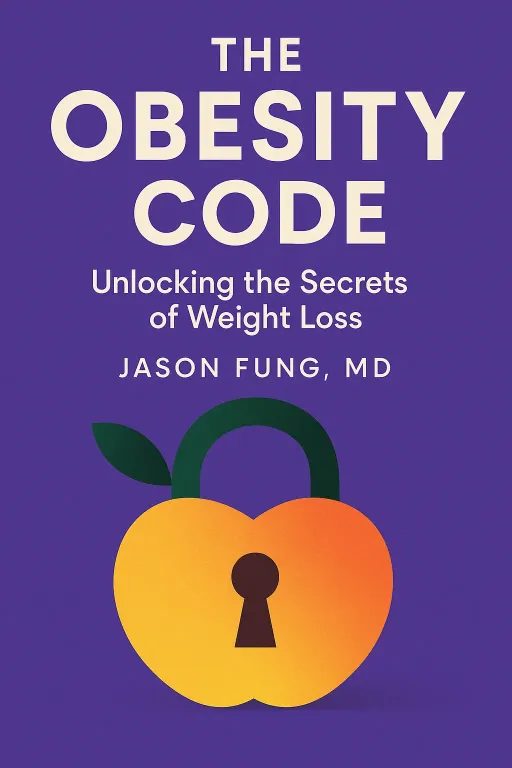
Nova: Exactly, Atlas. And that frustration stems from a pervasive blind spot in our understanding of metabolic health. Today, we're going to dive into two absolutely groundbreaking books that challenge everything we thought we knew about weight, health, and energy: "The Obesity Code" by Dr. Jason Fung and "Metabolical" by Dr. Robert H. Lustig.
Atlas: These aren't just diet books, are they? Dr. Fung, for instance, is a nephrologist, a kidney specialist. It's fascinating that his insights into obesity came from observing his diabetic patients. And Dr. Lustig, a pediatric endocrinologist, has been a relentless voice against the food industry's impact on children's health. Their clinical backgrounds lend so much weight to their arguments.
Nova: Absolutely. They bring a deep, evidence-based perspective that directly contradicts mainstream dietary advice. Our goal today is to redefine metabolic health, offering you a new operating manual for your body based on their insights, empowering you to make truly sustainable choices.
The Blind Spot: Beyond Calories In, Calories Out
SECTION
Nova: For decades, the mantra has been 'calories in, calories out.' Eat less, move more, right? It sounds logical, almost like basic physics. But as Fung and Lustig argue, this model is a gross oversimplification. It's a blind spot that leads to endless frustration.
Atlas: I mean, it sound logical. If you put less fuel in your car than it burns, it runs out. So, are you saying my meticulous calorie counting was all for naught? That's going to be a tough pill to swallow for many.
Nova: It's not that calories don't matter at all, Atlas. It's that they're not the driver, and focusing solely on them ignores the incredibly complex hormonal symphony happening inside your body. Think of it less like a simple fuel tank and more like a sophisticated thermostat. Your body has a set point for weight, and it actively fights to maintain it.
Atlas: A thermostat, huh? That's a great analogy. So, what's controlling this metabolic thermostat?
Nova: The main conductor of this symphony, especially when it comes to fat storage, is insulin. Dr. Fung, in "The Obesity Code," makes a compelling case that insulin resistance is the primary driver of obesity. He observed this firsthand with his diabetic patients. When he put them on specific eating patterns—not just calorie restriction—they not only dramatically improved their diabetes but also lost significant weight. This wasn't just about 'eating less'; it was about changing their bodies processed food.
Atlas: That's incredible. So, how does insulin resistance specifically sabotage weight loss, even with calorie restriction? For our listeners who are managing high-pressure teams and trying to optimize their 'body's machinery,' this concept might feel like a hidden bug in the system.
Nova: It absolutely is. When you eat, your body releases insulin to shuttle glucose into your cells for energy or storage. If you're constantly eating, especially foods that spike your blood sugar, your body is constantly releasing insulin. Over time, your cells become less responsive to insulin's signal—that's insulin resistance. When this happens, your body has to produce insulin to get the job done. High insulin levels tell your body to store fat and, crucially, it your body from burning stored fat.
Atlas: Ah, so it's a vicious cycle. More insulin leads to more fat storage, which leads to more insulin resistance, and on and on. It's like a feedback loop that's stuck in the 'store fat' position, regardless of how many calories you think you're cutting.
Nova: Precisely. And this is why simply cutting calories often fails. Your body, sensing a calorie deficit but still having high insulin, thinks it's starving. It slows metabolism, increases hunger, and makes you miserable, all while still holding onto fat. Fung argues that we need to address the signal, not just the calorie count. Specific eating patterns, like intermittent fasting, become powerful tools to lower insulin levels and allow the body to finally access and burn stored fat.
Atlas: That's a profound shift in thinking. It’s not about willpower, but about understanding the body's internal signals and strategically intervening.
The Shift: Insulin Resistance and Processed Food as Toxins
SECTION
Nova: And this naturally brings us to the elephant in the metabolic room: what insulin resistance in the first place? This is where Dr. Robert Lustig's work in "Metabolical" shines a light. He argues that processed food, particularly sugar, acts as a toxin that damages our metabolic machinery.
Atlas: Sugar as a toxin? That sounds a bit extreme, Nova. Isn't it just empty calories? Like, if I eat a candy bar, it’s bad because it has a lot of calories and no nutrients, not because it's inherently toxic.
Nova: That's the conventional view, but Lustig presents a starkly different picture. He argues that the way our bodies process fructose, the sugar found in processed foods, is fundamentally different and far more damaging than glucose. When you consume fructose, it goes directly to the liver. Your liver then has to process it, and in large amounts, it converts much of that fructose into fat. This fat then accumulates in the liver, leading to non-alcoholic fatty liver disease, and, you guessed it, insulin resistance.
Atlas: Whoa. So it's not just about the calories in sugar, but the of sugar and it's metabolized? Like alcohol, how it's processed almost entirely by the liver?
Nova: Exactly! Lustig often uses the analogy of alcohol. Alcohol is also processed by the liver, and excessive consumption leads to fatty liver, insulin resistance, and other metabolic damage. He argues that fructose, particularly in the high amounts found in processed foods, has a very similar metabolic pathway and effect. And remember, Lustig is a pediatric endocrinologist; he's seen the devastating impact of this firsthand in children struggling with obesity and type 2 diabetes, a condition once almost exclusively seen in adults.
Atlas: That gives me chills. So, for someone trying to optimize their 'body's machinery,' someone who's a strategist by nature, what's the strategic takeaway regarding processed food? How do we disarm this metabolic toxin?
Nova: The strategic takeaway is clear: prioritize whole, unprocessed foods. These foods come with fiber, which slows down sugar absorption, and they don't contain the concentrated amounts of fructose that overwhelm the liver. It's about shifting your focus from calorie counts to food quality and its hormonal impact. Both Fung and Lustig advocate for eating patterns that reduce insulin spikes and give your body a chance to heal from insulin resistance. This means less frequent eating, fewer processed carbohydrates, and more real, nourishing food.
Atlas: So, it's not just about you eat, but also you eat it, and the of that food. It's a complete paradigm shift from the old 'calories in, calories out' model. It's about respecting your body's complex biology.
Synthesis & Takeaways
SECTION
Nova: Absolutely, Atlas. What Fung and Lustig collectively propose is a profound re-evaluation of metabolic health. It's a call to move beyond the simplistic 'calories in, calories out' dogma and embrace the complex, hormonal reality of our bodies. It means understanding that insulin resistance is at the heart of many modern health crises, and that processed foods, especially sugar, are not just 'empty calories' but potent metabolic disruptors.
Atlas: This really changes the problem-solving framework, doesn't it? As an Architect and Strategist, you're always looking for the fundamental levers, the core principles that drive outcomes. And this insight about hormones and food quality feels like discovering the actual blueprints for the body's energy system, rather than just guessing based on surface-level observations.
Nova: Precisely. It empowers you to take a strategic approach to your health, understanding the 'why' behind metabolic signals rather than just battling symptoms. It allows for sustainable health choices because you're working your body's physiology, not against it. It's about mastering your body's metabolic signals for lasting energy, not just temporary weight loss.
Atlas: That's a truly powerful insight. It makes you wonder, if we've been getting this so wrong for so long, what other fundamental assumptions about health do we need to challenge? For our listeners, I encourage you to think about one food item you consume regularly that might be a silent contributor to metabolic dysfunction. What small shift could you make this week to honor your body's complex machinery?
Nova: A brilliant challenge, Atlas. Understanding these insights provides a powerful operating manual for the body, allowing us to build lasting health from the ground up, just like a master architect.
Atlas: Indeed. This is Aibrary. Congratulations on your growth!