

Overcoming the Friction of Procrastination and Perfectionism
Golden Hook & Introduction
SECTION
Nova: Over eighty percent of college students and approximately half of the working adult population systematically delay their most important tasks, costing billions in lost productivity and creating immeasurable mental distress. This staggering statistic suggests that our current approach to managing time is missing something fundamental about human psychology.
Atlas: Oh, I know that feeling of staring at a blank screen or a massive project and suddenly deciding that cleaning the entire kitchen is the most urgent task in the world. It is incredibly common, but knowing that everyone does it does not make the guilt any easier to carry when the deadline actually arrives.
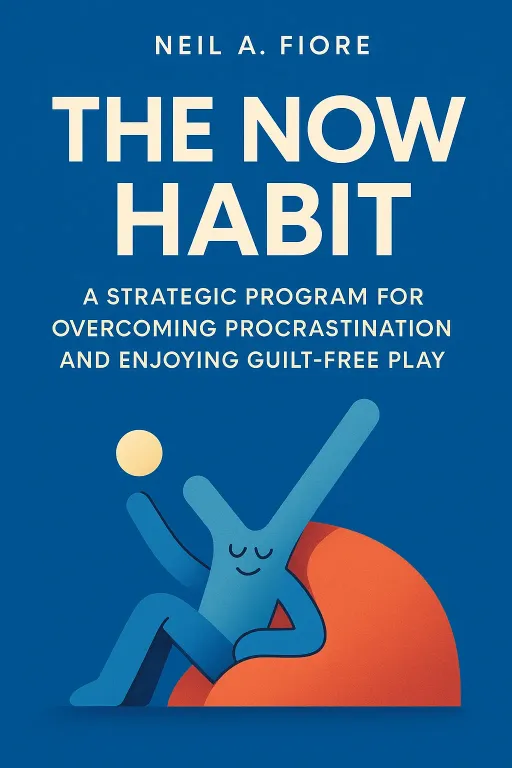
Nova: Exactly, and that is why we are diving deep into two phenomenal books today that completely turn our understanding of this struggle upside down. First, we have The Now Habit, written by Neil A. Fiore, which is a groundbreaking work based on his extensive research at the University of California, Berkeley, where he helped doctoral students finally finish their long-delayed dissertations. He offers a highly practical tool called the Unschedule to help us unlock our productivity.
Atlas: That sounds like exactly what our busy listeners need, especially those who are constantly trying to squeeze more value out of every single hour of their day. And what is the second book we are pairing with it?
Nova: We are combining those structural insights with a wonderfully direct book called LET THAT SH*T GO, written by Nina Purewal and Kate Petriw. They take the ancient, sometimes intimidating concepts of mindfulness and strip away all the complex jargon to show us how to release our grip on the things we cannot control, which is often the exact mental friction that causes us to avoid our work in the first place.
Atlas: I love that combination because structure without mental ease usually just leads to more stress. Let us start with this idea from Neil A. Fiore because his perspective on why we delay things is incredibly eye-opening and runs counter to almost everything we are told growing up.
Reclaiming Safety - Reframing Procrastination
SECTION
Nova: It really does. From a very young age, we are conditioned to believe that delaying our work is a moral failing, a sign of laziness, or a lack of discipline. Fiore challenges this head-on by showing that procrastination actually functions as a highly sophisticated coping mechanism. It is a psychological shield we construct to protect ourselves from the terrifying fear of failure and the intense pressure of perfectionism.
Atlas: Wait, that is a massive shift in perspective. You are saying that when I avoid a difficult task, my brain is not actually being lazy, but is actively trying to protect me from something?
Nova: Yes, that is the core of his research. When we face a task where our self-esteem feels tied to the quality of the outcome, the stakes become incredibly high. Our inner perfectionist demands a flawless result, which creates an intense amount of anxiety. To escape that immediate threat of anxiety and potential failure, our brain seeks safety in distraction. Procrastination is the temporary relief valve.
Atlas: Oh, I can definitely relate to that, and I am sure our listeners can too. It is like we are setting up a game we cannot win, so our subconscious decides that the only safe move is to refuse to play. But how does this play out in real life? Do you have an example of how this defense mechanism actually operates?
Nova: Think about a brilliant graphic designer who lands a major contract with a prestigious client. This is their dream project, but that also means the pressure is immense. They believe this design will define their entire career. Every time they sit down to sketch, they are paralyzed by the thought that their initial ideas are not perfect. So, they check their email, organize their desk, and research new design tools. They delay the actual work until forty-eight hours before the deadline.
Atlas: Let me guess, by waiting until the absolute last minute, they create a situation where they have a built-in excuse. If the client does not love the design, they can say they ran out of time, rather than admitting their best work was not good enough.
Nova: You hit the nail on the head. That is the exact psychological payoff. By delaying the work, they preserve their sense of competence. If they fail, it was a time management problem, not a talent problem. But if they succeed under that intense pressure, they feel like a hero. It is a highly destructive cycle that keeps us trapped in a state of constant anxiety.
Atlas: That sounds exhausting, and it really explains why traditional time management advice, like just make a to-do list or work harder, often backfires. If the root cause is fear and anxiety, then telling someone to just discipline themselves is like telling someone who is drowning to just swim faster.
Nova: That is a perfect analogy. Traditional advice often increases the pressure, which only increases the need for the coping mechanism. Fiore points out that perfectionism establishes these unrealistic, mountain-like standards. When we look at the mountain, we feel overwhelmed, so we freeze. To break this cycle, we have to change our relationship with the work and find ways to lower the psychological stakes.
Atlas: So how do we actually do that? If we cannot just force ourselves through it with willpower, what is the alternative path to getting things started?
The Unschedule and Guilt-Free Play
SECTION
Nova: This is where Fiore introduces his most famous and highly practical tool, which he calls the Unschedule. It is a complete reversal of how we normally plan our weeks. Typically, we create a calendar where we block out hours and hours of solid work, and then we try to fit our lives, our sleep, and our fun into whatever tiny gaps are left over.
Atlas: Right, we design this beautiful, aspirational schedule where we are working eight hours straight, and then we feel like complete failures by Tuesday afternoon because life got in the way, or we simply ran out of energy.
Nova: Exactly. The Unschedule flips this entirely. When you sit down to plan your week, you are forbidden from scheduling any work. Instead, you must first block out all of your non-work activities. You schedule your sleep, your meals, your commute, your exercise, and most importantly, your recreation and social time. You guarantee your guilt-free play first.
Atlas: Hold on a second, that sounds incredibly counterintuitive. If I fill my calendar with sleep, dinners, and movie nights, how does that actually help me finish my tax return or write my business proposal? My initial reaction is that I would just end up having a great time and getting absolutely nothing done.
Nova: It sounds that way, but the psychological effect is fascinating. When you schedule your guilt-free play first, two powerful things happen. First, you remove the resentment of work. You no longer feel like your work is a prison keeping you from living your life, because your life is already secured on the calendar. Second, it provides a very realistic, visual map of your actual available time.
Atlas: Oh, I see what you mean. When you actually look at a calendar with sleep, meals, and social commitments blocked out, you realize you do not actually have forty open hours of free time. You might only have fifteen or twenty hours of actual open space.
Nova: Exactly. It creates a healthy sense of urgency. You see that your open blocks of time are limited, which naturally encourages you to use them more efficiently. And here is the rules-based twist of the Unschedule: you are only allowed to write work down on your calendar after you have completed at least thirty minutes of uninterrupted, focused effort.
Atlas: Ah, so it becomes a ledger of actual achievements rather than a list of daunting obligations. It is like earning points. You do not schedule thirty minutes of writing; you write down that you completed thirty minutes of writing after you actually did it.
Nova: Yes, it turns the schedule into a positive reinforcement tool. It rewards action rather than punishing inaction. Every time you log a thirty-minute block, you feel a sense of momentum. It shifts your focus from the massive, overwhelming end goal to the simple, manageable process of starting.
Atlas: That makes so much sense because starting is always the hardest part. Once you are actually in the flow, it is much easier to keep going. But what happens when we sit down for those thirty minutes and that familiar, anxious voice starts telling us that what we are producing is not good enough? How do we handle that internal friction?
Releasing Control and Letting Go
SECTION
Nova: That is the perfect transition to the wisdom of Nina Purewal and Kate Petriw in LET THAT SH*T GO. They argue that a massive amount of our daily friction comes from our desperate desire to control things that are fundamentally beyond our control. We want to control how other people react to our work, we want to control the future success of our projects, and we want to control our own thoughts and feelings.
Atlas: That desire for control is so deeply linked to the perfectionism we were just talking about. We think that if we just worry enough, or plan enough, we can guarantee a perfect outcome. But in reality, all that worrying just drains our cognitive battery before we even begin.
Nova: It absolutely does. Purewal and Petriw suggest that the key to unlocking action is learning the art of letting go. They advocate for a very practical, stripped-down version of mindfulness. It is not about sitting on a cushion for hours; it is about recognizing when your mind is spinning on future variables and consciously choosing to release them.
Atlas: I am curious about how someone actually practices this in the heat of the moment. Let us say a listener is working on a high-stakes presentation for their team. They are staring at their slides, and their mind is flooded with thoughts like, what if they ask a question I cannot answer, or what if this whole proposal gets rejected? How do they let that go?
Nova: The authors suggest a simple, two-step mental shift. First, you actively acknowledge the worry without judging yourself for having it. You tell yourself, I am feeling anxious about how my team will react, and that is a normal response to a high-pressure situation. Second, you consciously ask yourself, do I have control over their reaction right now?
Atlas: And the honest answer is always no. You can control the quality of your preparation, but you can never control another human being's mind or future external events.
Nova: Exactly. Once you recognize that, you can redirect all that wasted energy back into the only thing you do control: the present moment. Purewal and Petriw recommend committing to just fifteen minutes of focused effort. You let go of the need for the presentation to be perfect, you let go of the fear of rejection, and you commit to just making fifteen minutes of progress.
Atlas: That fifteen-minute rule is so powerful because it lowers the bar of entry. Anyone can survive fifteen minutes of focused effort. It feels like a very small, safe experiment rather than a high-stakes performance.
Nova: It is a complete game-changer. When you combine Fiore's Unschedule with this mindfulness approach, you create a powerful system. The Unschedule protects your time and your mental health by prioritizing play, while the mindfulness practice protects your focus by helping you release the heavy burden of perfectionism.
Atlas: It is a beautiful synergy. It feels like we are moving away from a model of productivity based on self-punishment and moving toward a model based on self-compassion and realistic boundaries.
Synthesis & Takeaways
SECTION
Nova: That shift is the ultimate takeaway from both of these books. We often treat time as a rigid container that we must pack as tightly as possible, and we treat ourselves as machines that should perform flawlessly. But when we look at the actual evidence, that approach only leads to paralysis, anxiety, and avoidance.
Atlas: This conversation makes me realize that our relationship with time is deeply connected to how we value ourselves. If we only allow ourselves to feel good when we produce perfect results, we will always find reasons to avoid starting.
Nova: That is a profound truth. The real breakthrough comes when we realize that our worth is not defined by the perfection of our output. By scheduling our life first, we remind ourselves that we are allowed to enjoy our existence regardless of our productivity. And by committing to just fifteen minutes of imperfect action, we give ourselves permission to learn, grow, and make mistakes.
Atlas: I love that. So, for our listeners who want to put this into practice this week, let us give them a clear, simple challenge. Step one is to draft an Unschedule for the upcoming week. Block out your sleep, your meals, your exercise, and your fun first. See how much open space you actually have.
Nova: And step two: when you feel that familiar urge to procrastinate on a difficult task, do not beat yourself up. Recognize it as your brain trying to protect you. Take a deep breath, consciously let go of the need for a perfect outcome, and commit to just fifteen minutes of focused effort. Just fifteen minutes.
Atlas: It is a simple, compassionate, and incredibly effective way to reclaim your hours and your peace of mind.
Nova: Time is a finite canvas, and trying to paint it perfectly only leaves it blank. Embracing our imperfection is the only way we can actually begin to live and create.
Atlas: This is Aibrary. Congratulations on your growth!









