Stop Chasing Returns, Start Building Wealth: The Guide to Financial Independence.
Golden Hook & Introduction
SECTION
Nova: What if the biggest barrier to your financial freedom isn't the stock market, interest rates, or even your current income, but something far more personal and often completely overlooked?
Atlas: Oh, I see where this is going. Are we talking about my late-night impulse buys again, Nova? Lay it on me, what's the secret sauce I'm missing that’s apparently hiding in plain sight?
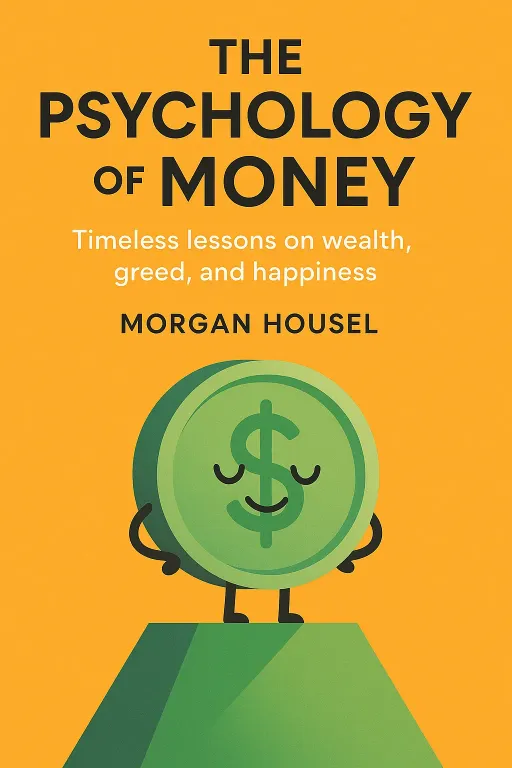
Nova: Not quite, Atlas, though those impulse buys definitely play a role. Today, we're dissecting that very idea, drawing heavily from two groundbreaking books: Morgan Housel's "The Psychology of Money" and Thomas J. Stanley and William D. Danko's "The Millionaire Next Door." Housel, a financial journalist and former columnist at The Wall Street Journal, masterfully unpacks how personal biases and historical context shape our financial decisions, making a compelling case for behavioral finance. Stanley and Danko, through extensive research and countless interviews, revealed the surprising, often invisible, habits of America's wealthy, completely upending common stereotypes.
Atlas: That's fascinating. So, for our listeners who are wired for systems and long-term vision, always seeking that next level of independence, this isn't about a hot stock tip. It's about designing a more robust personal financial architecture, is that it?
Nova: Precisely. It’s about building the right internal framework, which ultimately dictates whether any external strategy truly succeeds.
Deep Dive into Core Topic 1: The Behavioral Edge in Wealth Building
SECTION
Nova: Housel's core argument, and it's a profound one, is that financial success is less about what you know—your IQ, your financial acumen, your ability to predict market movements—and far more about how you behave. Good investing, he argues, isn't about getting rich quick, but about consistency, patience, and, crucially, avoiding big mistakes.
Atlas: That feels counter-intuitive for a lot of our analytical listeners. For someone wired to optimize for maximum returns and efficiency, doesn't 'avoiding mistakes' sound a bit… passive? Where's the competitive edge in simply being consistent?
Nova: Ah, but that’s the genius of it. Imagine two investors: one is a brilliant, high-IQ individual who can analyze balance sheets faster than anyone, but they're prone to emotional decisions—panicking during downturns, getting greedy during booms, constantly chasing the next hot trend. The other is of average intellect, understands basic compounding, but is incredibly disciplined. They consistently save a portion of their income, invest in a diversified portfolio, and ignore the daily market noise for decades.
Atlas: I think I know where this is going. The disciplined one probably ends up far wealthier, right? Because they avoid the catastrophic losses that wipe out years of gains for the "brilliant" but emotional investor.
Nova: Exactly. Housel illustrates this with historical examples, showing how some of the most spectacular financial failures weren't due to a lack of intelligence, but a failure of temperament. The ability to simply for an extended period creates an almost unstoppable compounding machine. Avoiding the big, emotionally driven pull-the-plug moments or the all-in gambles is the ultimate form of active management. It’s about emotional regulation, as you hinted, and understanding that time, not timing, is your greatest asset.
Atlas: So, it's less about finding the perfect algorithm for wealth, and more about designing a personal operating system that minimizes human error. It’s like building a bridge: the most advanced materials won't matter if the foundation is unstable due to human judgment errors.
Nova: A perfect analogy, Atlas. And this behavioral edge leads us perfectly to the surprising findings in "The Millionaire Next Door."
Deep Dive into Core Topic 2: The Unseen Habits of True Millionaires
SECTION
Nova: Stanley and Danko’s research completely shatters the popular image of a millionaire. Forget the flashy cars, the designer clothes, the sprawling mansions. They found that most millionaires live frugally, save diligently, and invest wisely over time, often shunning flashy consumption. The typical millionaire next door is often self-employed, runs a modest business, lives in an average neighborhood, drives an older, reliable car, and has a strong focus on financial independence over status symbols.
Atlas: That’s a massive paradigm shift. We’re constantly bombarded with images of wealth as conspicuous consumption. So, the real architects of wealth are actually building robust financial foundations, often out of the public eye, rather than just accumulating expensive toys?
Nova: Precisely. They are "underaccumulators of wealth" relative to their income. They prioritize financial security and freedom over displaying their success. The books are full of anecdotes about millionaires who track every penny, buy used cars, wear off-the-rack suits, and put their money into investments rather than liabilities. They understand the difference between looking rich and being rich.
Atlas: This resonates with the "engineer" mindset, which values efficiency and long-term utility over superficial aesthetics. But how do you balance that intense frugality with the need to invest in your own growth, or even the tools and experiences that fuel innovation and inspire a vision of impact? It can't just be about penny-pinching to the extreme, can it?
Nova: That’s an important distinction. It’s not deprivation for deprivation's sake. It's conscious allocation. These millionaires aren't necessarily cheap; they're. They invest in their businesses, their education, and their families, but they ruthlessly cut out wasteful, status-driven spending that doesn't align with their long-term wealth goals. It’s about making intentional choices about where your money goes, ensuring every dollar serves your vision of freedom, not someone else's idea of success. They build systems, not just hoard cash.
Atlas: So, it’s about designing a financial system where every component, every dollar, has a purpose in advancing your overall strategic objective, which is financial independence, rather than just reacting to external desires.
Nova: Exactly. It’s about building for the long term, piece by piece, often in an unglamorous fashion, but with incredible discipline.
Synthesis & Takeaways
SECTION
Nova: So, bringing it all together, true financial independence isn't about finding the next big market trend or having a genius-level IQ. It's about mastering your own behavior, combining the psychological discipline Morgan Housel champions with the practical, consistent habits of frugality, saving, and long-term investing that Stanley and Danko uncovered. It's a testament to the power of consistent, often unglamorous habits, emphasizing long-term accumulation over short-term gains.
Atlas: For our listeners who are driven by a vision of freedom and making an impact, this is incredibly empowering. It means the path to early financial independence and having the resources to pursue world-changing ideas isn't some mystical formula, but a disciplined, architectural approach to your own money. It's about freeing up mental and financial capital for those bigger goals, by being smart about the small, daily decisions.
Nova: And to make this immediately actionable, here’s a tiny step for everyone listening: review your last three discretionary purchases. Think about that new gadget, that subscription, that dining experience. Did they align with your long-term wealth-building goals?
Atlas: That's a powerful and immediate check. It’s not about judgment, but about aligning action with intention, right? It's about designing your spending to support your strategic vision, not just your immediate gratification.
Nova: Precisely. Because your disciplined approach is indeed a superpower, and when combined with these solid principles, it will truly accelerate your journey to lasting wealth, freedom, and impact.
Nova: This is Aibrary. Congratulations on your growth!