How to Build Lasting Wealth Without Chasing Quick Wins.
Golden Hook & Introduction
SECTION
Nova: Atlas, rapid-fire word association for "wealth." Ready?
Atlas: Ready! Bring it.
Nova: Gold.
Atlas: Yachts!
Nova: Stocks.
Atlas: Lamborghinis! Or, you know, a really good espresso machine.
Nova: Savings account.
Atlas: ... A comfortable retirement? Okay, less exciting, but way more practical.
Nova: Exactly! That last one, Atlas, is the quiet, often unsexy truth behind lasting wealth, and it’s what we're diving into today. We’re tearing down the myth that building true wealth is about market savvy or chasing quick wins. Instead, it’s about mastering your own behavior, your own psychology.
Atlas: Oh, I love that. So, less about being a stock market wizard and more about being, like, a financial Jedi master of your own mind?
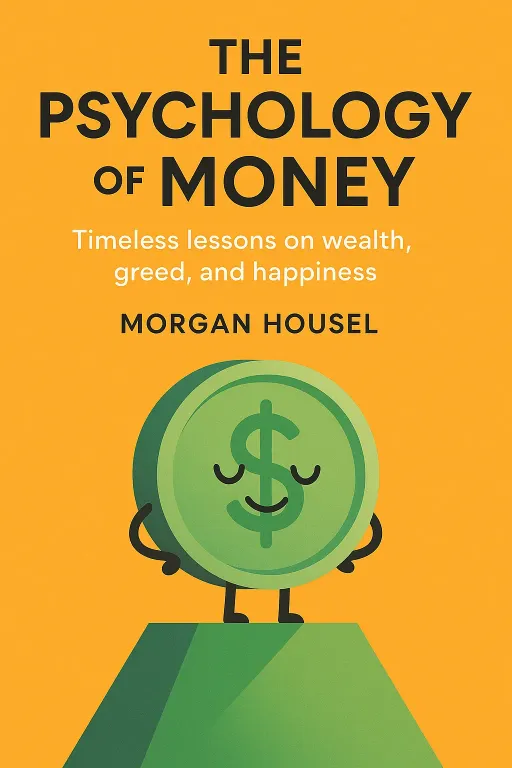
Nova: Precisely. And we're going to unpack this idea through two absolutely seminal books: first, "The Psychology of Money" by Morgan Housel, a financial columnist and venture capitalist whose work is celebrated for its brilliant blend of historical anecdotes and behavioral insights, making complex financial concepts incredibly relatable.
Atlas: I've heard amazing things about that book. It's like financial wisdom for real people, not just economists.
Nova: Exactly. And then, we'll dive into the groundbreaking classic, "The Millionaire Next Door" by Thomas J. Stanley and William D. Danko. This book, published in 1996, totally upended common perceptions about wealth by actually studying millionaires. It was the result of extensive research and interviews, revealing their surprisingly understated lifestyles.
Atlas: That's fascinating. So, they actually talked to the people who did it, rather than just theorizing. I imagine a lot of our listeners, the pragmatic planners, are looking for that kind of grounded, real-world insight.
Nova: Absolutely. Because the cold, hard fact is, building true wealth is less about market savvy and more about mastering your own behavior. Your habits, not just your assets, determine your financial future over time.
The Behavioral Science of Wealth: Why Your Mindset Matters More Than the Market
SECTION
Nova: So, let's kick off with this idea from Housel: why does our mindset matter more than, say, a hot stock tip?
Atlas: That’s counter-intuitive for so many people. We’re constantly bombarded with "buy this, sell that," or "this sector is exploding." Are you saying all that noise is secondary to, what, my internal monologue?
Nova: It’s not just secondary, Atlas, it’s often a distraction. Housel argues that financial success isn't typically about high intelligence or complex strategies. It’s about simple, repeatable behaviors like saving and patience. Think about this: two investors, both start with the same amount of money. One is a brilliant, highly educated financial analyst who constantly tries to time the market, makes aggressive bets, and panics during downturns. The other is a quiet librarian, not a genius, who simply consistently invests a portion of every paycheck, never looks at their portfolio, and lets it compound for forty years.
Atlas: Oh, I know where this is going. The librarian wins.
Nova: The librarian wins, hands down. The analyst, despite their "savvy," got caught in the emotional rollercoaster of fear and greed, chasing those quick wins, making impulsive decisions. The librarian, however, demonstrated behavioral mastery – the ability to remain calm, consistent, and patient, letting time and compound interest do the heavy lifting. The cause is their consistent action, the process is compound interest, and the outcome is lasting wealth.
Atlas: Wow, that’s actually really inspiring. Because it takes the pressure off feeling like you need a finance degree to get rich. But what does "behavioral mastery" actually look like in practice for someone who's a pragmatic planner, someone who wants to build their financial future strategically?
Nova: It looks like emotional resilience. It looks like understanding that markets go up and down, and not letting the daily headlines dictate your long-term strategy. It looks like having a strong "why" for your savings, so you don't raid it for impulsive purchases. It's about knowing your limits, being content with 'enough,' and understanding that the biggest gains come from staying in the game, not from hitting home runs.
Atlas: So, it’s less about market forecasting and more about self-forecasting. Predicting your own reactions and building systems around them.
Nova: Exactly! It's about building a financial system that accounts for the most unpredictable variable:.
The Unsexy Secret: Frugality, Consistency, and Living Below Your Means
SECTION
Atlas: That makes sense. We hear so much about the high rollers, the flashy spenders, the "influencers" showing off their wealth. But I imagine a lot of our listeners, the empathetic observers, look at that and think, "Is that really sustainable? Is that what I should be aspiring to?"
Nova: And that naturally leads us to the second key idea we need to talk about, which often acts as a counterpoint to what we just discussed: the surprisingly humble truth about how most millionaires actually achieve their status. This is where "The Millionaire Next Door" comes in. The authors, Stanley and Danko, spent years studying actual millionaires, and what they found completely shattered the popular image.
Atlas: I'm curious. What did they find? No private jets and champagne wishes?
Nova: Quite the opposite. Most millionaires aren't living in mansions, driving luxury cars, or wearing designer clothes. Their research showed that the vast majority achieved their wealth through consistent frugality, disciplined investing, and, crucially, living below their means. They were often self-employed, lived in modest homes, drove used cars, and prioritized saving and investing over conspicuous consumption.
Atlas: That sounds almost… boring. It doesn't have the same sizzle as a crypto millionaire story. But I imagine that's precisely the point. For someone who's an aspiring architect of their own life, building something solid and lasting, that consistency is probably more appealing than a gamble.
Nova: It's the ultimate unsexy secret. Consider the story of a high school teacher and his wife, a nurse, from the book. They earned solid, middle-class incomes their entire lives. They lived in the same modest house for 40 years, faithfully contributed to their retirement accounts, and never upgraded their lifestyle when their incomes rose. They drove reliable, older cars. They weren't flashy, they weren't "rich" by outward appearances, but by retirement, they were multi-millionaires. On the other hand, you have the high-earning doctor or lawyer who buys the big house, the fancy car, sends their kids to expensive private schools, and lives paycheck-to-paycheck despite a massive income.
Atlas: So, it’s not about how much you, it’s about how much you and. And the key differentiator is that behavior again, that discipline to live below your means even when you could afford to spend more.
Nova: Exactly. It's the quiet power of sustained action. It’s what allowed that teacher and nurse to build an empire, while the high-income professional often remained financially fragile.
Atlas: That's a great illustration. It makes me wonder, though, for our listeners who are thinking, "Okay, but I still want to enjoy my life, I don't want to be a miser." What's a tiny step someone could take to start embodying this "millionaire next door" mindset without, you know, cutting out all joy?
Nova: A fantastic question, and it's not about deprivation, it's about intentionality. A tiny step, one that Nova’s Take also emphasizes, is simply to track your spending for one week. Just one week. See where your money goes. You'll be amazed at how quickly small, unconscious expenditures add up. It’s not about judging, it’s about awareness. That awareness is the first step towards behavioral mastery.
Synthesis & Takeaways
SECTION
Nova: So, bringing it all together, Atlas, what we've learned from both Housel and Stanley & Danko is that building lasting wealth isn't a race for the fastest returns or the flashiest investments.
Atlas: No, it's a marathon of consistent, sensible actions. It’s about understanding that the biggest leverage we have in our financial lives isn't in some market prediction, but in the everyday choices we make with our money, driven by our own psychology.
Nova: It’s about recognizing that financial peace is a long game, won by consistent, sensible actions, not by seeking extreme returns. It's the quiet strength of delayed gratification, the power of patience, and the profound impact of living intentionally. Ultimately, it’s about internal mastery over external circumstances.
Atlas: That’s actually really inspiring, because it puts the power back in our hands. It's not about being lucky or exceptionally smart, it's about being consistently wise. So, for our listeners, what do you truly value? What brings you genuine, lasting fulfillment? Because when you align your spending and saving with those values, you're not just building wealth, you're building a life.
Nova: And that, Atlas, is the ultimate win.
Atlas: Absolutely.
Nova: This is Aibrary. Congratulations on your growth!