

Decoding the Global Matrix: Systems, Power, and the New World Order
Golden Hook & Introduction
SECTION
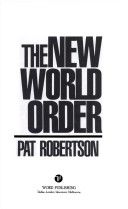
Orion: Imagine a network so vast, so tightly integrated, that a single change at the core instantly rewrites the rules for every single node on the periphery. In his controversial book, The New World Order, Pat Robertson argues that this isn't a hypothetical tech stack. It is, in his view, the actual blueprint of global geopolitics. A highly organized, centralized system designed to consolidate power on a global scale.
dirky smith: That is a fascinating way to frame it, Orion. As someone who spends a lot of time thinking about technology and how systems are built, the concept of a global network architecture immediately grabs my attention. When we talk about a new world order, we are essentially talking about the ultimate centralized network, aren't we? A system where control is concentrated at the very top, rather than distributed among individual, autonomous nodes.
Orion: Precisely, dirky. And that is exactly where we are going today. We are going to analyze Robertson's work not through a political or theological lens, but through a systems-thinking perspective. Today, we will tackle this book from two distinct angles. First, we will explore the architecture of centralized control, specifically looking at how global financial systems mirror centralized network infrastructures. Second, we will analyze information nodes and systemic influence, examining how elite organizations act as routers for global policy and public opinion.
dirky smith: I love that roadmap. It allows us to strip away some of the highly charged rhetoric and look at the actual mechanics of how such a system would function, how it maintains stability, and where its vulnerabilities lie. I am really curious to see how Robertson maps out these connections.
Orion: Excellent. Let us begin with our first major area of focus: the structural design of global finance.
Deep Dive into Core Topic 1
SECTION
Orion: To understand Robertson's thesis, we have to look at his historical analysis of financial centralization. He places a massive emphasis on the creation of the Federal Reserve System in the United States in 1913. According to Robertson, this was not just a routine economic adjustment. It was a fundamental redesign of the financial architecture. He argues that by creating a central bank, the power to print money and control interest rates was taken away from local, decentralized communities and placed into the hands of a select group of private bankers.
dirky smith: Hmm. That sounds incredibly similar to transitioning from a peer-to-peer network to a highly centralized client-server model. In a decentralized financial system, you have thousands of local banks operating independently, making decisions based on local conditions. But once you introduce a central bank, you are essentially installing a central operating system. Every other bank becomes a client that has to sync with the central server's protocols.
Orion: That is a highly accurate parallel, dirky. Robertson argues that this central operating system, as you put it, allowed a small group of international financiers to manipulate economic cycles. He details how, by expanding and contracting credit, these central actors could create artificial booms and busts. During a bust, asset values plummet, allowing those with concentrated capital to buy up real assets—like land, infrastructure, and businesses—for pennies on the dollar.
dirky smith: So, from a systems perspective, they are essentially manipulating the feedback loops. In any stable system, you need negative feedback loops to self-correct. If a local bank takes too much risk, it fails, and the system self-corrects. But if a central authority can artificially suppress those signals, they can create massive, systemic imbalances. It is like overriding the thermal sensors on a server rack. You might get a temporary boost in performance, but you are risking a catastrophic system-wide meltdown.
Orion: Exactly. And Robertson's point is that these meltdowns are not accidental bugs in the system; they are features. He argues that each major financial crisis serves as a justification for further centralization. When the decentralized components fail, the public clamors for a central authority to step in and restore order. This leads to the creation of even larger regulatory bodies, international monetary funds, and global financial institutions.
dirky smith: That is a classic centralization loop. The system creates a problem due to its own centralized design, and the proposed solution is always more centralization. It is like trying to fix a slow database by just adding more centralized processing power, rather than optimizing the queries or distributing the load. But let me ask you this, Orion: how does Robertson connect these financial mechanics to actual political control? Because controlling the money is one thing, but controlling sovereign nations is a whole different level of system integration.
Orion: That transition is seamless in his analysis. Robertson argues that debt is the primary API—the application programming interface—that connects financial power to political power. When sovereign governments run massive deficits, they become dependent on international lenders to finance their debt. Once a nation is deeply in debt, the lenders can dictate policy. They can demand structural adjustments, tax increases, or the privatization of national assets. The political leaders, regardless of their ideology, find themselves constrained by the financial protocols of the global system.
dirky smith: Ah, so debt acts as a dependency. In software development, if your application relies on a third-party API for its core functionality, you don't really own your application anymore. If that API provider changes their terms of service, or raises their prices, you have to comply, or your system crashes. So, in Robertson's view, national sovereignty becomes an illusion because the underlying financial dependencies are controlled by global actors.
Orion: Yes, that is precisely his argument. He views national governments as increasingly subservient to these global financial networks. It is a highly structured, top-down hierarchy where the financial layer dictates the parameters of the political layer.
Deep Dive into Core Topic 2
SECTION
Orion: This brings us naturally to our second core topic: information nodes and systemic influence. A centralized financial system is powerful, but to maintain long-term stability, you also need to control the flow of ideas, policies, and public opinion. Robertson focuses heavily on specific organizations that he views as key routing hubs for globalist ideology. Chief among these are the Council on Foreign Relations, or the CFR, and the United Nations.
dirky smith: Okay, so if we continue with our network metaphor, these organizations aren't necessarily the ones holding the capital, but they act as the routers and firewalls of the global system. They decide which ideas get transmitted, which policies get greenlit, and which perspectives get filtered out.
Orion: That is a brilliant way to conceptualize it. Let us look at the Council on Foreign Relations as a case study. Founded in 1921, the CFR is a non-partisan think tank, but Robertson paints a very different picture. He describes it as a highly exclusive node where elites from academia, government, media, and finance converge. In his view, the CFR does not just analyze foreign policy; it manufactures it. They establish the consensus. Once a policy consensus is reached within the CFR, its members—who occupy key positions in major media outlets and government agencies—distribute that consensus to the wider public.
dirky smith: That sounds like a classic hub-and-spoke distribution model. Instead of trying to convince millions of individual citizens of a certain policy, you only need to convince the key influencers at the central hub. Once they adopt the protocol, they propagate it down to their respective spokes—the media, universities, and government departments. It is incredibly efficient from an information-routing perspective. It minimizes latency and ensures a consistent message across the entire network.
Orion: Exactly. It creates what systems analysts call a closed information loop. If the major news anchors, the university professors, and the government advisors are all members of the same central hub, they will naturally validate each other's perspectives. To the average citizen on the outside, it looks like a consensus of independent experts. But in reality, it is a single signal being echoed through multiple channels.
dirky smith: Right, it is a feedback loop that amplifies the desired signal while drowning out any noise or dissenting views. In technology, we call this an echo chamber, but on a global scale, it is a highly sophisticated form of cognitive firemalling. It prevents alternative paradigms from ever reaching the mainstream processor. But what about the United Nations? How does Robertson view its role in this network?
Orion: Robertson views the United Nations as the ultimate framework for global governance—the physical infrastructure that is meant to eventually replace national sovereignty. He points to the UN's various charters and declarations as attempts to establish a global legal framework that supersedes national laws. In his book, he expresses deep skepticism about the UN's peacekeeping missions and its environmental initiatives, viewing them as pretexts for establishing a global military force and a global regulatory regime.
dirky smith: So, if the CFR is the software layer that designs the protocols, the UN is the hardware layer designed to enforce them globally. But this level of centralization seems incredibly fragile to me, Orion. In network security, we talk about the danger of a single point of failure. If you centralize all financial, political, and informational control into a single global system, any glitch, any corruption, or any systemic failure at the core could bring down the entire civilization. A decentralized system, with all its messiness, is highly resilient because if one node fails, the others keep running.
Orion: You have hit on the central paradox of Robertson's thesis, dirky. He argues that while this global system appears incredibly powerful, it is inherently unstable because it defies human nature and the natural order of decentralized, sovereign nations. He believes that this drive for a unified global system is ultimately driven by a spiritual deception—a desire to build a modern-day Tower of Babel. And just like the original Tower of Babel, he believes this centralized system is destined to collapse under the weight of its own hubris and systemic vulnerabilities.
dirky smith: That is a powerful conclusion. It suggests that no matter how sophisticated the network architecture is, if it ignores the fundamental nature of the individual nodes—which, in this case, are human beings who value freedom and autonomy—the system will eventually experience a massive, unrecoverable crash.
Synthesis & Takeaways
SECTION
Orion: As we wrap up our discussion of Pat Robertson's The New World Order, let us synthesize our key findings. We have looked at this complex and controversial book through a systems-thinking lens, identifying two main structural components: First, the architecture of centralized control, where financial systems like the Federal Reserve act as a central operating system, creating dependencies through debt. Second, the role of elite organizations like the CFR and the UN as information nodes and routing hubs that manufacture consensus and build the infrastructure for global governance.
dirky smith: This conversation has really broadened my perspective, Orion. It shows that whether you are looking at computer networks, corporate structures, or global geopolitics, the fundamental laws of systems still apply. Centralization offers efficiency and control, but it comes at the cost of resilience and individual autonomy. Decentralization, on the other hand, might look chaotic, but its distributed nature makes it incredibly robust and adaptable.
Orion: That is a profound takeaway, dirky. For our listeners, the actionable insight here is to develop a habit of systems thinking. When you look at global events, don't just focus on the individual actors or the immediate headlines. Look for the underlying architecture. Ask yourself: Where is the power being centralized? What are the dependencies? How is the information being routed? By analyzing the world as a network of interconnected systems, we can cut through the noise and understand the true mechanics of influence.
dirky smith: Well said, Orion. It is about upgrading our own mental operating systems to be more analytical, more curious, and less susceptible to the centralized signals of the mainstream network.
Orion: Thank you, dirky, for bringing your analytical perspective to this challenging text. And thank you to our listeners for joining us on this deep dive. Until next time, keep analyzing the systems around you.