

The City's Hidden Language: Decoding Urban Form and Function
Golden Hook & Introduction
SECTION
Nova: Atlas, I've got a challenge for you. Imagine you're standing in the busiest intersection of your favorite city. Now, if that city could whisper one secret about itself, something fundamental to its very being, what word do you think it would say? Give me just one word.
Atlas: Oh, that's a tough one, Nova! "Secret language of the city..." I'd have to go with... "Change." Because cities are always, always in flux. It’s never static.
Nova: "Change." A profound choice, and absolutely spot-on. Because while cities are indeed constantly changing, what if that change isn't always organic, but rather a carefully orchestrated dance of power and economics? And what if, simultaneously, that same change is humanity's greatest engine for innovation, wealth, and connection?
Atlas: That's quite the paradox, isn't it? It feels like we're about to peel back layers of urban reality. I'm already intrigued by this idea of a "secret language" dictating a city's fate.
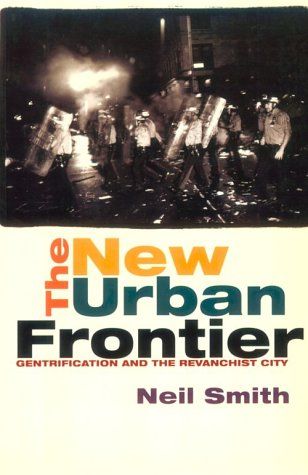
Nova: That's precisely what we're doing today on Aibrary, as we decode "The City's Hidden Language: Decoding Urban Form and Function." We're diving into two incredibly influential, yet often contrasting, perspectives. First, Neil Smith’s incisive and highly critical work, "The New Urban Frontier: Gentrification and the Revanchist City." And then, we'll turn to Edward Glaeser’s powerful, optimistic defense of urban life in "Triumph of the City: How Our Greatest Invention Makes Us Richer, Smarter, Greener, Healthier, and Happier."
Atlas: Two books that really shaped how we think about urban spaces. Smith, a geographer whose work was absolutely foundational in critical urban studies, really challenged the conventional, often rosy, narratives of urban renewal. He was an unflinching critic of the political economy of urban change. And Glaeser, as an urban economist, provides a robust, data-driven argument for the enduring power of cities, often from a perspective that champions market forces.
Nova: Absolutely. Smith's book, for example, became a rallying cry for activists and academics alike, offering a framework to understand the systemic forces behind displacement. His insights into the 'revanchist city' concept were particularly polarizing, but undeniably influential, bringing a critical lens to urban policy. Glaeser, coming from Harvard, offered a counter-narrative, celebrating the economic and social benefits of density, which resonated deeply with policy-makers and economists, though his work also sparked debates about the social costs of such rapid urban growth.
Atlas: It sounds like for anyone trying to understand their own community, or even just the broader societal structures, these two books offer essential, albeit very different, lenses. It’s about how we build resilient communities and foster positive change, moving beyond just individual actions.
The City as a Battleground: Gentrification and Power Dynamics
SECTION
Nova: So let's kick off with Neil Smith’s powerful, almost confrontational, concept of the "revanchist city." He argued that urban development, particularly gentrification, isn't just a natural, benign process of revitalization. Instead, it’s often a deliberate, systematic process driven by capital and power, where the city, metaphorically speaking, seeks "revenge" against its own marginalized populations.
Atlas: "Revenge"? That's a pretty charged word, Nova. It almost sounds like cities have an agenda. What exactly does he mean by that?
Nova: It’s a metaphor, of course, but it highlights the aggressive reclaiming of urban space. Smith saw gentrification as a return of capital to the urban core, often facilitated by government policies and private investment that prioritize developers and wealthier residents. This "return" often comes at the direct expense of long-term, lower-income residents who are displaced. He traced this phenomenon back to the economic shifts of the 1970s, when capital began to flow away from traditional industries and into finance and real estate, prompting a new scramble for profitable urban land.
Atlas: I mean, that’s a pretty bleak picture. It challenges the common narrative that urban renewal is just a good thing. So, he’s essentially saying it's not simply about individuals moving into a cheaper neighborhood and fixing up a house; it's a much larger, almost invisible, systemic force at play?
Nova: Precisely. Smith introduced what he called the "rent gap" theory. He argued that cities develop a significant gap between the actual rent collected from a property and the potential rent it could generate if redeveloped to its "highest and best use." This gap, often created by historical disinvestment and declining property values in older neighborhoods, becomes an irresistible lure for developers and investors. They see the potential for massive profits by buying low, renovating, and then selling or renting at much higher rates.
Atlas: So the "invisible architecture" here isn't just the physical structures but the underlying economic pressures and power dynamics that make certain areas ripe for this kind of transformation. It’s like the city is a giant economic chessboard, and capital is moving the pieces around.
Nova: Exactly. Let's think of a concrete example. Imagine a once-thriving industrial neighborhood that, over decades, saw its factories close, jobs disappear, and property values stagnate. Smith would say this creates a substantial "rent gap." Developers and investors, always on the hunt for opportunities, identify these areas. They might purchase old warehouses or multi-family homes at relatively low prices, knowing that with a strategic investment in renovation and rebranding, they can dramatically increase the property's value and potential rental income. This isn't just about individual homeowners improving their properties; it's about a calculated, large-scale economic strategy.
Atlas: But wait, for our listeners who are community builders, or just trying to understand why their own neighborhoods are suddenly changing so rapidly, isn't there often a benefit to this kind of investment? New businesses, better public services, improved infrastructure… doesn't that help everyone?
Nova: That’s the core tension, isn't it? Smith wouldn't deny that investment can bring physical improvements. The crucial question he raises is benefits and. The improvements often come at the expense of the original residents, who are priced out through escalating rents, rising property taxes, or indirect pressures like changing local businesses. The cultural and social fabric of the neighborhood, built over generations, can be irrevocably altered, often to the detriment of those who called it home. It becomes a systemic influence, far beyond individual actions, reshaping entire communities.
Atlas: That’s a really sobering thought. It’s like the very forces designed to "improve" a city can inadvertently dismantle its existing social structures. So, if we’re looking for solutions, understanding this "rent gap" and how these power dynamics play out is absolutely crucial for building resilient communities. You can’t address the problem if you don’t recognize its underlying mechanisms.
The City as an Engine: Innovation, Prosperity, and Human Connection
SECTION
Nova: And that naturally pulls us to the other side of this urban coin, which often serves as a powerful counterpoint: Edward Glaeser's compelling argument for the "triumph of the city." While Smith focused on the often-negative consequences of urban restructuring, Glaeser, as an urban economist, champions cities as humanity's greatest invention. He argues they are unparalleled engines of innovation, wealth creation, and profound human connection.
Atlas: So, where Smith sees conflict, Glaeser sees convergence? It’s almost two entirely different narratives about the same urban reality, just with different interpretations of the driving forces.
Nova: Exactly. Glaeser’s core argument is that human proximity in cities is the ultimate catalyst for progress. Think about it: when people gather in dense urban centers, ideas collide, innovations spark, and specialization flourishes. He points to historical examples, from the marketplaces of ancient Rome to the factories of industrial London, to modern tech hubs like Seattle, arguing that cities have always been humanity's crucibles of creativity and advancement.
Atlas: I can definitely see the appeal of that. I mean, you can’t deny the sheer concentration of talent, ambition, and resources in vast urban centers. But how does he address or reconcile that with the inequalities and displacements that Smith so vividly describes? Because that's a huge question for anyone focused on community building.
Nova: Glaeser acknowledges urban challenges like crime, congestion, and even poverty, but his economic lens often views them as solvable problems, or even, at times, as necessary byproducts of intense human interaction and rapid growth. He argues that the overwhelming benefits—higher wages, more diverse opportunities, better access to public services, and surprisingly, often a lower carbon footprint due to less driving—far outweigh these costs. He even suggests that density itself, by reducing travel and fostering shared infrastructure, can make cities inherently "greener."
Atlas: That's a pretty strong claim, that density makes cities greener. For our listeners who are deeply invested in sustainable living, that might sound totally counterintuitive. We often associate "green" with wide-open spaces, not towering apartment buildings.
Nova: It’s all about efficiency and shared resources. Glaeser argues that urban dwellers, on average, use less energy per capita than their suburban counterparts because they drive significantly less, live in smaller, more energy-efficient homes, and utilize shared public transportation and infrastructure more effectively. He uses economic principles to explain why cities thrive, focusing on what he calls the "three C's": consumption, creativity, and cost savings. Cities offer a wider array of goods and services, they foster innovative thinking through close contact and knowledge sharing, and they dramatically reduce the costs of moving goods, people, and ideas.
Atlas: So, if I'm trying to put these two together, Glaeser would look at a vibrant, bustling downtown, see the economic activity, the diverse people, the cultural institutions, and declare, "This is human progress in action, the ultimate expression of our collaborative spirit." While Smith might look at the exact same street, see the luxury boutiques replacing local businesses, and ask, "But at what cost to the original community, and who truly benefits?"
Nova: You've perfectly captured the tension. Glaeser emphasizes that cities make us richer, smarter, healthier, and happier because they provide unparalleled access to everything. He points to data showing that people in cities generally earn more, have better access to education and healthcare, and enjoy a greater variety of cultural and social experiences. It’s the sheer scale of opportunity that proximity affords.
Atlas: I can see how both of these perspectives are absolutely essential for a holistic understanding of urban planning and development. It’s not just about economic principles in isolation, nor just about social justice; it's about seeing how they intertwine. You can't achieve genuine progress or build truly resilient and equitable communities if you only consider one side of that equation.
Synthesis & Takeaways
SECTION
Nova: This brings us back to that crucial deep question: How do a city or neighborhood's formal plans compare to its organic, day-to-day life, and where do you see friction or harmony? Smith would instantly highlight the friction, the disjuncture between planned "renewal" and the very real, often painful, lived experience of displacement. Glaeser would celebrate the organic harmony of millions of individual decisions leading to collective prosperity and innovation, even with its inherent messiness.
Atlas: That's a truly powerful way to frame it. For a practical strategist, someone who genuinely wants to make a difference in their community, it feels like you absolutely need to understand both. You need to perceive the invisible hand of the market and the invisible, sometimes heavy, hand of power dynamics.
Nova: Exactly. Understanding the invisible architecture of urban development is crucial for building resilient communities and fostering positive change. It’s about moving beyond individual actions to recognize and influence systemic forces. If you're a community builder, you need to understand how that "rent gap" might be forming in your area, and how seemingly neutral zoning laws or development incentives might inadvertently contribute to gentrification.
Atlas: So, for listeners who want to contribute meaningfully, it’s not enough to just advocate for a new community garden or a better public library. You have to understand the deeper economic and power structures that determine where that garden goes, or who truly benefits, or is potentially displaced, by these improvements. And conversely, if you're looking to foster innovation and economic vitality, you need to grasp what makes cities so good at it—the density, the public spaces, the opportunities for serendipitous encounters that Glaeser champions.
Nova: It’s about finding that delicate, dynamic balance. How do we harness the incredible, almost unparalleled, power of cities to generate wealth, innovation, and human connection, without allowing those very forces to systematically exclude and marginalize? It requires a deeply nuanced understanding, moving beyond simplistic narratives of 'good' or 'bad' urban development. It's about designing formal plans that acknowledge and actively work the organic, complex life of a city, rather than imposing solutions upon it.
Atlas: That’s actually really hopeful. It implies that there's agency, even within these seemingly overwhelming forces. Understanding these hidden languages of the city empowers us to ask more insightful questions and push for more thoughtful, more inclusive, and ultimately, more sustainable urban development. It’s about ensuring our cities truly triumph for, not just a fortunate few.
Nova: Precisely. And that, dear listeners, is a lifelong journey of discovery, critical thinking, and a willingness to engage with complex, often uncomfortable truths.
Atlas: This is Aibrary. Congratulations on your growth!