High-Growth Career Systems
Golden Hook & Introduction
SECTION
Nova: You know, Atlas, I’ve been thinking a lot about the old career playbook. The one that says you keep your head down, do good work, and eventually, if you’re lucky, that promotion will magically appear.
Atlas: Oh, I know that playbook! It’s dog-eared and covered in coffee stains from all the late nights spent "paying your dues." But honestly, Nova, for anyone driven by progress and building a solid future, that passive approach can feel like a slow crawl up a slippery slope. It’s draining.
Nova: Exactly! What if the fastest, most fulfilling way to actually build that solid future isn't waiting for permission, but actively creating your own path within the organization? What if you could effectively promote yourself, not by asking, but by making it undeniable?
Atlas: That sounds almost… revolutionary. I imagine a lot of our listeners, who value self-growth and actionable wisdom, are leaning in right now, wondering how that’s even possible. It almost feels counterintuitive to the traditional corporate ladder.
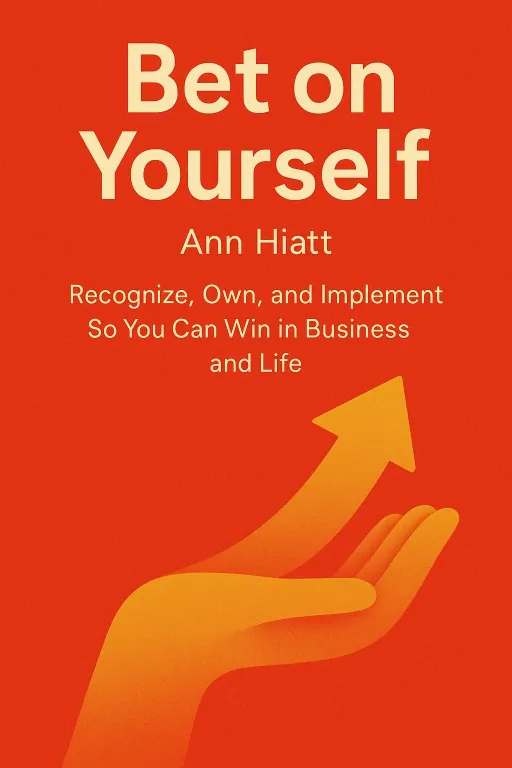
Nova: It absolutely is, and it’s a concept brilliantly explored in two books we’re diving into today. First, Ann Hiatt’s "Bet on Yourself," which distills the 'Silicon Valley mindset' she cultivated during her time working alongside giants like Jeff Bezos and Eric Schmidt at Amazon and Google. She saw firsthand what extreme ownership looks like.
Atlas: Wow, working with Bezos and Schmidt? That’s some serious proximity to power and innovation. What kind of insights does someone like that bring to the table?
Nova: She brings the understanding that the most impactful people don't just execute; they innovate. And then we have Alexandra Cavoulacos and Kathryn Minshew’s "The New Rules of Work." They’re the founders of The Muse, a career development platform, and their book offers a systematic approach to not just finding, but truly excelling in roles that align with your personal values.
Atlas: So, we’re talking about a blend of high-octane Silicon Valley drive and a more systematic, value-driven approach to career building. That’s a fascinating combination. It sounds like they’re both pointing to a similar destination, just from different starting points.
Nova: Precisely. And today, we’re going to explore how their insights converge into one powerful strategy: how to actively create value and sculpt your own high-growth career trajectory, rather than just waiting for it to happen.
The Silicon Valley Mindset: Extreme Ownership & Proactive Value Creation
SECTION
Nova: Let’s start with Hiatt’s "Bet on Yourself" and this idea of extreme ownership. In Silicon Valley, especially at those hyper-growth companies like Google and Amazon, the expectation isn't just that you do your job well. It’s that you think like a founder, even if you're not one.
Atlas: Okay, but isn't that just extra work? For someone who’s already focused on skill stacking and trying to integrate learning into a busy life, adding "think like a founder" to the to-do list might feel overwhelming. How do you do that without burning out?
Nova: That’s a brilliant question, Atlas, and it gets to the core of it. It’s not about doing work, necessarily, but about shifting your perspective on the work you doing. Hiatt saw that the most successful individuals didn't wait for problems to be assigned to them. They identified crucial gaps, often in areas nobody else was looking at, and proactively proposed solutions.
Atlas: So, it’s not about waiting for your manager to say, "Hey, we have this problem, go fix it." It’s more like, "I see a problem, and here’s my idea to fix it, and here’s why it matters."
Nova: Exactly! Imagine a scenario, something Hiatt might have seen unfold. Picture a junior product manager, let’s call her Maya. Her team is launching a new feature, and the marketing strategy is focused on existing users. But Maya, being a curious observer, starts noticing a pattern in customer support tickets—a specific segment of users who are consistently trying to use the product in a way it wasn't designed for. They’re struggling, but their attempts reveal a massive, untapped market.
Atlas: Huh. So she's seeing a problem that isn't even on the radar yet, because it’s not from existing customers complaining, but from customers failing. That’s a subtle but powerful distinction.
Nova: Precisely. And instead of just filing it away as an interesting anomaly, Maya takes extreme ownership. She decides this is problem to solve. She spends her lunch breaks and a bit of extra time, not to work on her assigned tasks, but to gather preliminary data. She pulls web analytics, looks at search queries, maybe even runs a few informal surveys with this "failed" user group.
Atlas: So she’s building a case, essentially. She’s not just saying, "Hey, I think there’s an opportunity here." She’s coming with receipts.
Nova: Absolutely. She then crafts a concise presentation. It’s not a full-blown strategy document, but a data-backed proposal identifying this unserved market, outlining their pain points, and sketching out a minimal viable product or a revised marketing angle that could capture them. She presents it to her manager, not as a complaint, but as a proactive opportunity for growth.
Atlas: That’s a powerful shift. It’s like she’s simulating being an entrepreneur within the company. She’s taking a calculated risk, investing her own initiative, and aiming for a disproportionate impact. For our listeners who are aspiring builders, that's incredibly resonant. It’s about building something new, even if it’s within an existing structure.
Nova: And the outcome? Her manager is blown away. Not just by the idea, but by her initiative, her data-driven approach, and her ability to identify a strategic blind spot. That’s how you create undeniable value. That’s how you make yourself indispensable, far beyond your job description.
Identifying Strategic Gaps & Architecting Your Role
SECTION
Nova: And this idea of seeing the whole chessboard, as you put it, naturally leads us to Cavoulacos and Minshew's insights on finding and excelling in roles that truly align with your personal values. They emphasize that while Hiatt’s mindset is crucial, you also need a systematic way to identify to apply that entrepreneurial drive. It's about finding those strategic gaps.
Atlas: Okay, so how do you even these gaps? For someone who values clarity and actionable wisdom, this sounds great in theory, but where do you start looking? Are we just supposed to wander around the office until we trip over an unmet need?
Nova: Not at all! Cavoulacos and Minshew provide a framework. It starts with understanding your own values and strengths, which is key to finding fulfilling work. But then, it’s about actively observing. Listen to what people are complaining about, what processes are clunky, what tasks are repeatedly falling through the cracks, or what strategic initiatives seem to lack a crucial piece.
Atlas: So, it’s like a detective mission, but for organizational inefficiencies and opportunities.
Nova: Exactly! Let’s say you’re a data analyst, and your core job is to generate reports. You're good at it, but you notice that the sales team often struggles to translate those reports into actionable strategies. They find the raw data overwhelming, and they're constantly asking for ad-hoc breakdowns that take you away from your main work. That’s a gap.
Atlas: Oh, I’ve been there! That’s a very relatable scenario. So, the gap isn't just "we need more reports," it’s "we need a between the reports and the sales team’s daily actions."
Nova: Precisely. So, instead of waiting for someone to create a "data translation specialist" role, you could take the Hiatt approach. You identify the gap: the sales team needs digestible, actionable insights, not just raw data. You gather data to back this up – maybe survey the sales team, track how much time is wasted on ad-hoc requests, or look at how competitor sales teams are leveraging data.
Atlas: And then you propose a solution, right? But what if your proposal gets shot down? What if you don't have the "authority" to make such a big move, especially if you're an aspiring builder trying to make a mark? It feels like a big risk.
Nova: That’s a valid concern, and it’s why the "simulating entrepreneurial drive" part is so crucial. You’re not demanding a new department be created. You’re proposing a pilot project. You might say, "I’ve noticed this challenge, and I’ve developed a template for a weekly 'Actionable Insights Brief' for one sales pod. I believe it could significantly improve their conversion rates and free up my time. Can I pilot it for a month and track the results?"
Atlas: So, you start small, prove the concept, and build momentum. That’s smart. It de-risks it for everyone involved. It’s about demonstrating value, not just asking for a bigger role.
Nova: Right. It’s about becoming the solution, even before the problem is officially recognized or a budget is allocated. You’re not just doing your job; you’re actively architecting your role to be one of indispensable value, directly tied to the strategic success of the organization.
Synthesis & Takeaways
SECTION
Nova: So, when we bring these two powerful ideas together – Hiatt’s extreme ownership and Cavoulacos/Minshew’s strategic gap identification – we see a clear path to high-growth career systems. It’s a continuous loop: your entrepreneurial mindset fuels your ability to spot opportunities, and spotting those opportunities allows you to create undeniable value.
Atlas: That makes so much sense. It’s not about passively waiting for someone else to open a door for you; it's about building your own door, right where it's needed most. For anyone driven by progress and seeking mastery, this isn't just about getting ahead; it's about truly owning your contribution and finding deeper meaning in your work.
Nova: Absolutely. The core takeaway from all of this is deceptively simple: don't wait for a promotion to be handed to you. Instead, identify a "gap" in your current project’s strategy—an unmet need, an overlooked opportunity, a process bottleneck—and then propose a data-backed solution. This simulates the entrepreneurial drive that defines high performers. It’s about making your impact so clear, so profound, that your value becomes undeniable.
Atlas: That’s incredibly inspiring. For our listeners who are ready to embrace this journey and schedule that 20 minutes daily for focused learning, what’s the very first, smallest thing they should do tomorrow to start applying this?
Nova: Start with observation. For just 20 minutes tomorrow, don't focus on your tasks. Instead, actively listen in meetings, observe team frustrations, or look at customer feedback. Just note down one recurring pain point or one area where you think something crucial is missing. Don't solve it yet; just identify it. That small step can be the beginning of creating your own high-growth system.
Atlas: That’s a great, actionable starting point. It’s about shifting perception before shifting action. Thank you, Nova, for illuminating these powerful strategies.
Nova: My pleasure, Atlas. It's truly about making yourself invaluable.
Atlas: This is Aibrary. Congratulations on your growth!