Unveiling the Dark Side: Criminal Law and Justice
Golden Hook & Introduction
SECTION
Nova: What if I told you that in America, freedom isn't always about what you do, but sometimes about the color of your skin, even in a system that claims to be 'colorblind'?
Atlas: Whoa, that's a pretty heavy way to start, Nova. I imagine a lot of our listeners, especially those driven by justice, might find that a bold claim. How can a system that prides itself on impartiality have such a profound, almost hidden, racial dimension?
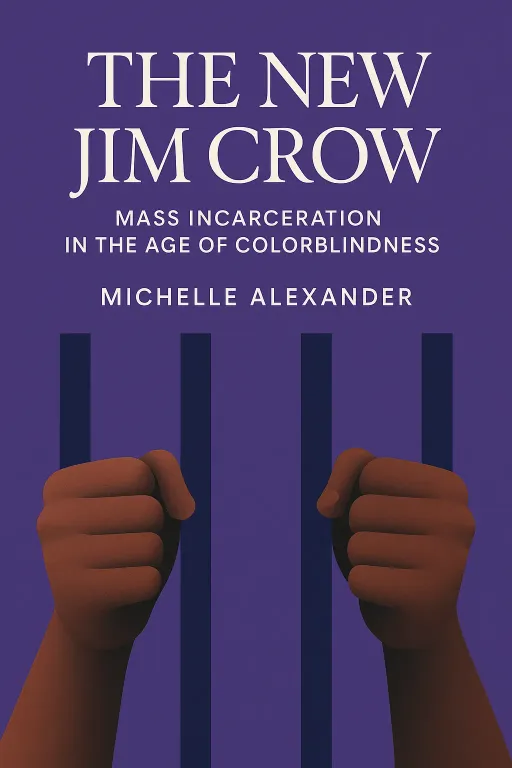
Nova: Exactly, Atlas. It's a question that cuts to the core of what we believe about justice. Today, we're diving into the dark side of criminal law, exploring its architecture and its profound human impact, through two incredibly powerful books. First, we have “The New Jim Crow: Mass Incarceration in the Age of Colorblindness” by Michelle Alexander.
Atlas: Ah, Alexander. I know her work is highly acclaimed and has been incredibly influential.
Nova: Absolutely. Alexander is a civil rights lawyer and legal scholar, and her background gives her work an undeniable authority. She doesn't just theorize; she brings a deep, practical understanding of the system. Then, we pair that with Truman Capote’s groundbreaking non-fiction novel, “In Cold Blood.”
Atlas: Oh, I've heard of that one. The true crime classic, right? It's always mentioned as a benchmark for the genre.
Nova: It absolutely is. Capote essentially invented a new form of journalism with that book, meticulously reconstructing a horrific crime and its aftermath. Together, these works offer both a systemic critique and a granular, compelling narrative of crime and punishment.
Deep Dive into Core Topic 1: The Systemic Critique of Mass Incarceration
SECTION
Nova: So, let's start with Alexander. Her central thesis is deeply unsettling. She argues that mass incarceration in the United States functions as a comprehensive racial caste system, much like Jim Crow laws once did.
Atlas: Wait, a racial caste system? That sounds pretty intense. Our legal system is supposed to be colorblind, right? Equal protection under the law and all that. How does she reconcile that with her claim?
Nova: That's the crux of her argument. She contends that while the explicit language of Jim Crow laws has been dismantled, a new system has emerged that achieves similar ends: the marginalization and control of a vast population, primarily Black men, through the criminal justice system.
Atlas: So, it's not about explicit laws anymore, but rather how the system is applied? Can you give an example of how this 'new Jim Crow' operates?
Nova: Think about the 'War on Drugs.' Alexander meticulously details how this initiative, despite drug use being relatively consistent across racial lines, was overwhelmingly waged in poor communities of color. This led to a dramatic surge in arrests and convictions for drug offenses in these communities, while similar issues in affluent, often white, areas went largely unaddressed.
Atlas: That makes me wonder, if drug use is similar, but the arrests are concentrated, then it's not really about the drugs themselves, is it? It's about who gets caught and how severely they're punished.
Nova: Precisely. And the consequences extend far beyond prison walls. Once labeled a 'felon,' individuals face a labyrinth of legal discrimination: exclusion from juries, denial of the right to vote, discrimination in employment, housing, access to education, and public benefits. It’s a civil death, a second-class citizenship that traps people in a cycle of disadvantage.
Atlas: That’s actually really inspiring for anyone who cares about fairness. It’s like, even if you serve your time, society isn't done punishing you. It sounds like the system is designed to keep people down, not to rehabilitate them.
Nova: Alexander argues that the system itself is the problem. It creates a permanent underclass, disproportionately affecting communities of color, thereby perpetuating racial hierarchy under the guise of 'tough on crime' policies.
Atlas: So basically you’re saying that even if a policy appears neutral on the surface, its impact can be anything but. It’s a powerful challenge to the idea that our justice system is inherently fair.
Deep Dive into Core Topic 2: The Human Element of Crime and Punishment
SECTION
Nova: And that naturally leads us to the second key idea we need to talk about, which often acts as a stark counterpoint to the systemic view: the individual human tragedy of crime. This is where Truman Capote’s “In Cold Blood” comes in.
Atlas: Okay, so from the broad, sweeping systemic critique, we're zooming in on a single, horrifying event. What makes Capote's work so enduring?
Nova: Capote’s book is a masterpiece of narrative journalism. He spent years immersing himself in the small Kansas town of Holcomb after the brutal 1959 murders of the Clutter family. He interviewed everyone: neighbors, investigators, even the killers themselves, Dick Hickock and Perry Smith. He reconstructed the events with such meticulous detail that it reads like a novel, but every word is true.
Atlas: That gives me chills. To get that close to such a horrific event, and to the minds of the perpetrators… how did he manage to humanize such a dark story without excusing the crime?
Nova: That’s his genius. He doesn't shy away from the brutality, but he also delves into the backgrounds and psychologies of Hickock and Smith. He explores their impoverished upbringings, their troubled pasts, their complex relationship, and their motivations. He makes you understand, even if you can never forgive, how such a monstrous act could have occurred.
Atlas: So it's not just a 'whodunit,' but a 'why did they do it' and 'what happened after'?
Nova: Exactly. He follows the investigation, the capture, the trial, and ultimately, the executions of Hickock and Smith. He paints a vivid picture of the Clutter family – their hard work, their faith, their place in the community – making their loss deeply personal. And then he shows the justice system in action, from the detectives methodically piecing together clues to the stark reality of the death penalty.
Atlas: Wow, that’s kind of heartbreaking. It puts faces and histories to the abstract concepts of 'crime' and 'punishment.' It sounds like it forces you to confront the raw, emotional reality.
Connecting the Threads: Systemic vs. Individual Justice
SECTION
Nova: Bringing these two books together, we see this incredible tension. Alexander shows us the cold, hard facts of systemic bias, how policies can create injustice on a massive scale. Capote, on the other hand, gives us the raw, emotional reality of individual suffering and the deeply personal impact of a crime and its consequences.
Atlas: It makes me wonder, how do we, as a society, balance the need for justice for individuals—like the Clutter family—with the potential for systemic injustice that Alexander exposes? It’s a fundamental question for anyone aspiring to advocate for fairness.
Nova: That’s the deep question, isn't it? After exploring these narratives, how do our perceptions of justice, punishment, and rehabilitation evolve? Capote’s detailed portrayal of the killers' lives, for instance, doesn't excuse their actions, but it does complicate the simple 'good versus evil' narrative. It compels us to consider the societal factors that might contribute to crime, which Alexander examines on a grander scale.
Atlas: So, Capote shows us the individual tragedy, and Alexander reveals the systemic tragedy that often underlies it. It’s a powerful one-two punch that really challenges easy answers. You can't just look at a single case and ignore the broader context.
Nova: And you can't just look at the statistics without remembering the individual lives behind them. Both authors, in their own ways, are urging us to look beyond the surface, to question the narratives we're given about crime and punishment. They make us confront the uncomfortable truth that our justice system, while striving for fairness, sometimes falls short, both in its grand design and in its individual applications.
Synthesis & Takeaways
SECTION
Nova: So, what we really see from these two powerful works is that understanding criminal law isn't just about statutes; it's about grasping its profound societal impact and the human stories it encompasses. It's a call to look critically at the systems we've built and the individual lives they touch.
Atlas: Absolutely. For our listeners who are analytical thinkers and ethical seekers, these books provide a crucial foundation. They show that building a strong base in fundamental legal principles must go hand-in-hand with examining real-world case studies and the ethical considerations that guide our moral compass. It’s about more than just knowing the law; it’s about understanding its soul.
Nova: And recognizing that the pursuit of justice is an ongoing journey, one that requires constant questioning and a deep empathy for all involved.
Atlas: That’s a great way to put it. It’s a journey where every step builds your foundation, pushing you to master one small legal concept, then move to the next, always with an eye towards real impact and fairness for all citizens.
Nova: This is Aibrary. Congratulations on your growth!