Unmasking the Narrative: How Stories Shape Civil Rights and Advocacy.
Golden Hook & Introduction
SECTION
Nova: We often say, "History repeats itself." But what if history isn't just itself, but actively our present, often behind a blind spot we never even knew we had?
Atlas: Wait, so we're not just learning from the past, we're its script? That's a fascinating and slightly unsettling thought.
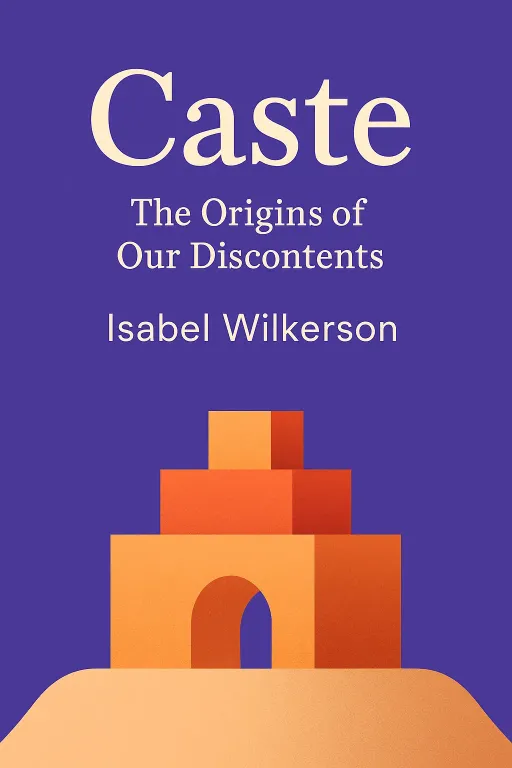
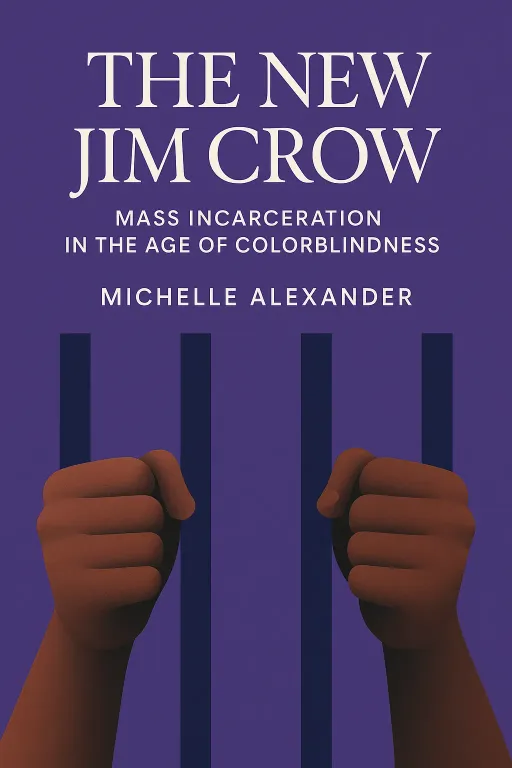
Nova: It absolutely is, Atlas. And today, we’re unmasking that very idea, drawing heavily from two groundbreaking works: Michelle Alexander's "The New Jim Crow" and Isabel Wilkerson's "Caste." Alexander, for instance, is a former civil rights litigator and law professor. Her background brings a deeply informed legal perspective to her analysis, making her arguments about systemic injustice particularly potent and impossible to ignore.
Atlas: That context immediately establishes a different kind of authority. It sounds like she's not just theorizing, but has seen the inner workings of the system she's critiquing.
Nova: Exactly. And our focus today is how these books, through their powerful narratives, reveal the enduring power of historical context in shaping modern civil rights struggles and advocacy.
Atlas: That sounds like it cuts right to the core of what many of our listeners, who champion dignity and navigate complex systems, feel intuitively. They're looking beyond surface-level issues.
The Persistent Echo: How Historical Narratives Shape Modern Civil Rights
SECTION
Nova: Precisely. We're diving into what we call "The Blind Spot." It’s this idea that history isn't just a collection of dusty facts; it's a living, breathing narrative that actively shapes our present. When we overlook the stories of past struggles, we're not just missing anecdotes; we're missing crucial lessons that directly influence current advocacy efforts.
Atlas: So, are you saying it's not enough to just history, but we have to understand and to truly advocate effectively?
Nova: You've hit the nail on the head. It's about recognizing that even after overt segregation laws were dismantled, the historical context, the of those laws, continued to perpetuate systemic injustice. Michelle Alexander’s "The New Jim Crow" is a masterclass in this.
Atlas: Oh, I'm familiar with that title, but unpack it for us. How does she connect a historical narrative to something as seemingly modern as mass incarceration?
Nova: Alexander argues, with chilling clarity, that mass incarceration functions as a contemporary system of racial control. She draws a direct line from the Jim Crow era, where overt laws enforced segregation and subjugation, to the current era where drug laws and criminal justice policies disproportionately impact Black communities.
Atlas: But for someone in the trenches, navigating modern regulations and striving for fairness, it feels like we've moved past overt racism. How can a historical truly impact something like a zoning law today, for instance, or a resource allocation decision?
Nova: That's the insidious part of the living narrative, Atlas. It's not always overt. Consider the parallel Alexander draws: voting rights restrictions for felons mirror the poll taxes that historically disenfranchised Black voters. Or the social stigma and economic exclusion that come from a felony conviction, echoing the segregationist practices that denied opportunities. The shifts from "Black people are inferior" to "criminals are undeserving," but the often remains racially concentrated. These underlying assumptions, built on historical racial biases, become embedded in seemingly neutral policies—like where schools get funding, how resources are distributed, or even how policing strategies are developed in certain neighborhoods.
Atlas: So it's like a computer program where the old, faulty code is still running in the background, even after we've installed a new operating system on top? It's shaping the outputs without us even realizing it's part of the original design.
Unmasking the Invisible Chains: The Power of Narrative to Expose Systemic Injustice
SECTION
Nova: That analogy of faulty code running in the background is perfect, Atlas, because it brings us to another powerful narrative that unmasks these invisible structures, and that's Isabel Wilkerson's "Caste."
Atlas: Oh, I'm curious about that one. The title alone suggests something incredibly deep and perhaps uncomfortable.
Nova: It is. Wilkerson explores how hidden hierarchies have shaped America, drawing profound parallels between the caste system in India, Nazi Germany's racial policies, and the racial hierarchy in the United States. She demonstrates the profound, often invisible, impact of these structures on human lives and societal progress. She’s not just recounting history; she’s revealing the of dehumanization and social stratification.
Atlas: When we talk about 'caste' in the American context, are we saying it's the exact same as India's system, or is Wilkerson using it as a powerful metaphor to expose something deeper?
Nova: That’s a crucial distinction. Wilkerson uses "caste" not as a direct equivalence, but as an analytical framework. She argues that America has an unspoken, inherited social hierarchy that operates distinctly from class. It’s about a narrative of inherent difference, of who is considered 'above' and who is 'below,' regardless of individual achievement or wealth. For instance, she illustrates how even during the Jim Crow era, wealthy Black individuals, despite their economic success, still faced the indignities and limitations of their caste. They couldn't necessarily escape the systemic barriers that a poor white individual, despite their economic hardship, often could, because that individual was still considered 'above' the lowest caste.
Atlas: Wow, that's incredible. It makes you realize how deeply ingrained these narratives are, not just in laws, but in our very perception of worth and opportunity. So, for our conscientious advocates, how does recognizing these narratives change their approach to systemic improvement?
Nova: Exactly. Wilkerson’s work, like Alexander’s, equips us to challenge deeply embedded inequalities not just by changing laws, but by understanding and dismantling the that give those laws their power and longevity. It’s about seeing the invisible architecture, the story that’s been told for generations, which allows these systems to persist.
Atlas: It's like finding the foundational beliefs that underpin the entire structure, which is far more impactful than just patching up a few cracks.
Synthesis & Takeaways
SECTION
Nova: Absolutely. Both Alexander and Wilkerson are essentially giving us X-ray vision. They show us that the "blind spot" isn't just about ignorance of history, but an active, often unconscious, perpetuation of historical narratives that keep systemic inequalities in place.
Atlas: So, for our listeners who are constantly seeking systemic improvement and championing dignity, this isn't just an academic exercise. It's a fundamental shift in how they approach their work.
Nova: Precisely. It means advocacy isn't just about fighting symptoms or individual acts of injustice. It's about recognizing the historical narratives that create the very conditions for those injustices to flourish. It's about asking, "What story is being told here, and who benefits from it? And how can we rewrite it?"
Atlas: That's a profound takeaway. It shifts the focus from simply reacting to proactively understanding the deep currents. What's one small action our listeners can take this week to apply this 'narrative unmasking' mindset?
Nova: Start by identifying one current issue you're passionately advocating for. Then, instead of just looking at the immediate facts, ask yourself: 'What historical narrative, however subtle, might be underpinning this issue? How is the past still writing the present here?' Just that question can illuminate new pathways for advocacy.
Atlas: That's powerful. It's about trusting that inner wisdom, that lived experience, as powerful data, as we often say. And then, sharing those small wins. This isn't just intellectual growth; it's about amplifying influence by understanding the roots.
Nova: Absolutely. Understanding these narratives is fundamental to being an ethical architect of change.
Atlas: This is Aibrary. Congratulations on your growth!