

The Tech Paradox: How to Innovate Without Burning Out
Golden Hook & Introduction
SECTION
Nova: Atlas, if you had to sum up "innovation without burning out" in just five words, what would they be?
Atlas: Faster, harder, smarter, then... crash and burn. Okay, maybe six. Your turn.
Nova: Mine would be: "Resilience isn't avoiding, it's evolving." And that, my friend, perfectly sets the stage for today's deep dive into a concept that challenges everything we think we know about progress. We're talking about "The Tech Paradox: How to Innovate Without Burning Out," a fascinating exploration into building systems that thrive under stress, not just survive it.
Atlas: Resilience isn't avoiding, it's evolving. Oh, I like that. So, we're not just talking about surviving the tech jungle, but actually... flourishing in it? Tell me more about this paradox.
Nova: Exactly. It’s about understanding the hidden costs of complexity and fragility, which is our first core topic today. This book pushes us to look beyond just the shiny surface of innovation.
The Hidden Costs of Complexity and Fragility
SECTION
Nova: So often, in our relentless pursuit of innovation, we add layers and features, assuming more is always better. But what if all that 'more' actually makes our systems—and us—more brittle?
Atlas: Wait, are you saying that chasing innovation can inadvertently create a house of cards? That sounds rough, but I can definitely relate to that feeling in my own work.
Nova: Precisely. The book argues that success isn't just about speed; it's about building systems that thrive under stress. Think about a complex piece of software. Each new feature, each integration, adds potential points of failure. It's like a finely tuned, incredibly fast race car that excels in ideal conditions but crumbles at the slightest bump in the road.
Atlas: That’s a great analogy. So, the faster we go, the more fragile we become? It’s like we’re optimizing for a perfect world that never actually exists.
Nova: Exactly. And this isn't just about software. Consider the tragic story of the Titan submersible. It was designed with a focus on cutting-edge innovation—a lightweight carbon fiber hull, a video game controller for navigation, off-the-shelf components. The goal was speed, efficiency, and a radical departure from traditional submersible design. On paper, it was innovative, a marvel of modern engineering.
Atlas: Oh man, I remember that. It was all over the news.
Nova: But in practice, this relentless pursuit of novel solutions, without fully understanding the introduced by unproven materials and unconventional engineering, led to catastrophic failure. The "innovation" created a system that was incredibly fast to deploy but utterly brittle under the immense, unforgiving stresses of the deep ocean. It highlights how prioritizing speed and novelty over proven robustness can have devastating hidden costs, where complexity masks inherent weaknesses.
Atlas: Wow, that’s actually really sobering. It makes you think about all the times we push for the "next big thing" without truly stress-testing the foundations. So, how do we move beyond just surviving these shocks, and actually benefit from them? That seems like the ultimate goal.
Antifragility: Benefiting from Disorder
SECTION
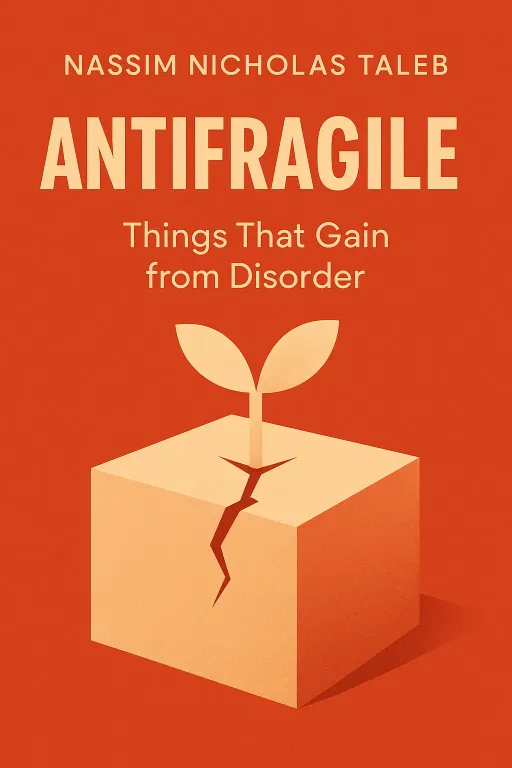
Nova: That naturally leads us to a radical concept from Nassim Nicholas Taleb's "Antifragile": the idea that some things benefit from shocks, thriving on disorder rather than just resisting it. It challenges us to move beyond mere robustness.
Atlas: Thriving on disorder? That sounds a bit out there. Most of us are just trying to keep our heads above water when things go wrong. What does "antifragile" even look like in practice?
Nova: It’s a fascinating concept. Imagine the human immune system. When exposed to a virus, it doesn't just resist; it learns, adapts, and becomes stronger, more resilient to future attacks. Or a weightlifter: stress on the muscles leads to growth. Taleb argues that many modern systems are fragile—they break under stress. Robust systems resist stress, but antifragile systems from it.
Atlas: So, basically you're saying that a system that can fail in small, controlled ways is actually stronger than one that tries to avoid all failure? Like, if a company lets its employees experiment and occasionally "fail fast," they learn more than if they just stick to a rigid plan?
Nova: Precisely! Nova's Take, from "The Tech Paradox," builds on this, arguing that true resilience in technology comes not from avoiding all risks, but from designing systems—and teams—that learn and evolve stronger from unexpected challenges. Think of Netflix's Chaos Monkey.
Atlas: Chaos Monkey? That sounds… aggressive.
Nova: It is, in the best possible way. This tool randomly disables parts of Netflix’s production system. It sounds insane, right? Intentionally breaking things? But the engineers designed it so that when these "shocks" occur, they surface vulnerabilities real outages happen. The system and the team learn to automatically recover, becoming antifragile. They don't just tolerate random failures; they from them, building a more robust and adaptable service that can withstand unexpected turbulence.
Atlas: That’s a perfect example! It’s like they're giving their system a vaccine against bigger problems. It's a proactive approach to chaos. But then, if adding more people to a complex project can make it even worse, how do we manage growth without introducing more fragility? That sounds like another paradox.
The Mythical Man-Month: The Pitfalls of Linear Thinking in Complex Systems
SECTION
Nova: That's where Frederick Brooks Jr.'s "The Mythical Man-Month" comes in. It's a foundational text in software engineering, and it argues that adding more people to a late software project makes it later. It highlights the inherent complexities of human communication and task division in technical teams.
Atlas: That sounds counter-intuitive to anyone managing a project under pressure. You’d think more hands on deck means faster delivery. What do you mean by "inherent complexities"?
Nova: Brooks famously coined "Brooks' Law." He observed that when a project is behind schedule, the intuitive response is to add more developers. But each new person requires training, adds communication overhead, and increases the number of potential misunderstandings. The time spent integrating new team members and managing increased communication often outweighs the benefit of extra hands. It's like trying to make nine women have a baby in one month – it just doesn't work. The problem isn't the number of people; it's the irreducible complexity of the task and the communication pathways.
Atlas: That makes me wonder about all the times I've seen teams struggle with communication breakdowns, even when everyone is brilliant. So, the "solution" of adding more people can actually new problems and increase fragility, not reduce it?
Nova: Exactly. It reveals that many 'solutions' can introduce new problems, especially when we apply linear thinking to inherently non-linear systems. The 'Tech Paradox' emphasizes that understanding this allows for sustainable growth. It's not about avoiding growth, but about growing intelligently, recognizing that human factors and communication are as critical as the code itself. It’s about focusing on clarity and efficiency, rather than just quantity.
Synthesis & Takeaways
SECTION
Nova: So, we've journeyed from the hidden fragility of ambitious tech to the radical idea of antifragility, and finally, to the sobering truth that more hands don't always make light work. The core message here is profound: innovation shouldn't come at the cost of our systems'—or our own—well-being. It's about designing for a world that's inherently unpredictable.
Atlas: That’s actually really inspiring. It feels like a complete reframing of what "success" means. It’s not about avoiding all risks or just building bigger, but about building smarter, more adaptable systems that can learn and grow from the unexpected. So, what's a practical step our listeners can take to start applying this?
Nova: A great first step is to ask: "How might embracing small, controlled failures make my current technology projects more adaptable and ultimately more robust?" Instead of trying to prevent every tiny hiccup, design mechanisms to let small things break safely. Observe, learn, and then build back stronger. This isn't just about code; it's about cultivating a mindset of adaptive resilience in your team and your entire organization.
Atlas: That’s a great way to put it. It’s about building a muscle, not just a shield. I imagine a lot of our listeners, especially those pushing boundaries in tech, will find immense value in shifting from a "fragile pursuit of perfection" to an "antifragile embrace of evolution." It's a powerful shift in perspective.
Nova: Absolutely. It's about recognizing that the journey of innovation is not a straight line, but a dynamic dance with disorder. And those who learn to dance best are the ones who truly thrive.
Atlas: I love that idea of dancing with disorder. It sounds a lot more engaging than just trying to avoid it.
Nova: It truly is. This is Aibrary. Congratulations on your growth!