

Stop Guessing, Start Building: The Foundation of Scalable Software.
Golden Hook & Introduction
SECTION
Nova: Everyone says "move fast and break things" in software. It's almost a sacred mantra in tech. But what if that philosophy, that relentless pursuit of speed, is actually the fastest way to build something that simply doesn't last? What if true, sustainable speed, the kind that leads to genuinely scalable systems, actually comes from slowing down?
Atlas: Whoa, hold on. Slowing down? That feels counterintuitive to every sprint retrospective I've ever been in. Are you saying the secret to building high-performance, robust software isn't about shipping features faster, but... what, meditating on our code?
Nova: Not quite meditating, Atlas, but definitely more. Today, we're diving deep into the foundational mindset behind "Stop Guessing, Start Building: The Foundation of Scalable Software." It's a concept that synthesizes timeless wisdom from some of the most impactful books in our field, pushing us to rethink how we approach software creation.
Atlas: So, we're talking about more than just writing lines of code, right? This is about disciplined thinking and strategic project management, the stuff that truly builds resilient systems. For the analytical architects and practical innovators listening, these are the pain points: how do you build something that actually endures and scales?
Nova: Exactly. And to answer that, we need to look at two critical pillars. First, the unseen foundation within the code itself.
The Unseen Foundation: Why Thoughtful Code is the Only Scalable Code
SECTION
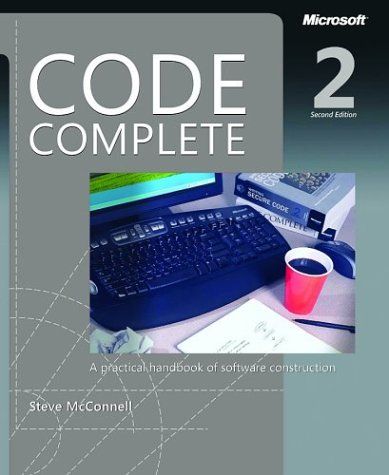
Nova: Let's start with the micro-level, the very fabric of our software. One of the most influential guides here is Steve McConnell's "Code Complete." It's almost a bible for software construction, published way back in 1993, but its insights are shockingly relevant today. McConnell's core premise is simple yet profoundly impactful: attention to detail at the micro-level directly impacts project success.
Atlas: Okay, "attention to detail." That sounds like something my high school English teacher would say about my essays. But in software, what does that actually look like? Is it just about making sure your semicolons are in place?
Nova: It's so much more. McConnell systematically breaks down best practices, emphasizing things like "defensive programming" and "clear variable naming." Think of defensive programming as building a fortress. You're anticipating invalid inputs, you're building robust error handling, you're essentially saying, "I know the world is chaotic, and I'm going to make sure my code can withstand it."
Atlas: Isn't "defensive programming" just a fancy term for over-engineering, though? For someone trying to hit a tight deadline, adding all those checks and balances can feel like a massive time sink. Where's the tangible benefit for an analytical architect who needs to deliver?
Nova: That's the classic trap, Atlas. It feels slower upfront. But imagine a scenario: you ship a feature quickly, but it’s riddled with assumptions about perfect user input. A few weeks later, a user enters something unexpected, and your system crashes, data is corrupted, or a security vulnerability is exposed. Now you're scrambling, debugging, patching, losing trust. That "fast" code just became incredibly, excruciatingly slow.
Atlas: I've seen that movie before, and it never ends well. So, the upfront investment in defensive coding actually pays dividends in stability and reduced maintenance later?
Nova: Precisely. It’s about building in resilience. And then there's "clear variable naming." It sounds trivial, right? But imagine inheriting a massive codebase where variables are named 'x,' 'y,' 'temp1,' 'data_processor_thingy.' Now, every time you touch that code, you're not just solving a problem; you're deciphering a riddle. That's a huge cognitive load, leading to more bugs and slower development for everyone down the line.
Atlas: So, a well-named variable isn't just about aesthetics; it's practically a form of documentation. It's a signpost that tells future developers, or even your future self, exactly what that piece of data is, without having to dig through comments or function calls.
Nova: Exactly! It's about reducing complexity, improving readability, and ultimately accelerating future development. When you write clear, defensive code, you're not just writing the compiler; you're writing. You're building a system that's a joy to maintain and extend, not a nightmare. It's the difference between building a house with a solid concrete foundation versus one built on shifting sand. One stands the test of time, the other crumbles.
Beyond the Code: Managing the Human and Organizational Complexity of Software
SECTION
Nova: But even the most beautifully crafted code can fail if the project isn't managed well. And that naturally leads us to the second key idea we need to talk about, which often acts as a counterpoint to the purely technical. We're talking about "The Mythical Man-Month" by Frederick Brooks Jr.
Atlas: Ah, Brooks's Law! The one about adding more people to a late project making it later. I've heard that phrase thrown around a lot. But for our listeners, the analytical architects, who are often leading teams, what does that mean? Why can't we just throw more hands at the problem and speed things up?
Nova: It's a profound insight, and Brooks, who managed the IBM System/360 project in the 60s, learned it the hard way. He explains why adding manpower to a late software project makes it later by highlighting the critical importance of clear communication, documentation, and managing complexity from the start. His famous analogy is that nine women cannot make a baby in one month. Some tasks are inherently sequential or require intense communication that scales non-linearly with team size.
Atlas: So, it's not about the individual's skill; it's about the inherent communication overhead. If you add five new people to a team of five, you're not just adding five new lines of communication; you're adding dozens of new potential communication paths, new training requirements, and new opportunities for misunderstanding. It’s a communication explosion.
Nova: Precisely. Brooks points out that much of the work in software development is not easily divisible. You can't just split a complex architectural decision into ten independent pieces. And every new person requires ramp-up time, diverting existing team members to train them. All of this drains resources from the actual work, pushing the deadline further out.
Atlas: This really hits home for anyone in a leadership role. For an analytical architect, managing teams is just as crucial as the architecture itself, but it's often the messiest part. So, what's the "tiny step" here for someone leading a project? How do you manage complexity and communication effectively you're in a death march?
Nova: Brooks's work screams for meticulous upfront planning. It's about foresight. You need clear architectural designs, well-defined module interfaces, and robust communication channels established. It's about identifying those indivisible tasks and giving them to fewer, highly skilled people. It's about documenting decisions, not just assuming everyone's on the same page. It’s about building consensus before the code is even written.
Atlas: In essence, you're saying that the "guesswork" often starts not at the code level, but at the project planning and communication level. If you're guessing about requirements, or about how your team will interact, you're already building on a shaky foundation.
Nova: Absolutely. Both McConnell and Brooks reveal that software mastery isn't just about syntax; it's about disciplined thinking and strategic project management. It’s about recognizing that software is a socio-technical system. The technical brilliance means nothing without the human clarity and organizational discipline to support it.
Synthesis & Takeaways
SECTION
Nova: So, bringing it all together, Atlas, whether we're talking about the meticulousness of "Code Complete" or the project management wisdom of "The Mythical Man-Month," the message is clear: building scalable software means stopping the guesswork. It means intentionality at every level.
Atlas: This really speaks to the "Purposeful Solver" in all of us, right? It's about building with impact, not just building. It's about creating solutions that are robust and can actually adapt to the future. So, for our analytical architects out there, the practical innovators, what's the one thing they should take away today to stop guessing and start building with this kind of foundational strength?
Nova: The single most impactful takeaway is this: invest in the "thinking" before the "doing." Pause to design, to communicate, to anticipate, and to name things clearly writing the first line of code. Embrace the journey of continuous iteration, but make sure each iteration builds on a solid, well-thought-out base, not just a quick hack.
Atlas: That's a powerful call to action. So, for everyone listening, review a recent code module you wrote, or a project you just finished. Can you identify one area for clearer naming, or improved error handling, or even just better communication within your team, based on these principles? Start small, build one project, and see it through with these foundational ideas in mind.
Nova: It's about recognizing that perfection is a moving target, but solid foundations allow you to chase it effectively.
Atlas: Absolutely. Thanks for breaking down these complex ideas, Nova.
Nova: Always a pleasure, Atlas.
Nova: This is Aibrary.
Atlas: Congratulations on your growth!