

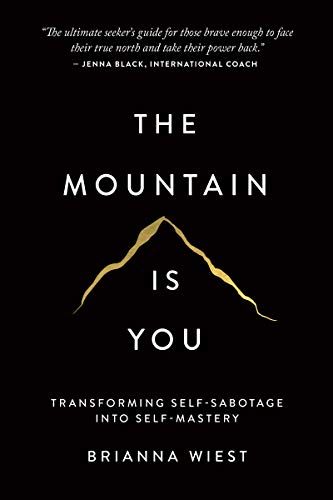
The Mountain Is You
Transforming Self-Sabotage Into Self-Mastery
Introduction
Nova: Picture this: you're standing at the base of a massive mountain, looking up. It feels impossible to climb. Every time you try, something pulls you back. Now, here's the twist Brianna Wiest delivers in her bestselling book — that mountain isn't some external obstacle. That mountain is you. Actually, it's made of your fears, your insecurities, your bad habits, and all the unconscious patterns you've built over a lifetime.
Nova: : I love that metaphor. But let me get this straight — she's saying I am my own biggest problem? That's a pretty tough pill to swallow.
Nova: It is, but it's also strangely liberating. Here's the thing about Brianna Wiest: she's become a global phenomenon. Her books have sold millions of copies, they're translated into more than 40 languages, and The Mountain Is You has sat on bestseller lists around the world. The full title is The Mountain Is You: Transforming Self-Sabotage Into Self-Mastery. And that subtitle tells you everything about what this book sets out to do.
Nova: : So we're talking about self-sabotage. I think most of us have a vague sense of what that means — procrastinating, talking ourselves out of good opportunities, maybe eating that third donut when we promised we wouldn't.
Nova: Exactly, and Wiest's argument is that those behaviors aren't random. They aren't evidence that you're lazy or broken. They're actually signals — messages from a deeper part of you that has unmet needs. She writes that self-sabotage is what happens when we refuse to consciously meet our innermost needs, often because we don't believe we're capable of handling them.
Nova: : That reframes everything. So today we're climbing this mountain together — understanding why we get in our own way, what self-sabotage actually is, and most importantly, how to transform those patterns into genuine self-mastery.
Nova: Let's start the climb.
It's Not Self-Hatred — It's Self-Protection Gone Wrong
The Truth About Self-Sabotage
Nova: So here's the first and most radical idea in The Mountain Is You: self-sabotage is not about hating yourself. It's actually a coping mechanism — a maladaptive one, but a coping mechanism nonetheless. Wiest explains that every act of self-sabotage is trying to meet an unconscious need.
Nova: : Wait, I need to sit with that. You're telling me that when I procrastinate on a big work project, my brain isn't just being lazy — it's trying to protect me from something?
Nova: That's exactly what Wiest argues. She gives this fascinating example: imagine you keep sabotaging your romantic relationships. You pick fights, you pull away, you find reasons it won't work. On the surface, it looks like you can't commit. But underneath, you might have a core need to know yourself better, and you're terrified of losing your identity in a relationship. The self-sabotage is a clumsy way of preserving your sense of self while still having companionship.
Nova: : That's almost poetic in how dysfunctional it is. Your brain is basically saying, "I need X, but I don't know how to ask for it, so I'll just blow everything up instead."
Nova: Right! And Wiest traces this back to several root causes. One is irrational fears — like believing deep down that you're not smart enough. Another is negative associations — maybe you unconsciously avoid financial success because you grew up believing rich people are bad. Then there's the fear of the unknown, which represents a loss of control. And false beliefs we've picked up, like thinking we're destined to live a certain way because that's all we've ever known.
Nova: : So the sabotage isn't the real problem — it's a symptom of something deeper.
Nova: Exactly. Wiest is very clear on this point: you cannot just get rid of the coping mechanism and think you've solved the problem. You have to dig down and ask, what need is this behavior trying to meet? Once you identify that, you can find a healthier way to fulfill it.
Nova: : She also lists out specific signs of self-sabotage, right? I read that there are quite a few of them.
Nova: Yes, and they're incredibly relatable. Resistance — when you suddenly need to reorganize your entire closet the moment you should be working on your business plan. Uprooting — constantly switching jobs or relationships every time things get serious. Perfectionism — rewriting chapter one for five years because it's never quite good enough. Justification — the classic "I'll start my diet next Monday." Disorganization, judging others frequently, toxic pride where you can't admit mistakes, and my personal favorite — the illusion of busyness.
Nova: : The illusion of busyness — being constantly in motion but never actually moving forward on what matters.
Nova: That's the one. Wiest asks a devastating question: are you genuinely busy, or are you just running from yourself? She also points out things like hanging out with negative people who drain you, fixating on improbable fears like plane crashes while ignoring real issues, and valuing appearances over feelings — looking successful on social media rather than feeling fulfilled in real life.
Nova: : This list feels like a mirror. I think anyone listening is going to recognize at least three or four of these in themselves.
Nova: And that recognition is actually the first step. Wiest says the most important act of self-love is acknowledging that you're not happy with where you are and deciding to do something about it. Not fluffy affirmations — real, honest accountability.
The Homeostatic Impulse and the Cost of Your New Life
Why We Fight Change
Nova: So this brings us to a huge question: if change is good for us, why do we resist it so hard? Wiest introduces this concept called the homeostatic impulse.
Nova: : Homeostasis — that's like how your body maintains a stable temperature, right?
Nova: Exactly. Your body has an inner thermostat constantly working to keep things stable. Wiest says our minds work the same way. They try to maintain a stable inner state by regulating our focus, our thoughts, our emotional baseline. So when you try to change — even positive change — your mind experiences it as a shock to the system.
Nova: : So even good change feels threatening?
Nova: Absolutely. Wiest gives this brilliant example: imagine landing your dream job that pays you twice as much for half the hours. Sounds amazing, right? But suddenly, you're not just thinking about surviving and paying bills anymore. You have to confront bigger questions — the meaning of your life, the quality of your relationships. That's stressful. Your brain might actually sabotage this new job to return to the familiar discomfort it already knows how to handle.
Nova: : That's wild. So we'd rather be comfortably miserable than uncomfortably happy?
Nova: Basically, yes. Wiest puts it bluntly: human beings are guided by comfort. They stay close to what feels familiar and reject what doesn't, even if it's objectively better for them. This is why people stay in bad relationships, dead-end jobs, or unhealthy patterns. The known misery feels safer than the unknown possibility.
Nova: : There's a quote from the book that I think captures this perfectly: "Your new life is going to cost you your old one."
Nova: That's probably the most famous line from The Mountain Is You, and it's powerful because it's so honest. Wiest explains that many people avoid doing necessary internal work because they realize that if they truly heal, their lives will change — sometimes drastically. You might lose relationships. You might become less liked. You might flounder for a while before finding your north star.
Nova: : And her response to that fear is basically — so what?
Nova: Essentially, yes. She writes, "The people who are meant for you are going to meet you on the other side. You're going to build a new comfort zone around the things that actually move you forward. Instead of being liked, you're going to be loved. Instead of being understood, you're going to be seen."
Nova: : That's a pretty compelling trade-off. But how do you actually start? Because knowing this intellectually and doing something about it are two very different things.
Nova: Wiest has a very specific answer to that, and it's not what most people expect. She says real, lasting change isn't about earth-shattering epiphanies. It's about microshifts — tiny, almost invisible adjustments in your day-to-day life. A microshift is changing what you eat for one part of one meal, just one time. Then doing it a second time and a third. Before you realize it, you've adopted a new pattern.
Nova: : So you don't need to reinvent your entire life by Tuesday.
Nova: Exactly. And here's a statistic that drives this home: if you save five dollars every day for 50 years and invest it at 7% compound interest, your total investment of about ninety thousand dollars grows to nearly eight hundred fifty thousand dollars. Small actions, compounded over time, create massive transformation. Wiest says our minds are actually antifragile — they need some adversity, some challenge, to grow stronger. It's like taking your brain to the gym.
How to Tell the Difference Between Your Gut and Your Fear
Intuition vs. Intrusive Thoughts
Nova: There's another major theme in this book that I think separates it from a lot of self-help literature, and that's Wiest's deep dive into the difference between intuition and intrusive thoughts.
Nova: : This is something I struggle with constantly. How do I know if I'm listening to my gut or just spiraling into anxiety?
Nova: Wiest gives us a framework. She describes intuition as a "deep down" intelligence — it often feels like it's coming from the body, and there's actually science behind this. The gut and the brain are connected via the vagus nerve, and most of your body's serotonin is produced in the gut. So those gut feelings are real physiological signals.
Nova: : And intrusive thoughts?
Nova: Those are more about falling into mental traps — cognitive biases and distortions. They tend to create a spiral. One anxious thought leads to another, then another, and suddenly you're convinced everything is going to fall apart. Wiest says the emotional messages from our intuition start as a whisper. But if we keep ignoring them, they turn into a scream.
Nova: : That whisper-to-scream progression makes so much sense. When I've ignored something that felt off, it always comes back louder.
Nova: Right. And if those messages keep getting suppressed, Wiest says they resurface in other parts of your life — often as self-sabotage. You start avoiding things that trigger painful emotions, which creates more problems. It's a cycle.
Nova: : So how do you actually tell them apart in the moment?
Nova: Wiest offers three key questions. First: are you responding to someone who is in front of you, or to your idea of them in your head? Second: are you reacting to a situation playing out right now, or to one you're imagining? Third: are your feelings about what's happening right now, or about what you hope and fear will happen in the future?
Nova: : Those are incredibly clarifying questions. It sounds like intuition is always anchored in the present moment, while intrusive thoughts are future-tripping.
Nova: Exactly. She also says intuitive thoughts tend to be calm, rational, and don't trigger a panic spiral. Intrusive thoughts create more problems, stay stuck in your head but not in your gut, and feel like they come from a smaller, more afraid version of you.
Nova: : This connects to something else she talks about — the emotional backlog. Can you explain that?
Nova: Wiest compares unprocessed emotions to an overflowing email inbox. Every time you experience an emotion, it's like getting a message from your body. If you never open those messages, you end up with a thousand unread notifications, totally overlooking crucial information you need to move forward. And since emotions are physical experiences — they can manifest as tension, headaches, rapid breathing — suppressing them affects both mental and physical health.
Nova: : So the solution is to actually feel your feelings, not just push through them.
Nova: Yes. And Wiest recommends a particular approach to meditation that's different from what most people expect. She says don't meditate to feel calm. Meditate just to feel. Let all your emotions come up and observe them as a compassionate, non-judgmental witness. That's how you process the backlog.
Nova: : That's such a shift — from meditation as an escape to meditation as a practice of presence and emotional honesty.
From Self-Sabotage to Self-Mastery
Climbing Your Mountain
Nova: Let's get practical. What does Wiest actually recommend we do to climb this mountain?
Nova: : Yes, because awareness is great, but action is better.
Nova: Her first big strategy is to disconnect action from feeling. This is crucial. She says that when you choose to do something new, you will feel afraid and anxious. That discomfort is not a sign that you're doing something wrong. It's a sign that you're stepping outside your comfort zone. She writes, "Though your emotions are always valid and need to be validated, they are hardly ever an accurate measure of what you are capable of in life."
Nova: : So just because something feels scary doesn't mean it's the wrong move.
Nova: Exactly. All your feelings know is what you've done in the past, and they're attached to what they've drawn comfort from. They have no data on the future you're trying to build.
Nova: : What else does she recommend?
Nova: She's big on releasing the emotional backlog we talked about. She also recommends writing a letter to your younger self as a way to process stuck emotions. And she talks about organizing your external environment. If your desk is chaos and your schedule is chaos, that often reflects internal chaos. But you can flip the script — by organizing your outer world, you start to feel more like the person you want to become.
Nova: : So external order creates internal order, not just the other way around.
Nova: That's the idea. She also tackles something I think is really timely: the fake glow-up. You know those social media transformations — green juices, matching athleisure, perfectly curated morning routines?
Nova: : The "That Girl" aesthetic, yeah.
Nova: Wiest calls this out directly. She says a real glow-up is authentic. It's not about looking like you have your life together for an audience. She asks a devastating question: "The next time you're trying to craft a glow-up story that is compelling to others, ask yourself why you are still waiting for their approval." Real transformation is often messy, uncomfortable, and not remotely Instagram-worthy.
Nova: : I love that because it removes the performance from personal growth. You're not doing it for the likes.
Nova: And here's perhaps the most empowering idea in the entire book: you already have everything you need. Wiest writes that you don't need to learn more skills or develop more strengths to overcome your self-sabotage. You're already equipped with the exact traits you need. The work is recognizing what you already possess and unlocking it from within.
Nova: : That's almost counterintuitive for a self-help book. Usually the message is "you need to become someone different."
Nova: And that's what makes this book stand out. The mountain isn't something to conquer so you can become a new person. The mountain is the vehicle for discovering who you already are. As Wiest writes in one of the most quoted lines: "One day, the mountain that was in front of you will be so far behind you, it will barely be visible in the distance. But who you become in learning to climb it? That will stay with you forever. That is the point of the mountain."
Conclusion
Nova: So let's bring this all together. The Mountain Is You by Brianna Wiest has sold millions of copies, topped global bestseller lists, and resonated deeply with readers around the world — and it's easy to see why. The core message is both challenging and hopeful: your biggest obstacle is yourself, but that also means you are the one with the power to change.
Nova: : And that change starts with understanding self-sabotage not as a personal failing, but as a signal. Those patterns — the procrastination, the perfectionism, the resistance — they're pointing to unmet needs and unprocessed emotions.
Nova: Exactly. The book walks us through recognizing the signs, understanding the homeostatic impulse that keeps us clinging to the familiar even when it hurts, distinguishing between intuition and fear-based intrusive thoughts, and finally, taking action through microshifts — tiny, sustainable changes that compound over time.
Nova: : I think what struck me most is how honest this book is. Wiest doesn't promise an easy climb. She tells you upfront: your new life will cost you your old one. You might lose relationships. You'll be uncomfortable. But what you gain — authenticity, self-mastery, a life that actually fits you — is worth that cost.
Nova: And she reminds us that we don't need to become someone else. The tools are already inside us. Growth isn't about adding more — it's about removing the barriers we've built and letting who we truly are emerge.
Nova: : So if you're standing at the base of your own mountain, wondering why you keep tripping yourself up, maybe it's time to stop looking for external solutions and start the inner climb. The mountain is you — and that's exactly where the power lies.
Nova: This is Aibrary. Congratulations on your growth!