

The Invisible Hand of Culture: How Norms Shape Economic Development
Golden Hook & Introduction
SECTION
Nova: You know, for decades, economic development gurus have been flying into communities, armed with spreadsheets and 'best practices,' only to watch their grand plans crumble. What if the blueprint they were following was fundamentally, invisibly, flawed?
Atlas: Oh man, that's a provocative start. Are you saying it's not simply about injecting capital or introducing new tech? That it's… deeper?
Nova: Exactly. Today, we're pulling back the curtain on that invisible flaw with a deep dive into the profound insights from 'The Invisible Hand of Culture: How Norms Shape Economic Development.' It's a fascinating journey that fundamentally reshapes how we think about progress.
Atlas: I'm intrigued. We often hear about market forces and policy, but "culture" feels like such a nebulous term in economics.
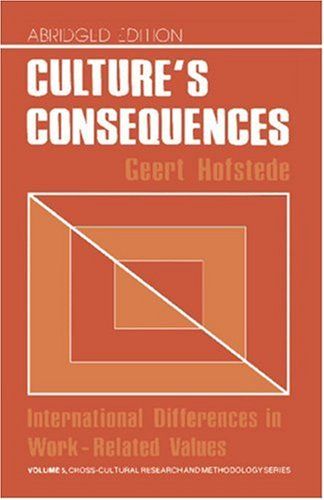
Nova: It does, doesn't it? And at its heart are two foundational thinkers who brought clarity to that nebulousness. Geert Hofstede, whose work on cultural dimensions was initially a groundbreaking study for IBM, defining how we understand national differences across the globe.
Atlas: So, a corporate deep dive into what makes people tick, globally? That’s quite the origin story for a foundational text.
Nova: Absolutely. And then there's Samuel Bowles, an economist whose interdisciplinary approach in 'The Moral Economy' radically challenged the very notion of purely rational, self-interested economic actors. He merged economics with sociology and anthropology in a way that profoundly shifted perspectives.
Atlas: That's a significant challenge to the conventional wisdom. It sounds like these books are saying we've been looking at the economic engine, but ignoring the very fuel it runs on, or perhaps the driver behind the wheel.
Nova: A perfect analogy, Atlas. And it leads us directly to our first deep dive: Hofstede's incredible work on cultural dimensions, which acts like an X-ray into the invisible architecture of economic behavior.
Hofstede's Cultural Dimensions: Unpacking the Invisible Architect of Economic Behavior
SECTION
Nova: So, Hofstede, through his extensive research across over 70 countries, gave us a framework to understand national cultures. Think of culture not as a fuzzy feeling, but as the operating system running beneath all our economic interactions. One key dimension he identified is 'Power Distance.' It's about how a society accepts unequal distribution of power.
Atlas: Okay, so, high power distance versus low power distance. What does that actually look like in practice? Can you give us a real-world scenario where misunderstanding this played out badly in an economic initiative?
Nova: Absolutely. Imagine a well-intentioned international aid organization trying to implement a new, highly decentralized agricultural program in a community with a very high power distance culture. Their goal was to empower individual farmers directly, giving them autonomy over resources and decisions.
Atlas: Sounds progressive, right? Give the power to the people.
Nova: On paper, yes. But in this culture, decisions had traditionally flowed from village elders or established authorities. Farmers were accustomed to, and even expected, directives from respected leaders. When the aid workers tried to bypass these structures, expecting individual farmers to suddenly take charge, the initiative faltered.
Atlas: Oh, I see. So the cause wasn't a lack of desire or capability among the farmers, but a fundamental misread of their social contract. They weren't rejecting the idea; they were rejecting the it was introduced.
Nova: Precisely. The process of implementation clashed with deeply ingrained norms of authority and deference. Farmers were hesitant to make decisions without the blessing of their elders, or they simply waited for instructions that never came from the 'new' system. The outcome was confusion, distrust, and ultimately, the program's failure to achieve its goals, all because of an invisible cultural dimension.
Atlas: That sounds like a fundamental misread of the human element, not just the financial. For our strategic investors or community leaders listening, how would they even begin to identify these "invisible" dimensions before launching an initiative? It's not like you can just run a cultural diagnostic test.
Nova: You can't, not like a blood test, but you can certainly become culturally intelligent. Hofstede's work provides a fantastic starting point for understanding general tendencies. But the real key is deep engagement with local communities, listening intently, and empowering local leaders to co-design initiatives. It's about recognizing that what works in one cultural context, say, a highly individualistic, low power distance society, might be completely counterproductive in another.
Atlas: So, essentially, they were trying to install Mac software on a PC, expecting it to run seamlessly. It highlights that even the best intentions can go awry if you ignore the underlying cultural operating system.
Nova: Exactly. And that leads us perfectly to Samuel Bowles, who takes this idea of cultural influence even further, arguing that our economic decisions aren't just about rational self-interest, but about something far more profound: the moral economy.
The Moral Economy: Beyond Self-Interest in Economic Development
SECTION
Atlas: Wait, are you saying people purely selfish in economic decisions? That seems to fly in the face of a lot of conventional wisdom, especially in economics. We're taught that self-interest is the primary driver.
Nova: It's a powerful challenge to that conventional wisdom, isn't it? Bowles argues that while self-interest certainly plays a role, it's often overridden or profoundly shaped by something else: our intrinsic motivations, our sense of fairness, our trust in others, and the shared norms of our community. He shows how institutions and cultural norms create what he calls a 'moral economy,' where people cooperate not just for personal gain, but because it feels right, or because they trust others to reciprocate.
Atlas: I'm curious. How does that translate into a large-scale economic initiative? Wouldn't a strategic investor still prioritize measurable ROI above all else? How do you account for 'feeling right' on a balance sheet?
Nova: That's the million-dollar question, and Bowles provides a compelling answer. Consider a fair-trade cooperative in a rural community producing a specialty crop. A traditional economic model might suggest offering individual farmers higher prices for their crop as the primary incentive. But what if that community already has deeply ingrained norms of mutual support and shared responsibility?
Atlas: So, a collective identity.
Nova: Precisely. In such a scenario, an initiative that focuses solely on individual financial incentives might actually erode existing trust and cooperation. Instead, imagine an initiative that leverages those pre-existing norms. The cooperative structure isn't just about better prices; it's about decision-making by consensus, shared profits for community projects, and a collective brand that everyone takes pride in.
Atlas: So, for someone trying to build lasting prosperity, it's about cultivating that moral capital as much as financial capital? It's about recognizing the existing social fabric and weaving your initiative into it, rather than trying to replace it.
Nova: That's the essence of it. The cause of success here isn't just the market price; it's the intrinsic motivation fostered by shared purpose and trust. The process involves designing structures that reinforce, rather than undermine, communal values. And the outcome? More robust, equitable, and sustainable economic development, often with higher levels of participation and commitment than purely self-interested models could achieve. It's an economy built on cooperation, not just competition.
Atlas: That gives me chills, honestly. It's like finding the hidden currents that can either propel or sink a ship, currents that are far more powerful than the visible winds. It's about building a legacy that transcends quarterly reports.
Synthesis & Takeaways
SECTION
Nova: And that's where the two books we discussed today beautifully converge. Hofstede gives us the map, showing us the contours of these invisible cultural landscapes – the power distances, the individualistic versus collectivistic tendencies. Bowles then explains these landscapes matter so profoundly for our economic endeavors, demonstrating that a 'moral economy' built on intrinsic motivations and trust is often more resilient and equitable than one built solely on external incentives.
Atlas: This fundamentally changes how we should approach any economic engagement, doesn't it? It's not just about the numbers; it's about the soul of a community. It makes me think about that deep question from the book: How might a specific cultural value in community influence the success or failure of a new economic initiative?
Nova: It's a powerful question because it forces us to look beyond universal economic theories and truly engage with the specific human context. True economic sustainability isn't about imposing a universal blueprint but about understanding and nurturing the unique 'invisible hand' already at play within a community. It’s about building on existing strengths, not just filling perceived gaps.
Atlas: And for those of us who are strategic investors, community weavers, or legacy builders, that means shifting our mindset from 'what can we bring?' to 'what's already here that we can amplify?' It's about respect, understanding, and truly collaborative growth.
Nova: Absolutely. It's about recognizing that the deepest, most lasting forms of prosperity are often rooted in the very cultural values we might otherwise overlook.
Atlas: What a powerful reminder that the human element is always the most profound factor.
Nova: This is Aibrary. Congratulations on your growth!