

The Protector's Sanctuary: Decluttering Your Home to Rebuild Your Mind
Golden Hook & Introduction
SECTION
Albert Einstein: We spend a lifetime building a home, filling it with memories, and... stuff. But what if the very place designed to be our sanctuary has become the primary source of our stress? What if the key to a more peaceful mind, better relationships, and deeper self-care isn't found in adding more, but in taking away?
4ryy462bp9: That’s a powerful question. It turns the whole idea of “home improvement” on its head, doesn’t it?
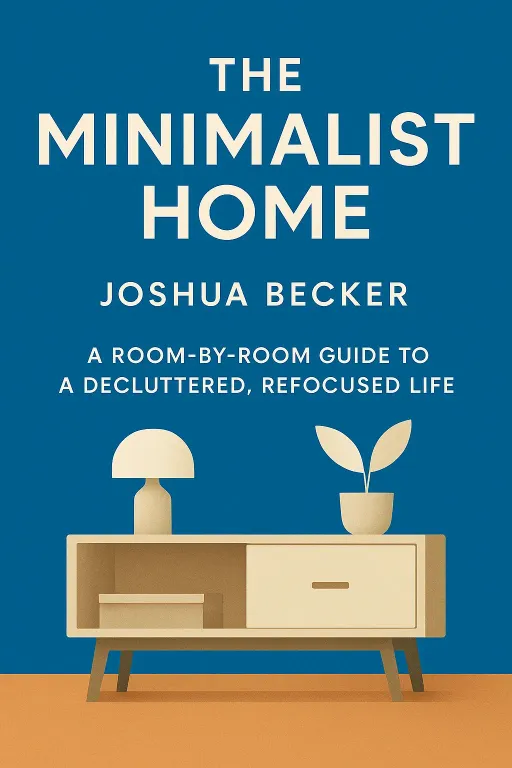
Albert Einstein: Precisely! And that's the radical and liberating idea behind Joshua Becker's book, "The Minimalist Home." I'm your host, Albert Einstein, and with me is 4ryy462bp9, a dedicated educator with a deep interest in mindset and self-care. Welcome!
4ryy462bp9: Thank you for having me. I’m fascinated by this topic. As an educator, I’m always thinking about how our environment shapes our ability to learn and grow. It seems the same must be true for our homes.
Albert Einstein: Exactly. Today we'll dive deep into this from two perspectives. First, we'll explore the philosophy of transforming your home from a place of stress into a true sanctuary. Then, we'll get practical and focus on how decluttering your most personal spaces can become a powerful act of self-care and confidence-building. So, 4ryy462bp9, as someone who helps nurture others, does this idea resonate—that our environment can either support us or drain us?
4ryy462bp9: Oh, absolutely. It’s the foundation of a good classroom, and it’s certainly the foundation of a good life. If your home is chaotic, it’s like trying to think with constant background noise. You can’t find peace, you can’t focus. It drains your energy before the day has even begun.
Deep Dive into Core Topic 1: The Philosophy of Home: From Clutter to Sanctuary
SECTION
Albert Einstein: That's a perfect analogy. Becker starts his book by challenging the very thing we see on television all the time—those home makeover shows. They’re all about adding new furniture, new gadgets, more, more, more. He argues that this rarely leads to lasting happiness. Instead, he offers a beautifully simple definition of minimalism. He says it is, and I quote, "The intentional promotion of things we most value and the removal of anything that distracts us from them."
4ryy462bp9: I love that. It’s not about deprivation, it’s about intention. It reframes the entire process. You’re not just getting rid of stuff; you’re making room for what truly matters. It's a mindset shift, from 'I need to clean' to 'I want to live differently.'
Albert Einstein: You’ve hit the nail on the head. It’s a shift in mindset. And the results can be life-altering. The book shares a wonderful story about a woman named Shannan. For the first decade of her marriage, she and her husband moved several times, and with each move, they accumulated more and more stuff. Their home felt crowded, messy. Shannan felt a constant sense of guilt, and her husband was growing resentful of the clutter. It was creating real tension in their relationship.
4ryy462bp9: That sounds incredibly stressful. The home becomes a source of conflict instead of comfort.
Albert Einstein: Exactly. The turning point for them was a trip to a cabin in Tennessee. The cabin wasn't large, but it felt spacious and comfortable because it only had the essentials. It was a revelation for Shannan. Inspired, she signed up for an online decluttering course and started removing things from their home. Her husband saw the change in her and joined in, clearing out his own garage workshop.
4ryy462bp9: So it became a team effort. That must have been crucial.
Albert Einstein: It was. They worked together, and the transformation was profound. Their home became a sanctuary. But the real change was in them. Shannan wrote that their relationship became more loving. They started bike riding together. She, a self-described introvert, overcame her fear of people and became more outgoing and engaged in her community. She said, "Minimalism isn’t about removing things you love. It’s about removing the things that distract you from the things you love."
4ryy462bp9: That’s beautiful. The decluttering wasn't the goal, but the they used to achieve a bigger goal—reconnecting with each other and with themselves. It’s like setting a clear 'learning objective' for your own life, which is something we do in education. The objective wasn't 'have a clean house,' it was 'have a better life,' and minimalism was the curriculum they used to get there.
Albert Einstein: What a fantastic way to put it! The curriculum for a better life. It’s not about the stuff at all. As Shannan said, "To me, it’s so not about the stuff anymore."
Deep Dive into Core Topic 2: The Practice of Refuge: Decluttering for Rest and Confidence
SECTION
Albert Einstein: Exactly! It's about living differently. And that brings us to the spaces where that change can feel most immediate and personal. Becker argues that our bedrooms should be our ultimate refuge. But for many, they're anything but. They become a storage closet for things that have no home, a place for unfolded laundry, a second office...
4ryy462bp9: And the research backs this up, right? I’ve read that clutter is directly linked to higher cortisol levels, the stress hormone. And a cluttered bedroom can seriously disrupt sleep.
Albert Einstein: You are absolutely correct. One study the book mentions found that the greater a person's clutter, the more likely they are to have a sleep disorder. Your brain doesn’t switch off when it’s surrounded by a sea of to-do lists in physical form. This is where the practice of minimalism becomes a direct act of self-care.
4ryy462bp9: It makes perfect sense. If you want to rest and recharge, you need an environment that signals 'rest' and 'recharge,' not 'chaos' and 'unfinished business.'
Albert Einstein: Precisely. And this leads to another powerful story from the book, about a woman named Nicola in Scotland. She considered herself environmentally conscious, but her bedroom was still overflowing. Clothes, shoes, makeup, books, knickknacks. She’d stay up late, watching TV, feeling unproductive. So she decided to start minimizing, right there in her bedroom.
4ryy462bp9: I can imagine that felt overwhelming at first. Where do you even begin?
Albert Einstein: She started small and found the process became more and more satisfying. She removed clothes she never wore, old magazines, even furniture like extra dressers and chairs that were just collecting dust. As her bedroom became more minimalist and calming, she found she actually to spend time in it. She started reading more and falling asleep faster.
4ryy462bp9: So the environment changed her habits.
Albert Einstein: It created a cascade of positive changes! With better sleep came more energy. With more energy, she wanted to feel fitter. She started going to the gym, eating healthier, and managing her stress in positive ways. And get this—in 2016, she ran a Tough Mudder race for charity, something she said she never would have even considered before. All stemming from the decision to declutter her bedroom.
4ryy462bp9: That's fascinating. It's a chain reaction. A calm space leads to better rest, which gives you the energy to care for your body, which builds confidence. It's a tangible form of self-care that starts with something as simple as clearing your nightstand. It’s not just about aesthetics; it’s about creating the conditions for you to become your best self.
Albert Einstein: And that confidence extends to how we present ourselves to the world. Becker touches on this when he discusses closets. He talks about creating an "iconic wardrobe," not in a high-fashion sense, but in having a simplified set of clothes you love and feel great in. It removes decision fatigue every morning.
4ryy462bp9: That’s another form of self-care! You’re giving yourself the gift of one less decision to make in a day filled with thousands of them. You start the day feeling calm and confident, not stressed and indecisive. It all connects.
Synthesis & Takeaways
SECTION
Albert Einstein: It all connects indeed. So, we've seen that minimalism is, first, a philosophy for intentional living, starting with your 'why,' and second, a practice for well-being, starting in your most personal spaces. It’s a journey from a home that drains you to a home that restores you.
4ryy462bp9: And it’s a journey that seems accessible to everyone. It’s not about having a perfect, sterile-looking house. It’s about creating a home that reflects and supports the life you truly want to live.
Albert Einstein: A wonderful summary. So, for our listeners who are feeling inspired but perhaps a little overwhelmed by the idea of a total overhaul, what’s a good first step?
4ryy462bp9: I think for anyone listening who feels that sense of being overwhelmed, the best advice from the book is to not aim for a massive purge right away. Maybe the first step is just an experiment. What if you just cleared one surface? Your kitchen counter, or your bedside table. Put everything away that doesn't belong there. It might only take five minutes.
Albert Einstein: A small, controlled experiment. I love it.
4ryy462bp9: Exactly. And then just live with that for a day. Experience that small pocket of calm and see how it feels. It's not about perfection; it's about progress. It’s about giving yourself a little bit of breathing room and proving to yourself that a calmer space feels better. That feeling is what will motivate you to continue.
Albert Einstein: That is a beautiful, practical, and deeply kind piece of advice. It’s not a command to throw everything away, but an invitation to discover a little peace. Thank you, 4ryy462bp9, for sharing your wonderful insights today.
4ryy462bp9: It was my pleasure. This has given me so much to think about.
Albert Einstein: And for all of you listening, perhaps the most profound thought is this: the things you own end up owning you. But by letting go, you don’t just gain empty space. You gain freedom.









