

4 Books Unlocking Real Estate Wealth
You don’t need to be rich to invest — just know these rules.
Golden Hook & Introduction
SECTION
Lucas: Okay, you know what’s wild? I read somewhere that Monopoly was originally designed to warn people about the dangers of capitalism. Yet every family game night turns into a ruthless real estate bloodbath. Sophia: Exactly! It’s supposed to be anti-capitalist propaganda, but instead it became the blueprint for every landlord’s origin story. Somewhere between flipping Baltic Avenue and buying Boardwalk, America learned compound interest before compound feelings. Lucas: So, basically, the moral went from “capitalism is bad” to “if you can’t beat the system, collect rent.” Sophia: Pretty much. And that’s where our theme today kicks in — you don’t need to be rich to invest. You just need to understand the game. Real estate isn’t Monopoly money; it’s Monopoly mindset. Lucas: So we’re flipping the table — from luck and privilege to skill and strategy. Sophia: Yes! Because real wealth in real estate isn’t about buying mansions. It’s about learning the rules that rich people already play by — leverage, patience, behavioral control, and seeing value where others see risk. Lucas: So, by the end of this episode, we’ll show that even if you’re starting with Park Place dreams and a Baltic Avenue budget, you can still play to win. Sophia: Exactly. Let’s roll the dice.
Dive into key insights and ideas
SECTION
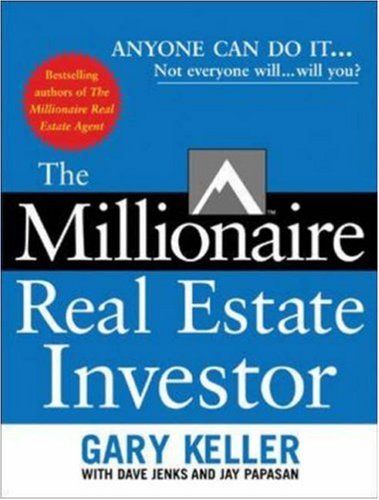
Sophia: Let’s start with the book that lays down the foundation — Gary Keller’s “The Millionaire Real Estate Investor.” It’s basically the constitution of modern real estate thinking. His core argument is simple but radical: wealth is a model, not magic. He interviewed over a hundred successful investors and found patterns — mindset first, systems second, deals third. Lucas: Right, and I like that he doesn’t sell the “quit your job, buy ten houses, live on a yacht” fantasy. He says, build like a business, not a lottery ticket. Which instantly makes me trust him more. Sophia: Exactly. Keller’s point is that anyone can build wealth if they follow disciplined models. You don’t need millions to start; you need clarity on what you’re building toward. That ties perfectly into Brandon Turner’s “The Book on Rental Property Investing.” Turner’s whole thing is demystifying the small investor’s path — from your first duplex to a portfolio. Lucas: Yeah, Turner’s like that friend who shows up in jeans and says, “You don’t need Wall Street — you need spreadsheets.” His “BRRRR” strategy — buy, rehab, rent, refinance, repeat — sounds like a gym routine for your wallet. Sophia: And it works because it’s rooted in cash flow logic. He reframes “wealth” from being about asset price to being about income stream. That connects back to Keller’s first rule: think like a business owner. Every property is a mini-company. Lucas: Which is funny, because when people say “passive income,” it’s rarely passive. You’re managing tenants, repairs, and market shifts. Turner calls it “the best boring path to freedom.” Sophia: Exactly. And here’s where William Poorvu’s “The Real Estate Game” changes the perspective. Poorvu, who taught at Harvard Business School, sees real estate as a multi-player ecosystem — the “players,” the “properties,” the “capital markets,” and the “environment.” He breaks investing into stages like a game board: concept, commitment, development, operation, reward, reinvestment. Lucas: So basically, it’s Monopoly for MBAs. Sophia: Pretty much, but with emotional realism. Poorvu teaches that the key player isn’t the one with the most money — it’s the one who understands timing and psychology. Every deal is a negotiation of perception. Lucas: Speaking of psychology, Daniel Kahneman’s “Thinking, Fast and Slow” slides in like the voice of reason. He’d say most investors lose not because of money, but because of mental shortcuts — heuristics. We buy houses the way we buy shoes: quick, emotional, and often one size too small. Sophia: Yes! Kahneman calls it System 1 thinking — fast, emotional, impulsive — versus System 2, slow and deliberate. Real estate demands System 2 discipline. But people get trapped by cognitive biases — anchoring to a price, overvaluing familiarity, or fearing losses more than they desire gains. Lucas: That’s the “loss aversion” thing, right? The idea that losing $10 hurts more than gaining $10 feels good? Sophia: Exactly. And in property investing, that’s why people freeze. They’ll miss ten great deals to avoid one potential loss. Which leads us to “Real Estate Investment: A Value-Based Approach” by Goddard and Marcum. They argue that smart investing blends math and meaning — fundamentals and foresight. It’s about understanding value creation, not chasing trends. Lucas: So, while Turner’s like, “Get out there and buy,” Goddard and Marcum are like, “Hold up, let’s crunch the numbers.” Sophia: Precisely. They teach the mechanics — net present value, internal rate of return, cap rates — but they also remind us that behind every equation is human behavior. The best investors balance numbers with narrative. Lucas: Which is probably why all five books, though totally different in style, are secretly talking about the same thing: money follows mindset. Sophia: You nailed it. Let’s unpack that. Keller says think like a millionaire before you are one. Turner says act like an investor before you can afford to be one. Poorvu says play the game intelligently even if you’re the smallest player on the board. Kahneman says tame your brain’s biases. Goddard and Marcum say measure what matters. Lucas: So, the pattern’s clear — they’re all teaching control. Control of information, control of behavior, control of emotion. Sophia: And that’s what separates speculation from investment. Speculators chase headlines; investors chase value. Think of the housing bubble: people bought homes not to live or rent, but to flip because their neighbor did. That’s pure System 1 chaos. Lucas: Yeah, like herd mentality in real estate. It’s basically financial FOMO with a mortgage. Sophia: Exactly. Meanwhile, the value-based investor steps back, asks, “Does this property generate sustainable income?” That’s the difference between gambling and strategy. Poorvu would call it reading the field before making the play. Lucas: So, if we blend them all, what’s the grand unified theory? Let me guess: patience? Sophia: Patience, but also iteration. The wealthiest investors iterate like scientists — test, observe, refine. Turner’s first rental isn’t his last; Keller’s millionaire didn’t stop at one deal. They treat failure as data, not disaster. Lucas: Which is refreshing. Because most people think of real estate as this once-in-a-lifetime “buy your dream home” moment. These authors see it as a long game of learning. Sophia: Exactly. And if we borrow from Kahneman again, that’s shifting from the “experiencing self” — who wants immediate pleasure — to the “remembering self” — who values long-term story and growth. The good investor listens to the remembering self. Lucas: So, practical translation time. If I’m the average listener, I’ve got maybe a bit of savings, a stable job, and zero clue where to start. What do I actually do? Sophia: Perfect question. First, adopt Keller’s model: think big, start small, act now. That means you define your wealth target — say, replacing $3,000 a month in expenses with rental income — and reverse-engineer how many properties or deals it would take. Lucas: So that’s the “game plan” part. What’s next? Sophia: Second, follow Turner’s advice — find your first deal that cash flows positively, even modestly. Use his “one percent rule”: monthly rent should be about one percent of purchase price. That filters bad deals fast. Lucas: Okay, so if I buy a $200,000 house, I should aim for $2,000 rent? Sophia: Roughly, yes. It’s a heuristic, not a commandment. Third, bring in Goddard and Marcum’s discipline — calculate net present value and cap rate before emotion. Fourth, apply Poorvu’s framework — understand your players: lender, broker, contractor, tenant. It’s a human network, not just numbers. Lucas: And fifth, apply Kahneman’s humility. Don’t trust your gut blindly; train it. Ask yourself: “Am I making this decision because it feels good, or because the data supports it?” Sophia: Exactly. In other words: emotional diversification. You diversify assets, but you should also diversify your decision styles — part logic, part intuition, part patience. Lucas: That’s deep. So, the secret to wealth is basically behavioral finance meets brick and mortar. Sophia: Yes! And it’s not about how much money you have now; it’s about how consistently you apply these rules. Compound interest rewards discipline more than dollars. Lucas: Which, ironically, brings us full circle to Monopoly. Everyone thinks the goal is to own the board, but the real trick is cash flow and staying in the game long enough to let compounding do its thing. Sophia: Perfect metaphor. In Monopoly, people go bankrupt not because they lack luck, but because they overextend — they buy too fast, too emotionally, and with no liquidity. That’s real life too. If you keep some cash, play slow, and buy value, you win over time. Lucas: So maybe Monopoly isn’t about greed after all. It’s a behavioral economics simulator that rewards patience. Sophia: Exactly. It’s Kahneman in disguise — a slow-thinking, high-reward system for those who don’t get seduced by Boardwalk glamour. Lucas: I’m starting to think the real estate game isn’t about property — it’s about psychology and patience disguised as property. Sophia: Couldn’t have said it better. The real estate “game” is really the game of mastering yourself.
Key takeaways
SECTION
Lucas: So, let’s wrap this up. We started with Monopoly and ended with mindfulness. Somewhere between Boardwalk and behavioral economics, we figured out you don’t need to be rich — you just need to be strategic. Sophia: Exactly. Real estate wealth isn’t gated by income; it’s gated by understanding. Understand your numbers, your biases, your market, and your timeline. That’s the real four-house strategy. Lucas: And maybe the best takeaway is this: stay curious, stay patient, and keep learning. Every property teaches you something — about markets, about people, about yourself. Sophia: Which echoes what Gary Keller says: “Wealth is built a dollar at a time, a deal at a time, a lesson at a time.” Lucas: So, your homework tonight — look around your city or your neighborhood and ask, “Where is value hiding in plain sight?” Because that’s how investors think. They don’t see property; they see potential. Sophia: Play the long game. Think slow, act smart, invest with purpose. And remember: the board’s big enough for everyone who learns the rules. Lucas: This is Aibrary, signing off.