

Stop Fragmenting, Start Synthesizing: The Guide to Interdisciplinary Breakthroughs.
Golden Hook & Introduction
SECTION
Nova: Okay, Atlas, quick game. I'll give you two seemingly random words, and you tell me the first thing that comes to mind that connects them. Ready? "Medicine" and "Artificial Intelligence."
Atlas: Oh, I like that! Hmm... "Medicine" and "AI"... My first thought is definitely "ethical dilemmas."
Nova: Bingo! You just hit the bullseye of today's mind-bending topic. We're diving into the powerful ideas from "Stop Fragmenting, Start Synthesizing: The Guide to Interdisciplinary Breakthroughs." This isn't a book in the traditional sense, but a powerful framework that emerged from extensive research into how the most impactful thinkers and innovators actually operate. It distills wisdom from leading minds, all focused on intentional integration.
Atlas: So, it's less about a single author's perspective and more about a curated, evidence-based approach to connecting the dots? That's really intriguing.
Nova: Exactly. And it perfectly sets the stage for our first core idea: the undeniable power of being a generalist.
The Generalist's Advantage & Lateral Thinking
SECTION
Atlas: The power of a generalist. That's an interesting framing, especially when the world so often pushes us towards hyper-specialization, right? You're told to pick one thing, master it, and stick to your lane.
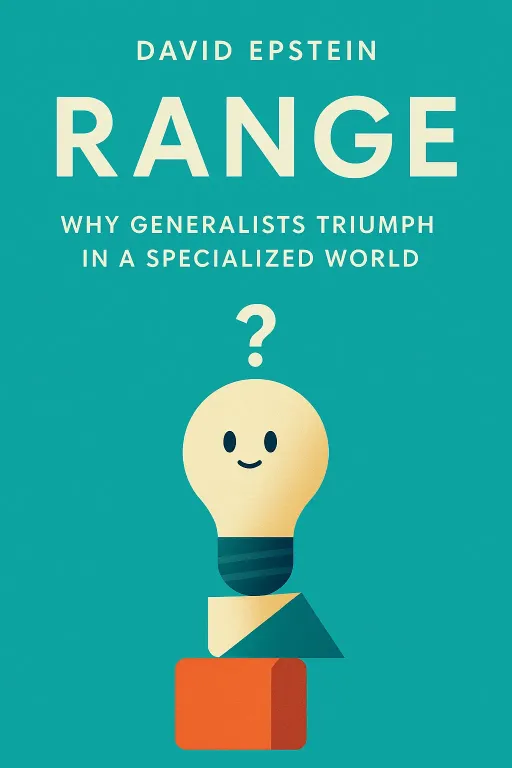
Nova: Precisely. But what if your 'lane' is actually the entire highway? We're drawing heavily from the insights of David Epstein's incredibly influential work, "Range: Why Generalists Triumph in a Specialized World." Epstein makes a compelling argument that diverse experiences across disciplines foster what he calls 'lateral thinking.' It's the ability to apply insights from one domain to another, which is absolutely crucial for complex problem-solving.
Atlas: Okay, but isn't that just a fancy way of saying "jack of all trades, master of none"? For our listeners who are deep in highly technical fields, that might sound almost counter-intuitive.
Nova: That's a great point, and it’s the common misconception. The key here is that for truly 'wicked problems' – those complex, multifaceted challenges where no single discipline holds all the answers – the generalist is not only valuable, they're indispensable. Think about something like designing an ethical AI diagnostic tool for a rare disease. A specialist in machine learning might focus purely on optimizing the algorithms. Their depth is incredible.
Atlas: Right, get the code perfect, make sure it's accurate.
Nova: Exactly. But a generalist, someone with a broader range, would immediately see the need to bring in expertise from medical ethics to consider patient privacy and data bias, from sociology to understand how a diagnosis impacts a family, and even from design thinking to ensure the tool is actually usable by doctors. That interdisciplinary approach prevents unforeseen societal harms and leads to a far more robust, ethical, and ultimately usable solution.
Atlas: Wow. So, for someone like our audience, who naturally sees connections between disparate fields – say, engineering and medicine – this isn't a sign of indecision or lack of focus. It’s actually their superpower?
Nova: Absolutely. Your breadth isn't a distraction; it's your competitive advantage for creating truly impactful solutions. Think of it like a mental Swiss Army knife versus a single, very sharp scalpel. Both are valuable, but for navigating the unpredictable landscape of modern challenges, the Swiss Army knife mind can adapt, connect, and innovate in ways the scalpel simply can't. You’re uniquely positioned to solve problems that specialists can’t even fully define.
Innovation at the Intersections: The Medici Effect
SECTION
Atlas: That makes so much sense, the 'Swiss Army knife mind.' So, how do we intentionally that range? How do we actively connect these dots to create something truly new, not just better? It sounds like there's a next step beyond just diverse interests.
Nova: There absolutely is. This is where we move from just having the diverse building blocks to actually constructing something groundbreaking. We're talking about what Frans Johansson brilliantly termed "The Medici Effect" in his book by the same name: "Breakthrough Insights at the Intersection of Ideas, Concepts, and Cultures." Johansson shows that innovation often explodes at the intersection of different fields. It's not just about having varied perspectives, it's about them.
Atlas: So, it's not enough to be a generalist; you have to be a generalist, actively seeking out those intersections?
Nova: Precisely. And the impact is exponential. Take the invention of the MRI machine, for instance. It didn't emerge solely from the field of medicine. It was a spectacular collision of physicists who understood nuclear magnetic resonance, engineers who could build superconducting magnets, computer scientists who developed the image processing algorithms, and finally, medical doctors who could interpret the images. Each group brought their unique, often siloed, insights to the table.
Atlas: That's incredible. It's not just a medical device; it's a testament to interdisciplinary collaboration.
Nova: Exactly. The unique insights from each domain, when brought together, created a diagnostic tool that utterly revolutionized medicine, offering a non-invasive view inside the human body that no single discipline could have achieved alone. The deliberate effort to form interdisciplinary teams, to force those collisions of ideas, was the catalyst.
Atlas: That's really powerful. So, for our listeners who are already looking towards fields like Biomedical Engineering or Ethical AI in Healthcare – destinations where you're inherently merging disciplines – the 'Medici Effect' isn't just a nice-to-have, it's the way to make real breakthroughs?
Nova: In those fields, it's foundational. Biomedical Engineering lives at the nexus of biology, medicine, and engineering. Ethical AI in Healthcare requires a constant synthesis of technology, medicine, philosophy, sociology, and law. These aren't just 'intersection-rich' fields; they the intersections. The drive that many of our listeners have for impact, for pushing boundaries, is perfectly aligned with this approach. You're not just solving problems; you're creating entirely new solution spaces.
Synthesis & Takeaways
SECTION
Nova: So, bringing it all together, "Range" provides us with the diverse building blocks, the varied experiences and knowledge, while "The Medici Effect" gives us the intentional process, the blueprint for combining those blocks in unexpected ways. Your interdisciplinary path isn't just valid; it's your superpower.
Atlas: That's such a freeing thought. It makes you realize that all those seemingly disparate interests aren't pulling you apart; they're actually building towards something profound and unique. What's one tiny step someone can take this week to start actively synthesizing?
Nova: The best way to start is small and intentional. Dedicate just 15 minutes this week to mind-mapping connections between a recent medical insight you learned and a technological advancement you've read about. Don't censor yourself; just let the ideas collide on paper or in your mind. See what emerges.
Atlas: And trust your unique path. Not everyone sees the world as you do, and that's precisely why you're positioned to make such a unique difference. Embrace that multidisciplinary vision.
Nova: Absolutely. What unexpected connections will you uncover this week? This is Aibrary. Congratulations on your growth!