

Beyond Innovation: How Technology Drives Unintended Social Change
Golden Hook & Introduction
SECTION
Nova: We often cheer for every new gadget, every app promising efficiency. We celebrate the speed, the convenience, the sheer 'progress' of it all. But what if the very things we celebrate are slowly, subtly, eroding the foundations of what makes us human? What if convenience comes with an invisible, profound cost?
Atlas: Oh man, that's a heavy start, Nova! Are you saying our shiny new tech isn't always our friend? Because I just upgraded my phone, and it feels pretty friendly right now.
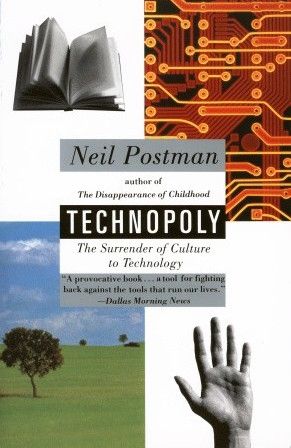
Nova: It absolutely feels friendly, Atlas! And that's precisely the blind spot we're talking about today. We rarely see the hidden costs and profound societal shifts triggered by these advancements. Today, we're diving into this fascinating, and frankly, a bit unsettling, idea through the lens of two incredibly prescient thinkers: Neil Postman, with his seminal work, and Tim Wu, with.
Atlas: Okay, so and. I'm curious, what makes these books so relevant right now? They're not exactly fresh off the press, right?
Nova: You're right, they're not. And that's what makes them even more powerful. Neil Postman, a media theorist, wrote decades ago, but he eerily predicted so many of the digital age's dilemmas. He saw the future of information overload and the erosion of critical thinking long before the internet was a household name. His insights feel more urgent today than ever.
Atlas: Wow, that's actually really inspiring – someone seeing the future before it even arrived.
Nova: Absolutely. And then there's Tim Wu, a legal scholar who has profoundly influenced modern antitrust discussions. His historical analysis in reveals these recurring patterns of power consolidation in information industries. He's been instrumental in showing us how those historical cycles are now being re-examined in the context of today's tech giants. So, we're looking at a philosophical critique from Postman and a historical-economic analysis from Wu, both converging on this idea that technology is not just a tool; it's a force that reorders our values and institutions.
Atlas: That makes me wonder, if technology is reordering our values, what exactly does that look like in practice? How does it actually happen?
When Technology Becomes Tyrant: Understanding Technopoly
SECTION
Nova: That’s the perfect question, Atlas, because it brings us right to Postman’s central argument: the rise of what he called 'Technopoly.' He wasn't just talking about a society technology, but a society by it. In a Technopoly, technology dictates culture, replacing traditional values with efficiency, technical expertise, and measurable data. It's like our tools don't just help us achieve goals; they start defining what as a goal.
Atlas: So, what exactly does it mean for technology to 'dictate culture'? Can you give an example of how it undermines critical thinking in our daily lives? Because I think most people still feel like they're in control.
Nova: Oh, they absolutely feel in control, and that's the insidious nature of it. Think about social media algorithms. The intended benefit is connecting people and delivering relevant content, right? The 'efficiency' here is maximizing engagement – keeping you scrolling, clicking, reacting. But what's the hidden cost? The algorithm prioritizes highly emotional, often polarizing content because it generates more engagement. So, the cause is an algorithm designed for efficiency; the process is the creation of filter bubbles and echo chambers where you're constantly fed information that confirms your existing biases.
Atlas: That sounds rough, but… what's the outcome?
Nova: The outcome is a profound undermining of critical thinking and democratic discourse. When we’re constantly exposed to a curated, often extreme, version of reality, our ability to engage with differing viewpoints, to sift through nuance, to even disagreement, diminishes. Postman argued that when information becomes detached from meaning, context, and wisdom, we lose our capacity for independent judgment. We become excellent at processing data, but poor at making sense of the world.
Atlas: That's why it feels like we're constantly shouting past each other online. But wait, isn't there an upside to instant information access? I mean, we can learn anything, anytime.
Nova: Absolutely, there’s an immediate, undeniable upside to vast information access. But Postman would argue that this instant access often comes at the expense of depth and context. It’s like drinking from a firehose – you get a lot of water, but you might drown. The value of knowledge shifts from deep understanding to mere information retrieval. And when efficiency becomes the ultimate value, things like patience, contemplation, and nuanced debate—which are crucial for critical thinking—start to feel… inefficient.
Atlas: I guess that makes sense. We're optimized for quick hits, not deep dives. That's a powerful and a bit alarming thought. But if technology is dictating our values, who's pulling the strings? Is it just the algorithms, or is there a human element to this control?
The Master Switch: The Hidden Hand of Information Monopolies
SECTION
Nova: That's a perfect segue, Atlas, because it brings us beautifully to Tim Wu's. While Postman dives into the philosophical shift, Wu gives us the historical blueprint for how control over information becomes consolidated. He traces this recurring cycle in virtually every major information industry.
Atlas: So, it's not just technology does, but owns it. What's an historical example of this 'master switch' being thrown? Because I think of the internet as inherently open.
Nova: You're right to think of the internet as open, and that's often how these cycles begin. Wu shows that information industries consistently start with open, decentralized innovation, often driven by enthusiasts and small players. But then, almost inevitably, they move towards consolidation, where a few powerful entities gain control over both content and distribution. Think of the early radio industry in the US. It started as a hobbyist's paradise, a wild west of amateur broadcasters.
Atlas: Really? I always thought radio was just… big corporations.
Nova: Exactly! That's the consolidation at work. The cause was a combination of economic pressures and the desire for order. As radio's potential grew, larger corporations like RCA and NBC began to see its immense commercial value. The process involved aggressive acquisitions, patent pooling, and lobbying for favorable regulations. They essentially bought up the key technologies and broadcasting licenses, creating powerful networks.
Atlas: So, they just… scooped it all up?
Nova: Precisely. And the outcome? Instead of a decentralized medium for diverse voices, radio became a highly centralized, commercially driven platform. A few powerful gatekeepers controlled what was broadcast, influencing public opinion and shaping cultural narratives. The 'master switch' was thrown, and they controlled the flow of information.
Atlas: Wow, that sounds eerily familiar with today's tech landscape. Are we just reliving history with Big Tech, then? Because it feels like a few companies have a lot of control over our digital lives.
Nova: That's the chilling parallel Wu draws. He argues that we're seeing this cycle play out again with modern digital platforms. Initially, the internet was this incredibly open, democratic space. But now, whether it's social media platforms, search engines, or e-commerce giants, we see immense consolidation of power. These companies control not just the platforms but also the data, the algorithms, and effectively, the flow of information that shapes public discourse. The deep question from our main content about unexamined trade-offs between progress and deeply held societal values becomes incredibly sharp here.
Atlas: You're right. It's not just about the convenience of these platforms, but the power they wield over what we see and believe.
Synthesis & Takeaways
SECTION
Nova: Exactly. When you put Postman and Wu together, you get a powerful, almost unsettling, picture. Postman warns us that technology subtly shifts our values towards efficiency, potentially eroding critical thinking and democratic discourse. Wu then shows us the historical pattern of how control over the very channels of information flow gets consolidated into the hands of a powerful few.
Atlas: So, if 'progress' can have these hidden costs and the 'master switch' keeps getting thrown, what's our role as engaged citizens? How do we even begin to examine these trade-offs when they're so subtle and ingrained in our daily lives?
Nova: That's the crucial question, Atlas. It starts with awareness. Recognizing that technology is never neutral, that it always carries a bias. We need to cultivate a deep sense of media literacy, understanding not just the content we consume, but it's delivered to us and controls that delivery. We have to actively question the trade-offs: Is this new convenience worth the erosion of privacy? Is instant information worth the degradation of nuanced public debate?
Atlas: That's a call to action for everyone to be more than just passive consumers, but active participants in shaping our technological future. It means demanding accountability from platforms and policymakers, and critically assessing the values embedded in the technologies we adopt.
Nova: Precisely. The trade-off isn't just about convenience versus privacy; it's about the fundamental structures of our society, our democratic values, and ultimately, what it means to be human in an increasingly technocratic world. Understanding these dynamics is the essential first step to reclaiming our agency and ensuring that progress truly serves humanity, rather than redefining it.
Atlas: That's a profound thought to sit with. We need to be more deliberate about the future we're building.
Nova: Absolutely. This is Aibrary. Congratulations on your growth!