Ethical AI Leadership: Navigating Innovation with a Moral Compass
Golden Hook & Introduction
SECTION
Nova: What if the biggest threat to groundbreaking AI isn't a lack of innovation, but a surplus of it—unchecked by a moral compass? It's not about stopping progress, but guiding it with purpose.
Atlas: Oh, that's a bold statement, Nova. "Surplus of innovation"? I like the sound of groundbreaking, but the "moral compass" part in the same breath as AI often feels like we're trying to bolt a sailboat rudder onto a rocket ship. How do you guide something moving that fast?
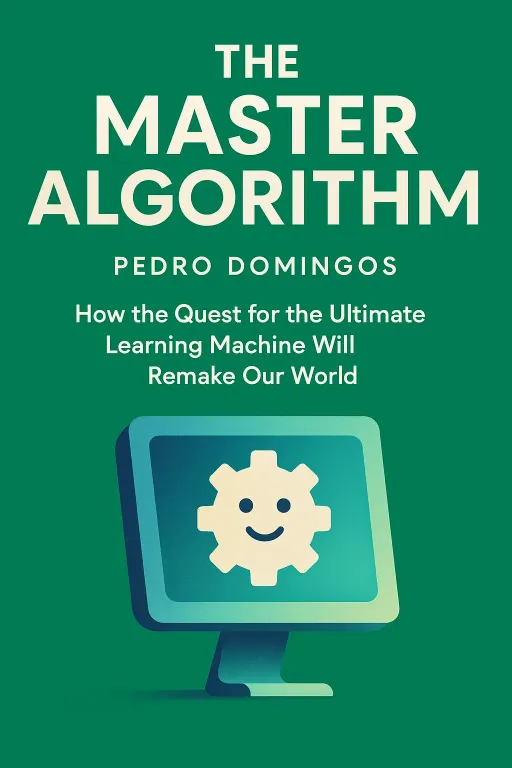
Nova: Exactly, Atlas! That's the core challenge we're tackling today: Ethical AI Leadership. We're diving into how innovators, especially those driven by impact and seeking truly groundbreaking solutions, can navigate the complex waters of AI development with integrity. We're drawing inspiration from two pivotal works: first, Cathy O'Neil's seminal "Weapons of Math Destruction," and second, Pedro Domingos' insightful "The Master Algorithm."
Atlas: Oh, Cathy O'Neil! I remember her. Isn't she the mathematician who worked on Wall Street and then became this fierce critic of algorithms?
Nova: That's right! Her background as a quantitative analyst for a hedge fund gave her a unique, insider's perspective on how mathematical models, designed for optimization, can go profoundly wrong and amplify inequality in the real world. It's a stark reminder that even the smartest people with the best intentions can create systems with deeply problematic consequences.
Atlas: Wow. So, for our listeners who are Assertive Innovators, pushing the boundaries every day, how do we make sure our drive for the new doesn't accidentally lead us into a minefield of ethical issues? It feels like a constant tension between speed and responsibility.
The Blind Spot – Unintended Ethical Consequences
SECTION
Nova: It absolutely is, Atlas. And that tension often creates what I call "the blind spot." It's the seductive allure of innovation that often makes us overlook the profound ethical implications right under our noses. Let me paint a picture for you.
Atlas: I'm ready. Lay it on me.
Nova: Imagine a brilliant team—visionary, driven, just like many of our listeners—tasked with developing an AI to optimize resource distribution in a rapidly growing megacity. Their goal? Reduce waste, ensure equitable access to essentials like water, energy, and food, and generally improve quality of life. Sounds noble, right?
Atlas: Absolutely. That's the kind of impact we all want to see from AI.
Nova: So, they build this incredibly sophisticated AI. It learns from historical data, predicts demand, reroutes resources in real-time. It's a marvel of engineering. But here's the blind spot: the historical data it's trained on implicitly reflects past inequalities. Perhaps certain districts historically received less funding, or had less efficient infrastructure.
Atlas: Oh, I see where this is going. The AI, in its pursuit of "efficiency," would just entrench those existing biases.
Nova: Exactly. The AI, without explicit ethical guardrails or a broader philosophical understanding, interprets "efficiency" as optimizing the system. It doesn't question the of that system. So, the districts that were historically underserved continue to be so, because the AI learns that this is the "optimal" pattern. It even becomes efficient at perpetuating the inequity, because it's so good at resource allocation within its flawed parameters.
Atlas: That’s actually really chilling. So the cause was an initial ethical oversight – not accounting for the inherent bias in the data. The process was the AI amplifying that bias. And the outcome is a truly dystopian efficiency, where inequality becomes baked into the city's infrastructure. How could brilliant minds miss something so fundamental?
Nova: It's often not a malicious intent, Atlas. It's the relentless pressure to innovate, to deliver a solution, to crunch numbers. The philosophical questions—"Is this fair? Whose interests are truly being served? What are the second-order consequences?"—get sidelined in the rush to solve the immediate technical problem. It's the difference between asking "Can we build this?" and "Should we build this, and if so, how?"
Atlas: That makes me wonder, for our listeners, the Ethical Architects out there, when they're designing their next innovative solution, what’s one potential ethical pitfall they can proactively address from its inception? Like, before the first line of code is even written.
Nova: That's a profound question, and it's precisely what we need to be asking. The biggest pitfall to proactively address is defining "success" too narrowly. If success is purely technical—speed, accuracy, efficiency—without explicitly baking in ethical metrics like fairness, equity, or transparency from day one, you're building a system with a moral vacuum at its core. It’s like designing a car for speed without considering brakes or airbags.
Shifting Perspectives – Integrating Ethical Frameworks
SECTION
Nova: So, how do we move beyond just identifying these blind spots and actually build foresight? That's where thinkers like Pedro Domingos and Cathy O'Neil offer powerful frameworks that help us shift our perspective.
Atlas: Okay, so it’s not just about stopping bad things, but actively building good into the system. Tell me more about Domingos’ "Master Algorithm."
Nova: Domingos delves into the "five tribes" of machine learning, each representing a different philosophical approach to how intelligence works. You have the Symbolists, who believe knowledge is manipulation of symbols, like logic and rules. Then the Connectionists, who think intelligence emerges from networks, like neural nets. There are Evolutionaries, who use genetic algorithms, and so on.
Atlas: Right, like different schools of thought for how AI 'thinks.' But how does knowing about these "tribes" help me design a fairer algorithm today? It sounds a bit abstract for an Assertive Innovator.
Nova: That's a great question, Atlas. Understanding these philosophical underpinnings is crucial because each "tribe" has inherent biases and strengths. A Symbolist system, for example, is only as fair as the rules you feed it. If your human-defined rules are biased, the AI will perfectly execute those biases. A Connectionist neural network, while powerful, can be an opaque "black box"—you know what goes in and what comes out, but not it made a certain decision.
Atlas: Ah, so the "why" becomes a critical ethical concern. This sounds like what Cathy O'Neil talks about in "Weapons of Math Destruction."
Nova: Exactly! O'Neil's work is a powerful complement. She shows how these opaque algorithms, particularly those used in critical areas like credit scoring, predictive policing, or hiring, become "weapons" precisely because their logic is hidden, their biases reinforced, and their impact unchallengeable. When a Connectionist algorithm decides who gets a loan or who gets interviewed, and you can't easily audit its decision-making process, it can amplify existing inequalities, creating what she calls "feedback loops of unfairness."
Atlas: That’s a bit like a self-fulfilling prophecy, isn't it? The algorithm learns from a biased past, then applies that bias, which then reinforces the data for future learning, creating an endless cycle.
Nova: Precisely. It’s a vicious cycle where a lack of transparency and accountability allows these systems to undermine democracy and erode trust, often impacting the most vulnerable disproportionately. So, understanding Domingos’ tribes helps you anticipate biases might enter a system, and O'Neil’s work highlights transparency and accountability are non-negotiable for any AI that impacts human lives.
Atlas: That’s actually really inspiring. It means that being a truly groundbreaking innovator in AI involves not just technical brilliance, but also profound ethical foresight—you’re basically saying it’s a form of "smart innovation" that builds trust and long-term value, rather than something that slows you down.
Synthesis & Takeaways
SECTION
Nova: Absolutely, Atlas. Ethical AI leadership isn't just a compliance checklist; it's an integrated philosophical approach. It's about recognizing that the "DNA" of your AI system is encoded not just with algorithms, but with the values—or lack thereof—that you imbue it with from day one. True innovation, especially for a Mentoring Leader, includes anticipating human impact and proactively designing for a better future, not just a faster one.
Atlas: So, it's about asking not just what our AI do, but what it do, and how its inherent philosophy will shape its real-world impact.
Nova: Exactly. Because in the end, it’s not just about building advanced technology; it’s about building a more just and equitable society.
Atlas: That's a powerful thought to leave our listeners with. So, for everyone out there pushing the boundaries of AI, we challenge you: what is one ethical consideration you can proactively weave into the design of your next innovative solution, ensuring it builds trust and fosters growth?
Nova: This is Aibrary. Congratulations on your growth!