

Books You Need to Read about Your Brain
The Lie That Keeps You Sane
SECTION
Daniel: You ever tear the apartment apart looking for your phone—only to realize you’ve been holding it the whole time? Sophia: Oh, I’ve done worse. I once called my phone to find it. It rang. In my hand. Daniel: That’s peak self-betrayal. You literally gaslit yourself. Sophia: Right? But here’s the thing. That moment—where your brain confidently insists reality is one thing when it’s not—that’s not a glitch. It’s the system working as designed. Daniel: So… my brain is supposed to lie to me? Sophia: Constantly. Every second, your brain is predicting the world, not perceiving it. It fills in gaps, filters, edits, smooths edges. You think you’re seeing reality, but you’re actually watching a movie your brain is producing in real time. Daniel: So I’m the unreliable narrator of my own life. Sophia: And that’s what we’re talking about today—how the mind deceives you, and how, once you understand its tricks, you can start steering them. Daniel: Okay, but if my brain’s lying to me, how do I even trust myself enough to fix it? Sophia: That’s the paradox. You can’t stop the lies—but you can learn the pattern. And once you see the pattern, the illusion loses power. Daniel: So today, we’re basically confronting the world’s most charming con artist—our own brains. Sophia: Perfectly put. We’ll travel from Dean Burnett’s The Idiot Brain, where we laugh at our own absurd design flaws… to Oliver Sacks’s The Man Who Mistook His Wife for a Hat, where those flaws turn uncanny. Then we’ll meet Ethan Kross and Nicole Vignola to decode the mind’s private chatter and how to rewire it. And finally, Norman Doidge will show us that the brain isn’t just a liar—it’s also a shapeshifter. Daniel: So today’s story isn’t about how our brains betray us—it’s how they adapt, right? Sophia: Welcome to “Mind Games.”
The Trickster Inside Your Head
SECTION
Daniel: All right, so start me here—why does the brain need to lie in the first place? Sophia: Survival. Your brain’s not built to tell the truth; it’s built to keep you alive. Dean Burnett, in The Idiot Brain, says it’s like a bureaucratic office that’s been overworked for millions of years. It cuts corners. It files half your memories wrong. It makes confident guesses. And it runs on whatever caffeine equivalent neurons use. Daniel: So it’s a lazy civil servant that just wants to make it to Friday. Sophia: Exactly. Take perception. You don’t actually see everything in front of you. Your eyes scan the world in quick jumps—saccades—and your brain stitches the frames together like a movie editor filling gaps. You think you’re seeing a stable world, but it’s a hallucination of stability. Daniel: Which explains why I can stare straight at the fridge and still not find the mustard. Sophia: Classic. The “inattentional blindness” trick. Your brain predicts what should be there. If mustard isn’t in the mental script, you literally won’t see it. Daniel: So basically, I’m living inside my brain’s PowerPoint presentation. Sophia: And most of the slides are made up. Daniel: Great. Now I trust nothing. Sophia: Hold that thought. Because Oliver Sacks takes this to another level in The Man Who Mistook His Wife for a Hat. He describes a patient—Dr. P—who lost the ability to recognize faces. He’d look at his wife and, sincerely, reach for her head thinking it was his hat. Daniel: Wait, that’s real? Sophia: Completely real. The part of his brain that recognized visual patterns worked fine—but the link to emotional meaning, to personhood, was severed. He saw, but didn’t know. Sacks wrote, “He saw but did not perceive.” Daniel: That’s eerie. Like the soul is missing from the picture. Sophia: And here’s the kicker—Sacks used those cases to show that what we call “normal perception” is just a very delicate illusion of integration. The brain is guessing what things are while trying to save energy. It’s improvising. Daniel: So we’re all living on the edge of chaos, and the only difference between me and Dr. P is that my guesses mostly line up with reality. Sophia: The line between sanity and error isn’t a wall—it’s a fog. Daniel: So this “lying brain” thing—it’s not just random. It’s efficiency. It’s survival. Sophia: Yes. Every deception serves a purpose. Your brain edits out “truth” to protect your focus, your energy, your identity. It’s a storyteller, not a scientist. Daniel: Which… kind of makes sense. Because total truth would be unbearable. Every sound, every flicker, every thought—raw reality would fry the circuits. Sophia: The lie keeps you sane.
The Voice That Won’t Shut Up
SECTION
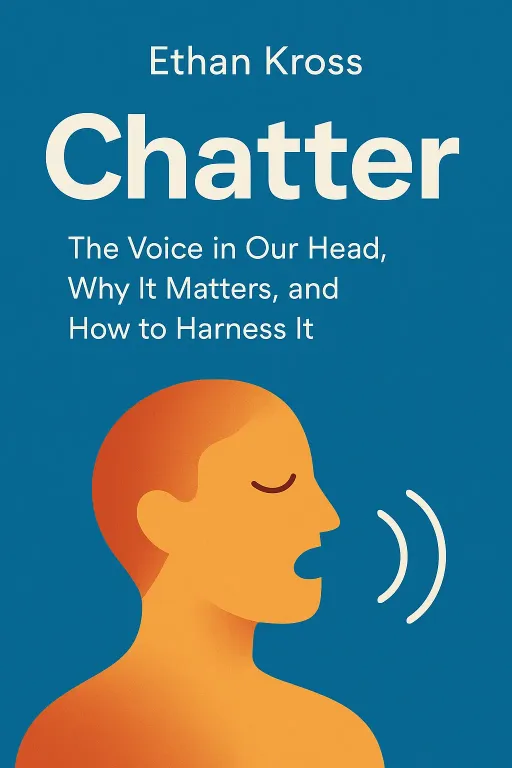
Daniel: Okay, so far, my brain’s a visual scam artist. But what about the voice in my head? The one narrating this exact conversation right now? Sophia: Ah, the eternal roommate. Ethan Kross calls it chatter. The inner monologue that gives advice, criticizes, worries, rehearses arguments from three years ago. Daniel: Yeah, that guy. He never shuts up. Sophia: Kross says the paradox is that the same mental voice that helps us plan also traps us. When we talk to ourselves from inside the experience, we drown in emotion. But when we talk to ourselves like an observer—use our name, take a step back—it flips the brain’s perspective network. You literally cool the emotional circuits. Daniel: So instead of, “I’m freaking out,” it’s, “Hey, B, you’re stressed, but you’ve done harder things. Sophia: That tiny shift moves the brain from survival mode to control mode. Daniel: That’s wild. It’s like emotional aikido. Sophia: And Nicole Vignola builds on that in Rewire. She’s a neuroscientist who trains athletes and CEOs. Her argument: thoughts aren’t just ephemeral—they’re physical. Every rumination, every worry, is a circuit rehearsing itself stronger. Daniel: So my negative thinking is like doing reps at a gym I don’t want to be in. Sophia: But the beauty of neuroplasticity—what Doidge later expands on—is that you can train new ones. Vignola says to pair cognitive reframing with body signals: breathe slower, visualize success, then act quickly before the brain defaults. You’re using action to rewrite wiring. Daniel: Give me an example. Sophia: Sure. A sprinter she coached kept freezing at the start gun—his mind replayed every past false start. Instead of fighting the fear, they rewired the association. They paired the sound of the gun with a deep exhale and a micro-smile—teaching the brain: “Gun equals release, not panic.” Within weeks, the circuit flipped. Daniel: So it’s not “think positive,” it’s “teach your neurons a new story.” Sophia: The brain doesn’t learn by logic—it learns by repetition and reward. Daniel: Which makes sense. Because if the brain’s been lying all this time, maybe we can feed it better lies. Constructive ones. Sophia: That’s a beautiful way to put it. You can’t stop your mind’s storytelling—but you can edit the script.
The Great Rewrite
SECTION
Daniel: Okay, but here’s the thing I keep coming back to. If the brain’s so flexible, why does change still feel so impossible? Sophia: Norman Doidge wrestles with that exact question in The Brain That Changes Itself. He tells the story of a woman named Cheryl who lost her sense of balance—her brain’s vestibular system went offline after an inner-ear infection. She couldn’t stand without falling. Daniel: That sounds terrifying. Sophia: It was. But Doidge’s team built a simple device—a small plastic strip with sensors that sent balance information to her tongue. It sounds insane, right? Daniel: You’re telling me she learned to balance… through her tongue? Sophia: That's right. Over time, her brain rewired—repurposed the sensory data—and she regained her ability to walk. Eventually, even without the device. Her brain learned a new language of equilibrium. Daniel: That’s… miraculous. Sophia: It is. But Doidge’s point is that this isn’t a miracle—it’s potential. The same neuroplasticity that traps us in bad habits also sets us free. The brain that lies can also reinvent the truth. Daniel: So we’re not just victims of our wiring—we’re editors. Sophia: Yes. Every time you catch a cognitive bias, every time you name a fear, every time you speak to yourself kindly instead of cruelly—you’re running new code. Daniel: You know, this changes how I think about self-awareness. It’s not a mirror—it’s a steering wheel. Sophia: That’s the essence of it. We spend our lives trying to find “truth,” but the real skill is learning the art of conscious illusion. Using your brain’s shortcuts in your favor. Daniel: So we live in the matrix—but at least we can learn to bend the code. Sophia: Exactly. The goal isn’t to stop your brain from lying. It’s to know which lies help you live better. Daniel: That’s… unexpectedly comforting. Like, if my brain’s a trickster, at least it’s a trickster that loves me. Sophia: That’s how Oliver Sacks saw it. The mind’s errors are part of its genius. Our confusion, our forgetfulness, our illusions—they’re not bugs. They’re adaptations for meaning. Daniel: And maybe that’s the greatest trick of all—that the lies are what make life feel coherent. Sophia: And once you see that, the game changes. You stop fighting your brain. You start playing with it. Daniel: So, in the end, it’s not about fixing the brain. It’s about partnering with it—learning its rhythms, respecting its illusions, and using them to build something closer to truth. Sophia: Or at least, a version of truth you can live in—and love. Daniel: This is Aibrary, signing off.