

Mastering the AI Supply Chain: From Silicon to Solution
Golden Hook & Introduction
SECTION
Nova: We often talk about AI as this cutting-edge, almost mystical frontier, a realm of pure innovation. But what if the secret to truly mastering the AI supply chain isn't just about chasing the next shiny algorithm, but about looking back, way back, to the industrial revolution?
Atlas: Hold on, Nova. Are you suggesting that the future of AI, a field synonymous with rapid, often chaotic advancement, lies in the dusty blueprints of old factories? That sounds a bit out there, honestly, for anyone trying to build high-density AI designs right now.
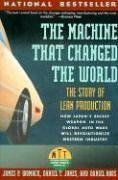
Nova: It absolutely sounds counterintuitive, doesn't it? But hear me out. Today, we're pulling profound insights from two seminal works that, on the surface, have nothing to do with artificial intelligence: "The Machine That Changed the World" by James Womack, Daniel Jones, and Daniel Roos, and "Factory Physics" by Wallace Hopp and Mark Spearman. "The Machine That Changed the World," for instance, wasn't just a book; it was a global phenomenon that popularized Lean principles derived directly from Toyota's manufacturing prowess. It fundamentally reshaped global industry and proved that efficiency could be a competitive advantage, not a compromise.
Atlas: Right, I'm familiar with the impact of Lean. It's legendary for streamlining processes. But applying that kind of rigorous, almost mechanical thinking to something as fluid and evolving as AI development... that's where my curiosity, and I imagine many of our listeners' curiosity, really gets piqued. How do these seemingly disparate worlds connect?
Nova: They connect by reframing our entire perspective. We're going to explore how we can transform AI infrastructure into a highly efficient, value-driven production system.
Lean Principles: Streamlining the AI Value Chain
SECTION
Nova: So, let's start with "The Machine That Changed the World" and its core message: Lean. Lean is all about relentlessly identifying and eliminating waste to maximize value for the customer. Think about a traditional car factory, then think about an AI development pipeline. For our listeners who design, scale, and build complex systems, this isn't just about coding; it's about a value chain from data ingestion to model deployment.
Atlas: That makes sense. I can definitely see how someone building an AI factory would want to eliminate waste. But what does 'waste' even look like in the context of AI? It's not like we're piling up defective car parts in the corner.
Nova: Exactly! It's not physical waste, but it's just as costly. We're talking about things like redundant data preprocessing steps, models sitting idle waiting for validation, inefficient retraining cycles, or deployment feedback loops that take weeks instead of days. Every one of these is a form of waste, a non-value-added step that slows down the delivery of an intelligent solution.
Atlas: Oh, I know that feeling. For anyone who's ever waited three days for a model to retrain only to find a minor bug, or for data to propagate through a pipeline, that resonates deeply. That's not just wasted time; it's wasted compute, wasted human effort, and delayed impact.
Nova: Precisely. Lean principles encourage us to map out the entire value stream for a critical AI model deployment. Visualize every step, from the moment you conceive a new feature to when it's fully operational in production. Then, relentlessly question each step: is this adding value to the end user? Can it be done faster, with fewer resources, or eliminated entirely?
Atlas: So you're saying, treat the AI development process less like a series of isolated experiments and more like a continuous flow, a river where every eddy or blockage is a problem to be solved?
Nova: That’s a great analogy, Atlas. And the beauty of Lean is it's not just about speed; it's about quality embedded at every step, about continuous improvement, and empowering the teams closest to the work to identify and solve problems. It's about 'pull' – only building what's needed, when it's needed, driven by demand, not speculative pushes. This shifts the mindset from 'let's build a model' to 'let's deliver intelligence as efficiently as possible.'
Atlas: I can see how that would appeal to someone who builds and scales complex systems. It’s about more than just the output; it’s about the efficiency of the entire system. But what about when things go wrong? AI is inherently probabilistic. How do you apply Lean to something that isn't perfectly predictable?
Factory Physics: Engineering Predictability in AI Operations
SECTION
Nova: That's a brilliant question, and it brings us perfectly to our second book, "Factory Physics." While Lean helps you identify and eliminate waste, Factory Physics gives you the scientific, mathematical tools to the remaining flow, even with variability. It's the engineering discipline behind managing manufacturing systems.
Atlas: Okay, so if Lean is the philosophy, Factory Physics is the rigorous science? For someone who designs complex systems, I'm always looking for those underlying scientific principles. But what does 'throughput,' 'inventory,' and 'cycle time' mean when we're talking about an AI factory instead of, say, a semiconductor plant?
Nova: Excellent question. Let's break it down. 'Throughput' is straightforward: how many AI models or features can you successfully deploy per unit of time? 'Cycle time' is how long it takes for a single AI model or feature to go from conception to deployment. And 'inventory' – this is where it gets interesting – in an AI factory, inventory isn't just physical goods. It's your data waiting to be processed, your trained models awaiting deployment, your feature sets in various stages of refinement.
Atlas: So, if I understand correctly, if I have a massive backlog of unlabelled data, that's 'inventory'? And if my data scientists are waiting for GPU clusters to free up, that's a bottleneck affecting 'cycle time' and 'throughput'?
Nova: Exactly! Factory Physics provides the mathematical models to understand how variability in one part of your AI pipeline – say, inconsistent data quality or unpredictable compute availability – impacts the entire system. It helps you quantify bottlenecks, optimize resource allocation, and even predict lead times for new AI features with surprising accuracy. It moves you from intuition-based capacity planning to data-driven, scientific management.
Atlas: Wow. That's a game-changer for anyone trying to scale AI reliably. It’s about making the unpredictable, predictable, not by eliminating randomness, but by understanding its impact and managing it scientifically. It feels like moving from being an artisan to being an architect of an AI production line.
Nova: It absolutely is. It's about engineering reliability and predictability into your AI operations. Think about optimizing your high-density GPU architecture. Factory Physics gives you the framework to analyze how adding more compute, or changing scheduling algorithms, will genuinely impact your model training cycle times and overall throughput. It's about understanding the relationships between variability, utilization, and performance.
Atlas: That resonates with the strategic mindset. It's not just about having the best AI models, but about having the most efficient, predictable for producing and deploying them. It's about seeing the factory, not just the components.
Synthesis & Takeaways
SECTION
Nova: So, when you combine Lean principles for identifying and eliminating waste with the scientific rigor of Factory Physics for managing the remaining flow, you fundamentally transform your approach to AI. You stop seeing AI development as a series of isolated, bespoke projects and start viewing it as a sophisticated, engineered production system.
Atlas: That's a profound shift, especially for those of us driven by mastery and pushing technological boundaries. It implies that future-proofing AI isn't just about the next algorithm, but about the foundational engineering of its delivery. It’s about building a reliable, scalable 'AI factory.'
Nova: Precisely. And the beautiful part is, these aren't just abstract theories. The application of these principles means faster deployments, higher quality models, and ultimately, more value delivered to your users, reliably and at scale. It’s about trust your vision, because you see what others miss.
Atlas: So, for our listener who’s ready to apply this, what’s the single most impactful tiny step they can take right now to start transforming their AI operations into this kind of efficient factory?
Nova: The most impactful tiny step is to map out the value stream for a critical AI model deployment. Pick one important model, trace its journey from raw data to production, and identify every non-value-added step and potential bottleneck you can eliminate. Just observing the current state is often the biggest eye-opener.
Atlas: That makes perfect sense. It’s about carving out that time, protecting that knowledge deep-dive, and trusting that vision to see the factory within the chaos. It's about starting small but thinking systemically.
Nova: Absolutely. It’s about taking control of your AI destiny, one optimized process at a time.
Nova: This is Aibrary. Congratulations on your growth!