

The Psychology of Excellence: From Sports to Work
Golden Hook & Introduction
SECTION
Nova: Forget work-life balance for a moment. What if your work your sport, and you're just not playing to win?
Atlas: Whoa, that's a bold opening, Nova! Are you suggesting my Monday morning sprint to the coffee machine is akin to an Olympic relay? Because if so, I think I just set a personal best.
Nova: Well, Atlas, maybe not quite the Olympics, but the underlying psychology? Absolutely. Today, we're diving into the fascinating world where the mental strategies of elite athletes and the practices of talent hotbeds aren't just for the pros. We're talking about how they can radically transform your professional life.
Atlas: So, you're telling me the secrets to crushing my next big project aren't just about more caffeine and longer hours? That's going to resonate with anyone who’s ever felt stuck in a professional rut. I’m intrigued.
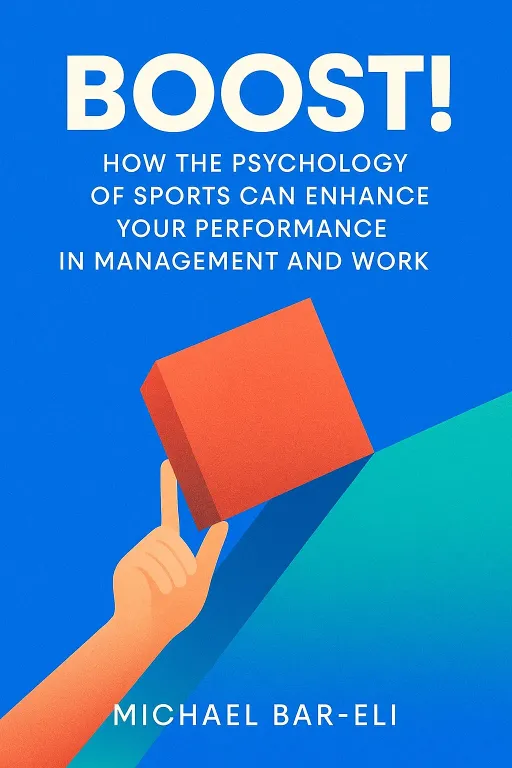
Nova: Exactly! We're pulling insights from two incredible books today. First, Michael Bar-Eli's "Boost! How the Psychology of Sports Can Enhance Your Performance in Management and Work," which is a goldmine from a renowned sports psychologist who's worked with everyone from Olympic teams to corporate executives, giving him a truly unique lens on performance under pressure.
Atlas: A sports psychologist for executives? That’s not a combination you hear every day.
Nova: And then, we'll explore Daniel Coyle's "The Little Book of Talent," where Coyle spent years immersing himself in what he calls "talent hotbeds" – places like obscure tennis academies or music schools that consistently churn out world-class performers. He's not just theorizing; he's showing us the actual mechanics of how talent is built, not just born.
Atlas: I love that. For our listeners who are constantly seeking growth and aiming to make a tangible impact, this sounds like a blueprint. So, where do we start this high-performance journey?
The Athlete's Mindset in the Workplace
SECTION
Nova: We start with Bar-Eli and the athlete's mindset. He argues that the psychological principles governing peak performance in sports—things like managing pressure, maintaining intense focus, and building cohesive teams—are not just transferable, but for success in the business world.
Atlas: Okay, but wait, are we really comparing a high-stakes boardroom negotiation to, say, a penalty shootout? It sounds a bit dramatic, and honestly, sometimes work feels more like a marathon than a series of sprints.
Nova: That’s the beauty of it, Atlas. It's not about the drama, it's about the. Think about a tennis player before a crucial serve at match point. Their heart rate is through the roof, the crowd is roaring, everything hinges on this one moment. How do they perform? They have rituals. They visualize the serve, they control their breathing, they clear their mind of distractions.
Atlas: I can definitely relate to that feeling of high pressure before a big presentation or a client pitch. My mind usually just races with all the things that could go wrong.
Nova: Precisely. Bar-Eli suggests we can adapt these athletic rituals. Before a big meeting, instead of just reviewing notes, imagine you're stepping onto the court. Take a few deep, controlled breaths. Visualize yourself delivering your message clearly and persuasively. This isn't just fluffy thinking; it's actively managing your physiological and psychological arousal.
Atlas: So, if I'm facing a tough negotiation, I shouldn't just like an athlete, I should something specific? Like, maybe I have a pre-negotiation power pose in the bathroom?
Nova: Exactly! A subtle, personal ritual. It could be a specific phrase you repeat, a particular way you organize your notes, or even just taking a deliberate walk around the block beforehand. The point is to create an anchor, a mental trigger that shifts you into a focused, high-performance state, just like an athlete does. It’s about being present and intentional.
Atlas: That’s a great way to put it. I imagine a lot of our listeners, especially those in fast-paced environments, often jump from one high-pressure task to another without that mental reset.
Nova: And it’s not just about individual performance. Bar-Eli also delves into team cohesion. Think about a championship basketball team. They don't just have individual stars; they have an almost telepathic understanding, a shared purpose, and unwavering trust. How do they build that? Through relentless practice together, open communication, and a collective commitment to a common goal.
Atlas: That’s actually really inspiring. I imagine a lot of our listeners, especially those leading teams or navigating complex projects, struggle with fostering that kind of deep trust and shared purpose in a competitive corporate environment, where individual metrics can sometimes overshadow collective success.
Nova: It’s about creating a culture where feedback is a gift, not a judgment, and where everyone understands their specific role in achieving the 'win'. Just like a coach designs plays, a manager can design team interactions to build that same level of cohesion and mutual reliance. It transforms a group of individuals into a true unit.
Cultivating Talent: The Hotbed Approach
SECTION
Nova: Speaking of building skills and improving performance, that brings us beautifully to Daniel Coyle's work in "The Little Book of Talent." He spent years studying these "talent hotbeds" around the world—places that somehow, almost magically, produce an outsized number of exceptional performers.
Atlas: Okay, so it's not just about "practice makes perfect," it's you practice? I mean, we all put in hours, but not everyone becomes a virtuoso. I’m curious, what makes these hotbeds so special? Is it just intense training, or something more?
Nova: It's definitely more. Coyle discovered it’s not about innate genius, but specific, repeatable practices. One of the biggest takeaways is the concept of "deliberate practice." It's not just mindlessly repeating a task. It's about pushing yourself to the edge of your ability, making mistakes, and then getting immediate, precise feedback to correct those mistakes.
Atlas: So, like a musician breaking down a complex piece, practicing a few notes over and over until they're perfect, rather than just playing the whole song badly?
Nova: Exactly! Or a software developer debugging code line by line, understanding why an error occurred, rather than just restarting the program. These hotbeds create environments where making mistakes is seen as crucial for learning, not as a failure. They foster a culture of constant, incremental improvement.
Atlas: Can you give an example of a "hotbed" and what makes it so special? I’m thinking of places where kids are just naturally gifted, but Coyle's saying it's more about the environment.
Nova: Coyle highlights places like Spartak Tennis Club in Moscow, which produced multiple top-ranked players despite limited resources. What they had was an intense focus on fundamental skills, a culture of immediate and often blunt feedback from coaches, and a powerful sense of belonging and shared purpose among the students. They saw each other as rivals but also as a community pushing each other to excel.
Atlas: That makes me wonder, how does this connect to intrinsic motivation? Because pushing boundaries and constantly facing your weaknesses can be incredibly draining. Where does the drive come from to keep doing that day in and day out?
Nova: That's the other critical piece. These environments cultivate intrinsic motivation. The joy of mastery, the desire to improve for its own sake, the deep satisfaction of overcoming a challenge. It's not about external rewards, but an internal fire. The hotbeds create what Coyle calls "ignition"—a spark of passionate engagement that makes the hard work feel like a game, not a chore.
Atlas: That’s a powerful distinction. For someone who's driven by progress, understanding how to ignite and sustain that internal fire, especially through challenging tasks, is invaluable.
Synthesis & Takeaways
SECTION
Nova: So, what we're really seeing here is a powerful synergy. Bar-Eli shows us the mental game—how to manage ourselves under pressure, focus our attention, and build winning teams. Coyle then reveals the mechanics of how to actually the skills and talent to perform at that elite level, through deliberate practice and fostering intrinsic motivation. They're two sides of the same coin of excellence.
Atlas: That's a profound connection. For someone who's constantly trying to refine their professional path and optimize their workflow, this offers a dual strategy: manage your mind like an athlete, and build your skills like a master craftsman.
Nova: Absolutely. It’s about approaching your career not as a static job, but as an evolving sport, a craft you are constantly refining.
Atlas: So, if I'm a pragmatic learner looking for actionable insights, what's the one tiny step I can take this week to start applying this?
Nova: Here's your tiny step: pick one mental strategy from a sport you admire—maybe a pre-game ritual for focus, a way to handle a bad call, or how a team celebrates a small win—and adapt it to a challenging professional task this week. See what happens.
Atlas: I love that. It’s simple, concrete, and immediately applicable. And it makes me think about your deep question: How might viewing your career challenges as a 'game' or 'competition' unlock new levels of performance and enjoyment?
Nova: It’s a complete reframing, isn’t it? It shifts the narrative from obligation to opportunity, from dread to dynamic engagement. It allows for strategy, for resilience, for the joy of incremental progress.
Atlas: Honestly, that sounds like a total game-changer for anyone feeling stuck or just looking for that next level. Reframing the challenge as a game, celebrating those small wins, even when it's just getting through your inbox... that's powerful. It injects purpose and even a bit of fun into the grind.
Nova: And that's what excellence is about: not just achieving, but enjoying the journey of becoming.
Atlas: A truly insightful conversation, Nova. Thank you.
Nova: My pleasure, Atlas. Always a joy to explore these profound ideas with you.
Nova: This is Aibrary. Congratulations on your growth!









