

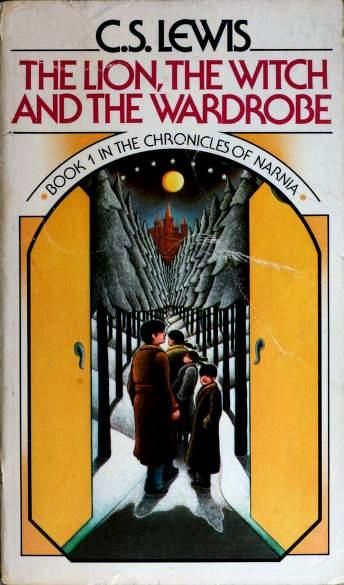
The Wardrobe in the Classroom: Unlocking Moral Imagination with C.S. Lewis
Golden Hook & Introduction
SECTION
Nova: What if the greatest tool for teaching critical thinking and moral courage isn't a textbook, but a dusty old wardrobe filled with fur coats? Think about that first step Lucy Pevensie takes into the snow. It is not just a transition into a magical land; it is a leap into a cognitive sandbox where the stakes of right and wrong are beautifully, safely real. Today, we are going to tackle this classic book from three different angles. First, we will explore how Narnia acts as a safe space for cognitive and emotional development. Then, we will dissect Edmund's betrayal through the lens of modern behavioral psychology. And finally, we will look at Professor Kirke's brilliant masterclass in teaching critical thinking to children. Welcome to the show! I am Nova, and joining me today is William, a veteran educator with over a decade of experience in shaping young minds. William, it is so wonderful to have you here with us.
William: Thank you, Nova. It is an absolute pleasure to be here. You know, when we look at a book like The Lion, the Witch and the Wardrobe, it is easy to dismiss it as just a charming children's fantasy. But as an educator, I see it as a profound pedagogical text. C. S. Lewis was, after all, an academic, and he understood deeply how stories scaffold our understanding of the world. I am really excited to dive into how these narrative structures can help us understand the learning process today.
Nova: Oh, I love that word, scaffolding! It is like Lewis is building a temporary structure to help us climb up to these massive, complex ideas. And it all starts with that physical transition, right? The wardrobe itself. Let us paint that picture. Lucy is exploring this massive, empty house on a rainy day. She finds a room with nothing in it but a large wardrobe. She steps inside, smelling the sharp scent of mothballs, feeling the soft, heavy fur coats brushing against her face. She takes a step further, expecting to feel the hard wooden back of the wardrobe, but instead, she feels something soft and cold and powdery. She looks down, and she is standing in the middle of a snowy wood at nighttime, with a lamppost glowing in the dark. It is such a sensory, immersive moment.
William: It really is. And from a developmental perspective, that wardrobe is the ultimate metaphor for what we call a cognitive sandbox. In education, we talk a lot about creating safe spaces for learning. When Lucy steps through those coats, she enters a space where she can explore high-stakes concepts like fear, empathy, and justice, but without the immediate, devastating real-world consequences. It is the literary equivalent of play-based learning. Children need these imaginative spaces to test out their emotional and ethical boundaries.
Nova: That is so true! And the very first person she meets is Mr. Tumnus the Faun. He is this gentle, nervous creature who is carrying an umbrella and some parcels. But we quickly find out he is in a terrible moral dilemma. He has promised the White Witch that if he ever finds a human, he will kidnap them and hand them over to her. Yet, as he spends time with Lucy, playing his flute and sharing tea, he realizes he cannot do it. He confesses to her, crying, and decides to risk his own life to save her. Talk about a heavy introduction to moral complexity for a young child!
William: Exactly. Mr. Tumnus is not a villain, but he is caught in a system of fear. For Lucy, this is her first real lesson in empathy and moral choice. She does not just see a monster; she sees a flawed individual making a difficult, courageous decision. In education, we refer to this as the development of moral imagination. By reading about Lucy's empathy for Tumnus, young readers are practicing how to put themselves in someone else's shoes. They are learning that doing the right thing often comes with a cost, but it is a cost worth paying.
Deep Dive into Core Topic 1
SECTION
Nova: It is like Lewis is giving us a safe environment to practice being brave. But what is fascinating is how the other children react when Lucy comes back and tells them about Narnia. They do not believe her! Especially Edmund, who is just so cynical and spiteful. He sneers at her and tells her she is just making up silly games. We see this huge contrast between Lucy's open-minded curiosity and Edmund's closed-off skepticism.
William: Yes, and that contrast is highly educational. Lucy represents epistemic openness, a willingness to accept new evidence even if it challenges her current worldview. Edmund, on the other hand, represents a kind of defensive skepticism. He is insecure, so he uses cynicism as a shield. In a classroom setting, we see this all the time. Some students are terrified of being wrong or looking foolish, so they shut down new ideas before they can even process them. Edmund's skepticism is not intellectual; it is emotional.
Nova: That is a really deep insight, William. It is not that Edmund is too smart to believe in Narnia; it is that he is too insecure to let himself experience the wonder of it. And that insecurity makes him incredibly vulnerable, doesn't it? Which leads us right into his own journey into the wardrobe. He follows Lucy in, mostly to tease her, but he gets lost and ends up meeting the White Witch herself.
William: And that meeting is a masterclass in psychological manipulation. The Witch does not use brute force to win Edmund over. She uses his own unmet emotional needs, and, of course, a very specific kind of sensory temptation.
Nova: Oh, the Turkish Delight! Let us talk about that. The Witch is riding in this magnificent sledge, wrapped in white furs, looking beautiful but cold. She sees Edmund shivering in the snow, and she offers him a warm drink and a sweet treat. She drops a single drop of red liquid from a small bottle into the snow, and instantly, it turns into a beautiful, round box tied with green silk ribbon. Inside is the most delicious Turkish Delight Edmund has ever tasted. Each piece is sweet and light, covered in powdered sugar, and as he eats it, he wants more and more. He cannot think of anything else.
William: This is such a powerful representation of the dopamine loop of instant gratification. In modern psychology, we talk about how easily our brains can be hijacked by short-term rewards. The Turkish Delight is not just candy; it is a symbol of anything that promises quick comfort at the expense of our long-term well-being. For Edmund, who feels overshadowed by his older brother Peter and misunderstood by his sisters, the Witch's attention and the sweet taste of the candy are intoxicating. She feeds his ego by telling him he is clever and handsome, and she promises him that he will be a king one day, and his siblings will be his servants.
Nova: It is so chilling how easily he falls into that trap! He is so consumed by the desire for more Turkish Delight and the promise of power that he is willing to betray his own family. He promises to bring his brother and sisters to her castle, even though we, the audience, can see clearly that the Witch is dangerous and evil.
William: It is a classic case of cognitive dissonance. Edmund knows, deep down, that something is wrong. He can see that the Witch is cruel, but his desire for the reward is so strong that he rationalizes his behavior. He tells himself that she is probably nice after all, and that his siblings are just being mean to him anyway. In education, we see this when students get caught in negative behavior loops. They make a bad choice, and instead of admitting it, they double down and justify it because the alternative, admitting they were wrong, is too painful for their ego.
Nova: So, how do we help an Edmund? Because in the book, Edmund's betrayal leads to a terrible situation where he realizes the Witch is actually a monster who turns people to stone and has no intention of giving him Turkish Delight or making him a king. He ends up cold, wet, and miserable, being dragged along as a prisoner. It is a complete collapse of his fantasy.
William: This is where the concept of restorative justice comes in, and it is one of the most beautiful parts of the book. When Edmund is finally rescued and brought to Aslan's camp, he has to face the consequences of his actions. But Aslan does not publicly shame him. Instead, they have a long, private walk together. We do not know exactly what they say, but when they return, Aslan brings Edmund to his siblings and says, "Here is your brother, and there is no need to talk of what is past."
Nova: That line always brings a tear to my eye! It is so incredibly moving. No need to talk of what is past.
William: It is a profound pedagogical lesson. If we want learners to grow and recover from their mistakes, we have to allow them a path back to community. If we permanently label a student as a troublemaker or a traitor, they will live up to that label. Aslan's grace gives Edmund a clean slate, which allows him to rebuild his identity. He goes from being Edmund the traitor to Edmund the Just, a wise and fair king. He needed that restorative conversation to heal.
Deep Dive into Core Topic 2
SECTION
Nova: That is a beautiful connection, William. It shows that learning is not just about acquiring facts; it is about character development and emotional growth. But before we get to that redemption, there is this amazing scene back in the real world that I think you, as an educator, must absolutely love. It is when Peter and Susan are so worried about Lucy's sanity that they go to speak with the owner of the house, Professor Kirke.
William: Oh, the Professor Kirke scene is absolute gold! It is a masterclass in critical thinking and epistemic trust. Peter and Susan are convinced that Lucy is either lying or losing her mind because she keeps insisting Narnia is real, while Edmund denies it. They expect the Professor to agree with them and maybe call a doctor. But instead, the Professor sits them down and uses pure, cold logic to challenge their assumptions.
Nova: Yes! He asks them a series of questions. He says, "How do you know Lucy's story is not true?" And they say, "Well, Edmund says it isn't." And the Professor replies, "And which of the two is the more reliable? Is Lucy a liar, or is she generally truthful?" They have to admit that Lucy is incredibly honest, while Edmund is often spiteful and untruthful.
William: Exactly. The Professor presents them with a logical trilemma, which is a classic philosophical tool. He says there are only three possibilities. Either Lucy is mad, or she is telling lies, or she is telling the truth. Since they know she is not mad, and they know she does not tell lies, they must logically assume, until they have evidence to the contrary, that she is telling the truth. It is a brilliant way of showing how our biases can blind us to logical conclusions. Peter and Susan were relying on what they thought was common sense, that magical lands do not exist, but they were ignoring the actual evidence of their sister's character.
Nova: It is so funny because the Professor ends the conversation by saying, "Logic! Why don't they teach logic at these schools?" I bet you have wanted to scream that sometimes, William!
William: More times than I care to admit, Nova! But seriously, what the Professor is doing here is validating the child's perspective. He is teaching Peter and Susan to have epistemic humility. Just because something seems impossible based on your current experience does not mean it is automatically false. We have to look at the credibility of the source and the consistency of the character. In an age of misinformation, this is one of the most critical skills we can teach our students. How do we evaluate claims? How do we separate our emotional biases from logical analysis?
Nova: And it is also about trusting children, right? The Professor does not dismiss Lucy just because she is young. He takes her character seriously. That must be so important in mentorship.
William: It is everything. If a student feels that their reality is constantly being dismissed by adults, they will stop sharing their thoughts. They will shut down. By validating Lucy's honesty, the Professor keeps the door open for communication. He models what a true mentor should be, someone who guides through inquiry rather than authority.
Deep Dive into Core Topic 3
SECTION
Nova: It is so interesting how all these pieces fit together. We have the wardrobe as this safe sandbox for emotional exploration, Edmund's journey showing us the psychology of temptation and the power of restorative growth, and the Professor showing us how to apply rigorous logic to our lives. It is like Lewis is giving us a complete toolkit for intellectual and moral maturity.
William: He really is. And what is fascinating is how these three elements interact. You cannot have true moral courage, like Lucy and eventually Edmund show, without the critical thinking skills modeled by the Professor. And you cannot develop those critical thinking skills without a safe space, like the wardrobe, to test them out. They are deeply interconnected.
Nova: They really are. And we see the culmination of this when the children finally become kings and queens of Narnia. They do not just rule; they grow into these wise, mature adults who govern with justice and mercy. They have fully integrated all these lessons. But then, years later, they are hunting the White Stag through the woods, and they stumble back upon the lamppost. They do not quite remember what it is, but they feel this pull toward it. They push through the branches, and suddenly, they are pushing through fur coats again, and they tumble out of the wardrobe back into the empty room. They are children again, and no time has passed in the real world.
William: That is such a poignant ending. It speaks to the idea that our educational and moral journeys are not always linear. We step into these intense learning experiences, we grow, we transform, and then we have to bring that transformed self back into our everyday, mundane lives. The challenge for the Pevensie children, and for any learner, is how to hold onto the wisdom they gained in Narnia when they are back in the ordinary world of school and rainy days.
Nova: That is a beautiful way to look at it. The learning does not stay in Narnia; it changes who they are in the real world. They carry that royal dignity back with them.
William: Exactly. True education is transformative. It is not just about memorizing facts for a test; it is about changing the way you see yourself and your responsibility to others. When Edmund goes back to school, he is no longer the spiteful bully. He is someone who has known grace and now practices justice. That is the real magic of the story.
Synthesis & Takeaways
SECTION
Nova: Well, we have covered some incredible ground today, William. From the snowy woods of Narnia to the psychology of the classroom, it has been an amazing journey. Let us do a quick recap of the key insights we have uncovered. First, we talked about the wardrobe as a cognitive sandbox, a safe space where we can explore complex emotional and moral ideas through play and story. Then, we looked at Edmund's struggle with temptation and the beautiful model of restorative justice that allowed him to grow from his mistakes. And finally, we explored Professor Kirke's lesson in logic and epistemic trust, showing us how to challenge our biases and validate the curiosity of others.
William: It really highlights how literature can be a powerful partner in education. For anyone listening today, whether you are a teacher, a parent, or just a lifelong learner, I think there are two really actionable takeaways here. First, be the Professor. When someone, especially a young person, comes to you with a wild idea or a perspective you do not understand, do not dismiss it out of hand. Apply logic, look at their character, and validate their curiosity. And second, create wardrobes. Build safe spaces in your homes, classrooms, and workplaces where people can make mistakes, experience grace, and practice moral courage without fear of permanent condemnation.
Nova: Create wardrobes. I love that so much! What a beautiful, encouraging note to end on. Thank you so much, William, for sharing your incredible insights and your passion for education with us today. This has been a truly magical conversation.
William: Thank you, Nova. It was an absolute joy.
Nova: And to all our listeners out there, thank you for stepping through the wardrobe with us today. We hope this conversation has sparked your imagination and given you some fresh ideas to bring into your own world. Until next time, keep exploring, keep learning, and remember, the door to Narnia is always open if you know where to look. Bye for now!