

Personalized Podcast
Golden Hook & Introduction
SECTION
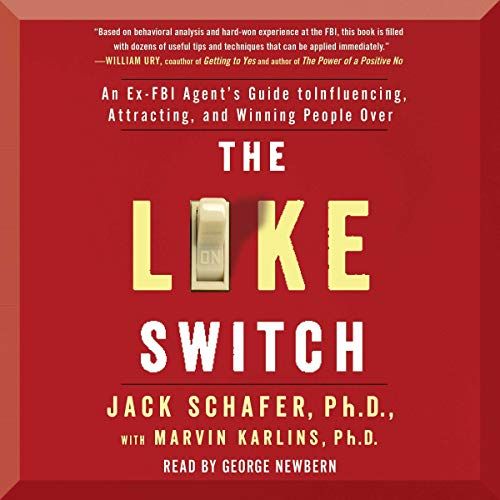
Nova: Imagine walking into a room and getting someone to trust you before you even open your mouth. It sounds like magic, or maybe some kind of superpower, but for FBI special agents, it is a pure, repeatable science. Today, we are cracking open Jack Schafer’s groundbreaking book, The Like Switch, to reveal how behavioral analysis can transform your social and professional life. And we are so excited to have Mike Kensley Landais with us today. Mike is a finance student who is incredibly passionate about the analytical side of human relationships. Welcome, Mike.
Mike Kensley Landais: Thanks, Nova. It is great to be here. You know, when we think about finance, we usually think about numbers, spreadsheets, and market data. But at the end of the day, finance is a relationship business. Trust is the ultimate currency. If people do not trust you, the numbers do not even matter. That is why I was so fascinated by Jack Schafer’s work. He takes something as abstract as friendship and breaks it down into a system we can actually understand and apply.
Nova: Oh, I love that concept of trust as the ultimate currency. That is so true. And today, we are going to tackle this book from two different angles. First, we will explore the Friendship Formula, which is this beautiful, mathematical-like way of looking at how we build comfort with others through silent signals. Then, we will dive into the art of elicitation, showing you how to use empathy statements to make others feel deeply understood so they naturally open up to you. It is going to be such a fun ride.
Deep Dive into Core Topic 1
SECTION
Nova: So, Mike, let us start with this incredible story from the book. Jack Schafer was an FBI counterintelligence officer, and his job was to recruit foreign spies to work for the US. Now, you can imagine, you cannot just walk up to a foreign diplomat and say, hey, want to spy for us? That gets you kicked out of the country, or worse. So, Schafer had to target a diplomat we will call Charles. Charles was known to be highly suspicious. Instead of approaching him directly, Schafer used what he calls the Seagull strategy.
Mike Kensley Landais: Right, the Seagull strategy. It sounds like a stealth mission, and in a way, it was. But it was entirely passive.
Nova: Exactly. Schafer found out where Charles did his grocery shopping. He would go to the same grocery store, and whenever Charles walked down an aisle, Schafer would walk down the same aisle. He did not speak to him. He did not even make eye contact at first. He just made sure he was in Charles’s line of sight. Over weeks, Schafer gradually increased his presence. He would stand closer. He would read a book nearby. He was just there. And eventually, Charles was the one who turned to Schafer and said, hello. The FBI agent did not have to say a single word to break down the initial barrier.
Mike Kensley Landais: That is what Schafer calls the Friendship Formula, right? Proximity plus Frequency plus Duration plus Intensity. When you look at it, it is like a compound interest formula for relationships. Proximity is just being in the same space. Frequency is how often you see them. Duration is how long you spend with them over time. And Intensity is how deeply you engage when you finally do.
Nova: Yes. It is so elegant, isn't it? We think of friendship as this mysterious spark, but Schafer shows it is often just a function of these four variables. By managing proximity and frequency first, without any pressure, Schafer made himself a familiar, safe presence in Charles’s life. Our brains are wired to view unfamiliar things as potential threats. By just being there, over and over, Schafer moved himself from the threat category to the safe category.
Mike Kensley Landais: It is brilliant because it removes the friction of the first interaction. In finance, we talk about risk mitigation. By establishing proximity and frequency first, you mitigate the social risk of the approach. But Schafer also talks about how we signal safety nonverbally during this process. He mentions three major friend signals. The eyebrow flash, the head tilt, and the genuine smile.
Nova: Oh, the eyebrow flash is my absolute favorite. It is that quick, fraction-of-a-second upward movement of the eyebrows. We do it completely subconsciously when we see someone we like or when we want to show we are approachable. If you walk down the street and someone flashes their eyebrows at you, your brain instantly registers them as friendly. But if they stare at you with unmoving eyebrows, your brain goes, uh-oh, predator.
Mike Kensley Landais: It is amazing how much our bodies speak before our mouths do. And then there is the head tilt. Schafer explains that tilting your head to either side exposes the carotid artery, which is a major vulnerability. Subconsciously, when we tilt our head, we are telling the other person, I trust you enough to expose my neck. I am not a threat. It is a sign of comfort.
Nova: It really is. And when you combine that with a genuine smile, what scientists call a Duchenne smile, it is incredibly powerful. A Duchenne smile is the one that crinkles the corners of your eyes. It is almost impossible to fake. People can spot a fake, polite smile from a mile away because the eyes do not move. But a real smile sends a massive wave of safety and warmth.
Mike Kensley Landais: I was thinking about how this applies to a young professional or a college student. When you walk into a networking event or even a new classroom, the temptation is to look down at your phone, or look very serious and busy. But that actually sends foe signals. It says, do not approach me, I am closed off. If we consciously practice the eyebrow flash, a slight head tilt, and a genuine smile, we are essentially lowering the transaction costs of starting a conversation. We are making it easy for others to invest their social capital in us.
Nova: That is such a great way to put it. Lowering the transaction costs of connection. We are literally signaling to the other person's subconscious that we are safe and open. And once that foundation of safety is built, we can transition to actual conversation. But even then, the FBI has a very specific way of talking to people to build deep rapport quickly, which brings us to our next big topic.
Deep Dive into Core Topic 2
SECTION
Nova: Once you are talking to someone, how do you get them to share their thoughts, their feelings, or even their secrets without making them feel like they are being interrogated? In the intelligence world, this is called elicitation. It is the art of gathering information in such a gentle, natural way that the other person has no idea they are giving it to you. They just think they are having a wonderful conversation.
Mike Kensley Landais: This is where the psychology gets really deep. In finance, when we do client discovery, we need to understand a client's risk tolerance, their financial goals, and their fears. But if you sit them down and ask, what are your biggest financial fears? They might freeze up or give you a very generic, safe answer. They do not want to look vulnerable. Elicitation is about bypassing those defensive walls.
Nova: Exactly. Because direct questions can feel like an audit or an interrogation. They put people on the defensive. One of the most powerful tools Schafer shares to bypass this is the Empathy Statement. An empathy statement is where you keep the focus entirely on the other person by reflecting their emotional state back to them. You do not talk about yourself. You do not offer advice. You just mirror what they are feeling.
Mike Kensley Landais: Right. And the structure is usually something like, so, you feel like, or, it sounds like you are. It is not about saying, I know how you feel, because that actually shifts the spotlight back to you. It is about keeping the spotlight on them.
Nova: Yes. Let us look at a real-world example. Imagine a colleague comes to you and says, I have been working on this project for three weeks, and my manager just told me we have to scrap the whole thing and start over. A typical response might be, oh, that sucks, the same thing happened to me last year, let me tell you about it. But that steals the spotlight. An empathy statement would be, wow, it sounds like you are feeling incredibly frustrated and undervalued right now.
Mike Kensley Landais: That is so simple, but it is incredibly powerful. When you say that, the colleague immediately feels heard. Their brain releases dopamine, which makes them feel good, and they naturally want to tell you more. They might say, yes, exactly, and let me tell you what else happened. You did not have to ask a single probing question. They just opened the floodgates because you created a safe space for them.
Nova: It is like magic, but it is just basic human biology. We all have a deep, fundamental need to be understood. When you give someone the gift of feeling understood, they will naturally gravitate toward you. Schafer also talks about the Third-Party Statement, which is another brilliant elicitation technique. This is where you make a statement about a third party to see how the person reacts, without putting them on the spot.
Mike Kensley Landais: Oh, I loved that concept. Can you explain how that works in practice?
Nova: Absolutely. Let us say you want to know if a colleague is planning to leave the company, but you cannot just ask them directly because that is too risky. Instead, you might say, I heard that some people in the industry are starting to look for new opportunities because of the current market conditions. You are not asking them about their plans. You are making a general statement about a third party. If they are happy and planning to stay, they might say, really? I think our company is doing great. But if they are thinking about leaving, they might say, yeah, it makes sense, a lot of people are feeling restless lately. They reveal their own thoughts by reacting to the third-party scenario.
Mike Kensley Landais: That is incredibly clever. It is like a soft probe. You are testing the waters without committing any resources or risking a direct confrontation. In finance, we could use this when discussing investment strategies. Instead of asking a client, are you scared of a market crash? You could say, many investors are feeling anxious about the recent volatility and are looking for safer assets. Their reaction will tell you exactly where their risk tolerance lies, without making them feel embarrassed about being anxious.
Nova: Yes. It is all about protecting the other person's ego and making them feel comfortable. When we use these techniques, we are not manipulating people. We are actually showing a deep level of empathy and respect for their emotional state. We are choosing to communicate in a way that feels safe and rewarding for them.
Mike Kensley Landais: I think that is a really important distinction, Nova. Some people might hear FBI techniques and think, oh, this is about manipulation or tricking people. But when you read the book, you realize it is actually about extreme empathy. It is about paying close attention to the silent signals people are sending, and responding in a way that makes them feel valued and heard. It is about building authentic bridges.
Nova: I could not agree more, Mike. It is about shifting our focus from ourselves to the other person. When we walk into a room, instead of thinking, how can I make people like me? We should be thinking, how can I make the people in this room feel comfortable and valued? That is the real like switch.
Synthesis & Takeaways
SECTION
Nova: This has been such an eye-opening conversation. We have covered how the Friendship Formula of proximity, frequency, duration, and intensity can help us systematically build trust. And we have looked at how nonverbal cues like the eyebrow flash and head tilt signal safety, while empathy statements and elicitation techniques allow us to build deep verbal rapport. Mike, as we wrap up, what is your biggest takeaway from all of this?
Mike Kensley Landais: My biggest takeaway is that social skills are not just something you are born with or not. They are a set of tools that can be studied, practiced, and mastered, just like financial modeling or any other professional skill. If you are analytical, you can use that to your advantage by observing these patterns in human behavior and consciously practicing them.
Nova: I love that. It is so encouraging. It means anyone can become a master of rapport if they are willing to practice. So, let us leave our listeners with a challenge. What is one practical thing they can do today to flip the like switch in their own lives?
Mike Kensley Landais: I would challenge everyone to try the Eyebrow Flash and Empathy challenge. Tomorrow, when you walk into your office, your classroom, or even your local coffee shop, consciously give someone an eyebrow flash and a genuine smile as you greet them. And then, in your very first conversation of the day, try to use at least one empathy statement. Instead of offering advice or talking about yourself, just reflect their emotional state back to them. See how they react. I think you will be amazed at how quickly the dynamic shifts.
Nova: Oh, that is a fantastic challenge. I am definitely going to do that tomorrow. Thank you so much, Mike, for sharing your wonderful, analytical insights with us today. You have given us a whole new way to look at the currency of human connection.
Mike Kensley Landais: Thank you, Nova. It was an absolute pleasure.
Nova: And thank you to all our listeners. Remember, the next time you want to build a connection, just flip the switch. Until next time, keep shining, keep connecting, and we will talk to you soon.