

Declutter Your Space, Clear Your Mind: The Path to a Peaceful Home
Golden Hook & Introduction
SECTION
Nova: Atlas, I'm going to throw out two words, and I want your immediate, unfiltered reaction. Ready?
Atlas: Oh man, hit me. I'm braced.
Nova: Decluttering.
Atlas: Oh, that's a tough one. My gut reaction is usually a mix of "Oh, I do that" and a deep, existential sigh. It feels like a mountain I'm just perpetually staring at, you know? Like a chore that never truly ends.
Nova: I totally know that feeling. It's an obligation, right? A never-ending battle against... stuff. But what if I told you that the act of decluttering isn't just about neatness? What if it's actually a profound journey into your own mind, a path to genuine inner peace?
Atlas: Okay, now you've got my attention. Inner peace? From sorting through old socks? That sounds like a magic trick I want to learn. I imagine a lot of our listeners, especially those of us juggling demanding careers and trying to maintain some semblance of order, feel that constant low hum of anxiety from a chaotic space.
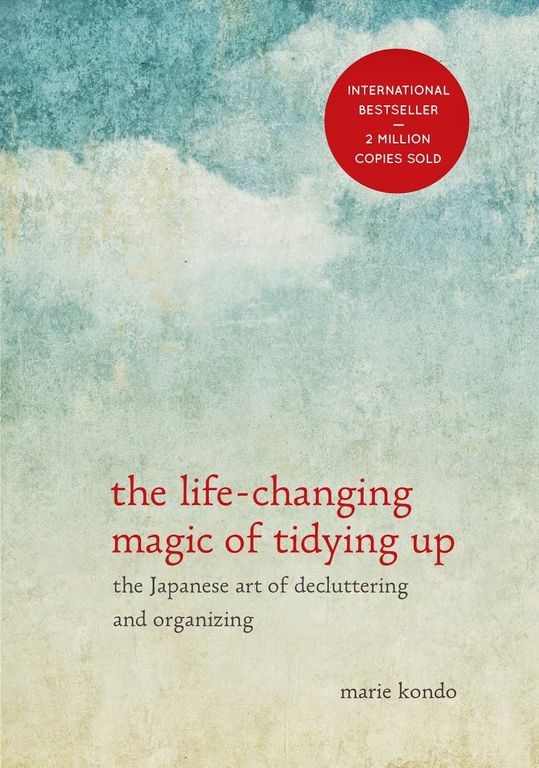
Nova: Absolutely. And that's exactly what we're diving into today. We're exploring a concept that has captivated millions, sparked a global movement, and genuinely changed lives. Today, we're talking about the transformative power of tidying up, drawing insights from two phenomenal books: by the phenomenal Marie Kondo, and by the brilliant Gretchen Rubin.
Atlas: Ah, Kondo! The queen of sparking joy! I remember when her book first hit, it was everywhere. It wasn't just another organizing book; it felt like a cultural phenomenon. It really made people rethink their relationship with stuff.
Nova: It truly did. What's fascinating about Kondo is that she wasn't just offering tips for organizing; she was essentially proposing a spiritual practice wrapped in a decluttering method. She started her tidying business when she was just 19, and her vision was always about more than just aesthetics. She even spent five years as a shrine maiden, which profoundly influenced her approach to objects and their energy. That background gives her method this almost reverential quality, rather than just a pragmatic one.
Atlas: Wow, a shrine maiden. That explains a lot. It's not just about throwing things away, then, but a whole different philosophy towards your belongings. So, where do we start with this 'life-changing magic'?
The Mindful Approach to Possessions: Sparking Joy and Conscious Release
SECTION
Nova: We start with the core, the absolute heart of the KonMari method: the 'spark joy' principle. It's deceptively simple, yet utterly revolutionary. Kondo doesn't ask you to decide what to; she asks you to decide what to. You hold each item in your hands, and you ask yourself: "Does this spark joy?"
Atlas: Okay, so you're saying I should interrogate my old college t-shirts? I mean, I held onto a lot of things out of sentimentality, or a 'just in case' mentality. How do you even define 'spark joy' beyond a gut feeling?
Nova: That's a great question, and it’s where the deeper insight lies. It’s not just a fleeting happy feeling. Kondo describes it as a physical sensation, a little jolt, a warmth, a sense of rightness when you hold something. If you don't feel that, then it's time to let it go. It forces you to engage with your possessions on a much deeper, more intuitive level than simply categorizing them. It’s about being present with each object.
Atlas: That’s a bit like mindfulness, isn’t it? Being fully present with something, even an inanimate object. But what about things you but don't necessarily 'spark joy'? Like, my tax returns? Or a fire extinguisher?
Nova: Exactly! That’s where the method gets practical. Kondo acknowledges that not everything will spark joy. For utilitarian items, the question shifts: 'Does this item fulfill a necessary function?' For things like tools or documents, their utility is their 'joy.' She's not advocating for a minimalist aesthetic purely for its own sake, but rather for a home filled with things that either serve a purpose or bring genuine happiness.
Atlas: I see. So it's about intentionality. Every single item in your home should have a reason for being there. And what about the 'thanking' part? That always struck me as a bit... whimsical.
Nova: It might sound whimsical, but it's profoundly psychological. When you thank an item before letting it go, you're not just being polite to a sweater; you're acknowledging its past role in your life. You're releasing any guilt or attachment you might have. It transforms the act of discarding from a negative, wasteful feeling into one of gratitude and conscious release. It's a way to honor the item and yourself.
Atlas: So it's not just about decluttering your physical space, but decluttering your emotional baggage attached to those items. I imagine a lot of our listeners, the Harmonizers and Seekers, are really driven by that need for calm, and this sounds like a direct path to it. It’s about transforming your environment, but also transforming your relationship with your past self.
Nova: Precisely. Think of it as a ritual of transition. You're closing a chapter with an item, learning from its presence, and then consciously moving forward. It’s less about getting rid of things and more about making space for the life you want to live now. It’s about honoring your present self.
Atlas: That’s actually really inspiring. It reframes the entire task. Instead of "Ugh, another pile of junk," it becomes "Thank you, old junk, for your service, now I make space for what truly matters."
Nova: And that's the narrative quality of it. It adds a story to each item, a beginning, a middle, and an end. It's not just a sweater; it's a sweater that served you, and now its purpose is complete. This method became a sensation because it touches on something deeper than just organization. It’s about living intentionally, about surrounding yourself only with what truly resonates with your ideal life. It’s why her show on Netflix was so popular; people saw the emotional transformation unfold.
The Profound Link Between Outer Order and Inner Calm
SECTION
Nova: And that naturally leads us to the second key idea, which often acts as a counterpoint or a deeper explanation to what we just discussed: the profound link between outer order and inner calm, as explored by Gretchen Rubin in.
Atlas: Oh, Gretchen Rubin! She's brilliant at distilling complex behavioral psychology into actionable insights. So, Kondo gives us the 'how' with 'spark joy,' and Rubin gives us the 'why' and the broader implications for our well-being?
Nova: Exactly. Rubin meticulously explores the psychological connection. She argues that our physical environment has a direct, measurable impact on our emotional state, our mental clarity, and even our relationships. A cluttered space isn't just visually distracting; it's a constant drain on our cognitive resources.
Atlas: I can definitely relate to that. When my desk is a mess, my brain feels like a mess. It’s like my thoughts are literally scattered across the papers and coffee mugs. But is there actual research behind this, or is it more of a folk wisdom kind of thing?
Nova: Absolutely, there’s research. Studies have shown that living in a cluttered environment can increase levels of cortisol, the stress hormone. It can impair our ability to focus, make decisions, and even our sleep quality. Our brains are constantly processing visual information, and if that information is chaotic, our brains are working overtime, leading to mental fatigue.
Atlas: Wow. So my messy living room isn't just an eyesore; it's actively stressing me out on a hormonal level? That gives me chills. That's a powerful insight for anyone, especially those of us who feel constantly overwhelmed and are looking for ways to reduce stress.
Nova: It truly is. Rubin doesn't just point out the problem; she offers practical, often surprisingly simple, strategies. Her approach is less about one grand tidying event, like Kondo’s, and more about consistent, manageable habits. She emphasizes that there’s no one-size-fits-all solution; it’s about finding what works for to create an environment that supports inner calm.
Atlas: So, for someone like me, who might feel overwhelmed by the sheer scale of a 'KonMari purge,' Rubin offers a different entry point? A more incremental, perhaps less emotionally intense path to the same goal?
Nova: Precisely. She talks about 'the one-minute rule' or 'the two-minute rule' – if a task takes less than a minute or two, do it immediately. Put that dish in the dishwasher. Hang up that coat. These tiny, consistent actions prevent clutter from accumulating, which in turn prevents the mental drain. She also highlights the power of 'designated homes' for everything. When every item has a place, putting things away becomes automatic, reducing decision fatigue.
Atlas: That makes sense. It’s like habit stacking, which is a big recommendation for our listeners who are trying to build routines effortlessly. Instead of a massive overhaul, it's about micro-actions that add up. And I guess the mental bandwidth you save from not constantly searching for things or feeling overwhelmed by visual noise can then be channeled into more productive or peaceful activities.
Nova: Exactly. Think of it as freeing up your mental RAM. When your environment is orderly, your mind can be too. You're not constantly battling external distractions, which allows for greater focus, creativity, and a general sense of peace. It’s about designing your environment to support your desired mental state. It's a foundational step towards greater well-being, as our Harmonizer listeners would appreciate.
Atlas: So, the ultimate goal isn't a perfectly sterile, magazine-ready home, but a home that serves as a sanctuary for your mind. A place where you feel supported, not stressed. That's a profound shift in perspective. It's not about being 'neat' for neatness' sake, but about cultivating an internal state of calm by intentionally shaping your external world.
Nova: Yes, and both Kondo and Rubin, in their unique ways, advocate for this deliberate approach. It’s not just about aesthetics; it’s about curating your life, one possession, one tidied shelf at a time. It's about recognizing that your external world is a powerful mirror and a powerful lever for your internal world.
Synthesis & Takeaways
SECTION
Nova: So, if we bring these two powerful perspectives together, what truly emerges is a holistic understanding of our relationship with our physical space. It's not just about decluttering; it's about deep self-care.
Atlas: I love that. Self-care that starts with your sock drawer, then ripples out to your entire emotional landscape. It makes the monumental task of 'getting organized' feel much more approachable and, honestly, much more meaningful.
Nova: Exactly right. And for our listeners, especially those who are Seekers of fulfillment and Architects of their own well-being, this offers incredibly practical and profound insights. It’s about embracing small steps, remembering that progress, not perfection, is the goal.
Atlas: That’s a great way to put it. Because the idea of 'perfectly tidy' can be another source of stress for some. But if we reframe it as a continuous journey towards a more peaceful home mind, that changes everything. It's about creating space for the life you want, both physically and mentally.
Nova: And that's why our tiny step towards tranquility today is so important: pick one small area—a drawer, a shelf—and apply the 'spark joy' principle. What stays, and what can you lovingly release to make more space for peace? It's a small act with a potentially massive impact on your inner world.
Atlas: That's a fantastic, actionable takeaway. Just one drawer. Today. I’m actually looking at my desk right now, and I think I can tackle that. It's about reclaiming a little bit of calm, one intentional decision at a time.
Nova: It’s about realizing that your home isn't just a collection of walls and possessions; it's an extension of your mind, a reflection of your inner state. And by intentionally shaping it, you're actively shaping your peace.
Atlas: This has been incredibly insightful, Nova. It truly elevates decluttering from a chore to a profound act of self-discovery and peace-making.
Nova: Absolutely. And that's the magic.
Atlas: This is Aibrary. Congratulations on your growth!