

Public Libraries in Flux: Catalysts for a Connected Future
Golden Hook & Introduction
SECTION
Nova: You know, it’s wild to think about. We live in an age where information is literally at our fingertips, yet the very places designed to share knowledge and foster community are often overlooked.
Atlas: Hold on, are you talking about libraries? Because honestly, I sometimes feel like they’re these quaint relics, charming but maybe not as essential as they once were.
Nova: Exactly! That’s the perception many have. But what if I told you that these "relics" are actually the unsung heroes building resilience in our increasingly fragmented world? That they’re not just about dusty books, but about something far more profound?
Atlas: Okay, you’ve got my attention. That sounds a bit out there, but I’m intrigued. What exactly are we overlooking?
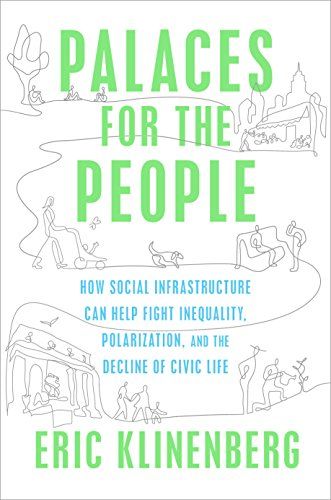
Nova: Well, today we’re diving into a fascinating exploration of public libraries, drawing insights from two incredible books: "Palaces for the People" by Eric Klinenberg, and "The Library Book" by Susan Orlean. Klinenberg, a renowned sociologist, positions libraries as critical social infrastructure, while Orlean, with her signature narrative flair, takes us on a captivating journey through their history and diverse roles, sparked by the infamous 1986 Los Angeles Public Library fire.
Atlas: Oh, I like that. Klinenberg’s work is highly regarded in the academic world for his deep dives into community, and Orlean has a knack for making even the most mundane subjects utterly captivating. So, we're talking about more than just checking out a novel.
Nova: Much more. We’re going to challenge that notion of libraries as mere book repositories and explore how they are adapting to become dynamic catalysts for connection, learning, and civic life in the 21st century.
The Enduring Power of Shared Spaces
SECTION
Nova: So, let’s kick off with Eric Klinenberg’s concept of "social infrastructure," which is central to "Palaces for the People." He argues that libraries, along with parks, schools, and even sidewalks, are vital for a healthy society. They’re the physical places and organizations that shape the way people interact.
Atlas: That makes sense, but how does a library specifically fit into that? I mean, a park, sure, you see people playing sports, having picnics. But a library often feels like a quiet, individual pursuit.
Nova: That’s where the magic is, Atlas. Klinenberg reveals that libraries are actually vibrant hubs of activity. They are places where people from all walks of life—different socio-economic backgrounds, different political views—can gather, interact, and build relationships. They offer free access to resources, yes, but more importantly, they provide safe, neutral ground for social mixing.
Atlas: So you’re saying they act as a kind of civic glue? Like, in an era where we’re constantly siloed into our digital echo chambers, these physical spaces force us to engage with actual humans?
Nova: Precisely. Klinenberg posits that strong social infrastructure helps fight inequality, polarization, and the decline of civic life. He points to libraries offering everything from job training and immigrant services to knitting clubs and parenting workshops. These aren't just amenities; they are vital services that bridge divides and create a sense of shared identity.
Atlas: That’s actually really inspiring. I imagine a lot of our listeners, especially those grappling with societal fragmentation and the impact of technology, would find that idea of a "civic glue" incredibly powerful. But what about the informational aspect? In a world of Google, how do libraries remain relevant as information sources?
Nova: That’s where Susan Orlean’s "The Library Book" adds another layer. Her narrative, sparked by the devastating 1986 fire at the Los Angeles Public Library, beautifully illustrates the library's evolution. She shows how they’ve always been more than just books. They're cultural centers, community anchors, and places that adapt.
Atlas: Ah, the LA fire. I remember hearing about that. A massive tragedy.
Nova: Indeed. It was an arson incident that destroyed over 400,000 books and damaged 700,000 more. Orlean uses this event as a springboard to explore the profound significance of libraries. She dives into their history, their diverse roles, and the sheer dedication of the people who work in them. She paints a picture of librarians as not just guardians of books, but as active curators of knowledge and community builders.
Atlas: So, the fire wasn't just about lost books, but it highlighted what libraries truly to a city—a living, breathing organism. That gives me chills to think about.
Nova: It’s a powerful illustration. She shows how libraries are constantly adapting, embodying that democratic ideal of shared knowledge. They’re not just reacting to change, but actively shaping their roles to meet evolving societal needs. They’ve become places where you can check out a Wi-Fi hotspot, learn coding, or even get help with your taxes. They're dynamic social organisms.
Atlas: Wow. That’s a completely different perspective than the quiet, dusty stereotype. So, they're not just providing resources, they're actively the conditions for connection and empowerment.
Curating Community & Knowledge
SECTION
Nova: Exactly. And this leads us to our second core idea: how libraries are actively curating community and knowledge in the digital age. They are finding innovative ways to assert their unique value proposition.
Atlas: But wait, in an age of pervasive digital information, isn't it easier to just find what you need online? Why do we still need a physical building for "curated" information? Isn't Google the ultimate curator?
Nova: That’s a great question, and it’s one that both Klinenberg and Orlean implicitly answer. Google is a vast ocean of information, but it lacks context, trust, and inclusivity. Libraries, on the other hand, offer,, and spaces. They have trained professionals—librarians—who can help you navigate that ocean, discern reliable sources, and find exactly what you need, often in formats you might not even know exist.
Atlas: I see. So, it’s about quality over quantity, and guidance over endless scrolling. It’s like having a skilled guide in a dense forest, rather than just being dropped in with a map you can’t read.
Nova: Exactly. Think about it: in a fragmented world, libraries are one of the few places left where people from different backgrounds can truly come together, not just virtually, but physically. They offer programs that address contemporary challenges, from digital literacy workshops for seniors to after-school tutoring for kids, and even mental health resources. They are actively fighting the digital divide.
Atlas: That’s a powerful point. For our listeners who are analytical innovators, constantly looking at how systems adapt and evolve, this transformation of libraries must be fascinating. They're essentially reinventing themselves as essential social infrastructure.
Nova: They are. Orlean's book highlights instances where libraries became critical community hubs during crises, offering refuge, information, and a sense of normalcy. They are resilient, constantly innovating to meet the needs of their communities, often with limited resources. They embody the idea that a connected future is built on shared resources and shared spaces.
Atlas: So it’s not just about what they, but what they and what they. They represent a commitment to collective well-being and shared progress. That’s a profound shift from just being a place to borrow books.
Synthesis & Takeaways
SECTION
Nova: Absolutely. The core of our podcast today is really an exploration of how public libraries, far from being obsolete, are evolving into indispensable catalysts for a connected future. They are the "palaces for the people" that Klinenberg describes, fostering community, bridging divides, and strengthening democracy.
Atlas: And Orlean’s vivid storytelling reminds us that this isn't a new phenomenon. Libraries have always adapted, always been more than just buildings filled with books. They’re living institutions, constantly reflecting and responding to the needs of society.
Nova: What truly stands out is their unique value proposition as curated, trusted, and inclusive spaces for knowledge and connection in an age of digital overload and social fragmentation. They are active agents in shaping a better future, one community at a time.
Atlas: That’s actually really inspiring. It challenges us to look beyond the obvious and see the deep, underlying mechanics of how these institutions shape our culture and our future. It makes me want to visit my local library with a completely fresh perspective.
Nova: I hope so! Next time you’re near one, step inside. Observe how it functions as a social space beyond its traditional role. What services or programs are offered that foster community or address contemporary challenges? You might be surprised by what you find.
Atlas: I definitely will. It’s a powerful reminder that sometimes the most impactful innovations are found in the overlooked corners of our society. Thanks for this, Nova.
Nova: My pleasure, Atlas. This is Aibrary. Congratulations on your growth!