

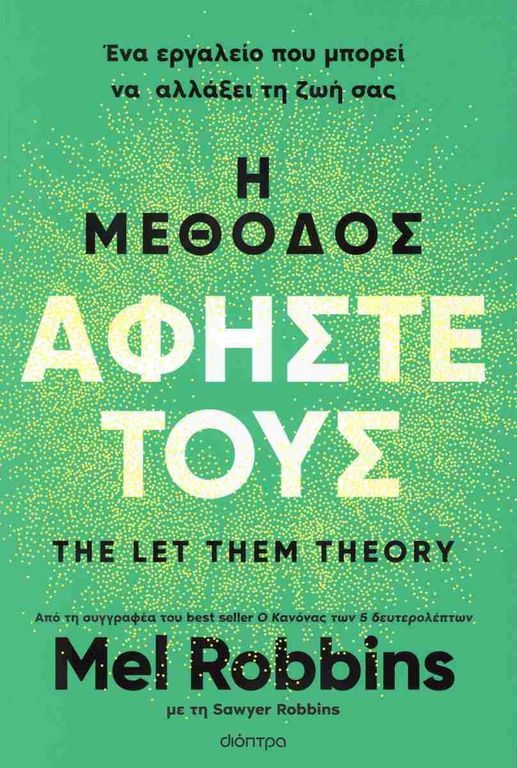
The Let Them Theory
A Life-Changing Tool That Millions of People Can't Stop Talking About
Introduction
Nova: Imagine this: You're standing in your kitchen, scrolling through social media, and you see photos of your closest friends at brunch together. A brunch you were never invited to. Your stomach drops. Your mind starts racing. Were you excluded on purpose? What did you do wrong? Now imagine that instead of spiraling, you say two words to yourself, and suddenly the anxiety lifts. Two words: Let them.
Nova: : That's a powerful pivot. But Nova, are you telling me that just saying "let them" can actually make all that hurt disappear? That seems almost too simple.
Nova: That's exactly the question millions of readers have been asking. Those two words are the foundation of Mel Robbins' book, The Let Them Theory, which has become a genuine cultural juggernaut. We're talking over ten million copies sold, the number one New York Times bestseller for every single week of 2025 so far, and translated into more than fifty languages. It's not just a book. It's a movement.
Nova: : Ten million copies? That's staggering. What is it about this idea that's resonating so deeply with people right now?
Nova: I think it's because so many of us are exhausted. Exhausted from trying to control what other people think of us, exhausted from managing everyone else's emotions, exhausted from the constant comparison and drama. Robbins claims that seven out of ten people are living in chronic stress from trying to control others. The Let Them Theory offers a way out. But it's also sparked real controversy. There are questions about where the idea really came from, whether it oversimplifies human relationships, and whether telling people to just let things go can sometimes do more harm than good.
Nova: : So we've got a blockbuster self-help phenomenon with a fascinating origin story and some serious critiques. I'm ready to unpack this.
Nova: Let's do it. I'm Nova.
Nova: : And I'm here with you. Today we're diving deep into The Let Them Theory by Mel Robbins. What it is, where it came from, how to use it, and whether it actually holds up.
What Is the Let Them Theory?
The Two Words That Sparked a Movement
Nova: So let's start with the basics. The Let Them Theory has two parts. Part one is "Let Them." When someone is doing something that frustrates you, annoys you, or disappoints you, you tell yourself: let them. Your friends didn't invite you to brunch? Let them. Your boss is in a bad mood? Let them. The person you're dating doesn't want a commitment? Let them.
Nova: : Okay, but that sounds a lot like just giving up or being passive. Like, if my friends are excluding me, shouldn't I say something?
Nova: That's the most common misconception, and it's why part two is so critical. After you say "Let Them," you say "Let Me." Let me decide what I want to do about this. Let me choose how I respond. Let me focus on what I can actually control. So in that brunch scenario, after you let them have their brunch without you, you ask yourself: let me reach out and make plans with a different friend. Or let me reflect on whether these friendships are reciprocal. Or let me go enjoy my Saturday morning doing something I love.
Nova: : So it's not passive acceptance. It's a deliberate choice to stop wasting energy on what you can't control and redirect that energy toward what you can. That's actually pretty different from just shrugging and saying "whatever."
Nova: Exactly. Robbins uses this vivid seesaw metaphor in the book. Without "Let Them," you feel inferior, like you're giving your power away. If you only use "Let Them" without "Let Me," you swing to the other extreme, feeling superior but detached and isolated. But when you combine both parts, you find balance. You maintain healthy boundaries while creating authentic relationships.
Nova: : The book opens with a story that Robbins says sparked the whole thing, right? Something about her son's prom?
Nova: Yes. Robbins tells this story about her son's pre-prom plans. She was micromanaging everything, worrying about the restaurant choice, the logistics, all of it. And her daughter turned to her and said, "Mom, if Oakley and his friends want to go to a taco bar for pre-prom, let them." Robbins says that moment hit her like a lightning bolt. She realized how much energy she was burning trying to control things that weren't hers to control.
Nova: : That's a very relatable parenting moment. But this is where things get complicated, right? That origin story isn't as clean as it seems.
Where Did Let Them Really Come From?
The Controversy Nobody Saw Coming
Nova: This is where the plot thickens. In 2020 and 2022, a poet named Cassie Phillips was going through an incredibly difficult time. Her marriage was falling apart, her husband had returned from deployment and was barely communicating, and she was isolated in a new city during the pandemic. Late at night, she started writing lines to remind herself she couldn't control her husband's behavior. Lines like "If they want to go weeks without talking to you, let them" and "If they want to follow the crowd, let them."
Nova: : So these lines sound almost identical to what ended up in Robbins' book.
Nova: They really do. In 2022, Phillips got the words "let them" tattooed on her arm and posted a picture on Facebook along with what people started calling a poem. That post went viral. Nearly fifty thousand shares. People were screen-printing it on T-shirts. A genuine grassroots movement was building. Then, in May 2023, Mel Robbins posted an Instagram video saying, "I just heard about this thing called the Let Them Theory. I freaking love this."
Nova: : And Phillips saw that and was initially flattered, right?
Nova: She was. She even messaged Robbins to thank her for sharing her words. She assumed Robbins was referencing her work. But Robbins never responded. And then the book came out in late 2024 with two hundred and three citations, and not a single one credited Cassie Phillips. Robbins has denied ever reading the poem. Her representative told The Atlantic that neither Mel, the fact-checkers, the researchers, nor the publishers ever saw it.
Nova: : That's hard to believe given how viral it was. And the timing is suspicious too. Robbins claims the idea came to her on prom night, but some investigators have pointed out that her original video about the theory was posted the day before prom.
Nova: Journalist Olga Khazan at The Atlantic did a deep investigation on this. She found that several of the tattoo photos included in Robbins' book, supposedly inspired by her podcast, actually look remarkably similar to Phillips' tattoo with similar lettering. And Robbins filed a trademark application for "Let Them" in 2024, which Phillips and her supporters see as trying to claim ownership of a grassroots movement.
Nova: : To be fair, Robbins does acknowledge in the book that concepts of detachment appear in Stoicism, Buddhism, and the Serenity Prayer. So she's not claiming to have invented the idea of letting go.
Nova: That's true. And an editor at a major publishing house told The Atlantic that self-help books are often derivative by nature. The key to selling them isn't necessarily originality. It's the author's existing platform. Robbins already had a massive following from her podcast and her previous bestseller, The 5 Second Rule. But the question of whether she should have credited Phillips, especially given the striking similarities in phrasing, remains deeply contested. As The Atlantic put it, Phillips has become a symbol for authors who will never earn out their advances while someone else takes their idea and runs.
Nova: : It's a messy story. But millions of people clearly don't care about the controversy or don't know about it. They're finding real value in the book. So let's talk about what's actually inside it.
How the Theory Works in Real Life
From Stress to Freedom
Nova: The book is organized around common struggles. Stress, fear of other people's opinions, dealing with emotional reactions, chronic comparison, and forming adult friendships. Each section gives you concrete ways to apply the Let Them plus Let Me formula.
Nova: : Let's go through some of the most powerful applications. What about stress at work?
Nova: This is one of the areas where the theory really shines. Robbins tells a story about an employee who hit all their targets but still didn't get a promised promotion. The natural reaction is to spiral into resentment and anxiety. But using the theory: let them make their promotion decision. You can't control it. Now, let me update my resume. Let me focus on building marketable skills. Let me decide whether this company deserves my loyalty.
Nova: : That's practical. What about dealing with difficult people? Family members who drive you crazy?
Nova: This is where Robbins introduces a concept she calls Frame of Reference. The idea is that everyone's behavior makes sense to them based on their life experiences, fears, and history. Her example is her own mother, who wasn't excited about Robbins' engagement. Instead of staying hurt, Robbins tried to understand that her mother's reaction came from fear of losing her daughter and a family history of separation. Let them have their reaction. Let me respond with compassion while maintaining my boundaries.
Nova: : That reminds me of the chapter about adult tantrums. Which is such a great phrase.
Nova: It really is. Robbins points out that many adults never learned emotional regulation, so when they're upset, they essentially revert to childlike behavior. Sulking, silent treatment, rage texting, slamming doors. Her advice is to imagine the eight-year-old version of that person in the room. It doesn't excuse the behavior, but it changes how you respond. You don't engage with the tantrum. You respond to the adult while setting clear boundaries.
Nova: : One of the most talked-about applications is dating. What does the theory say about relationships?
Nova: This is where it gets really blunt. If you're dating someone who won't commit, let them. If they're ghosting you, let them. If they're showing you through their actions that they're not invested, let them. Robbins says the Let Them Theory reveals who people truly are. And once you see that clearly, you get to choose what you do next. Maybe that's walking away. Maybe it's accepting the relationship for what it is rather than what you wish it were. But the key is you stop trying to change someone who doesn't want to change.
Nova: : What about friendships? That seems even trickier since friendships don't have the same clear boundaries as romantic relationships.
Nova: Robbins talks about something she calls the Great Scattering, that period in your twenties when friendships shift from being a group sport to an individual one. People move, have kids, change jobs. Research suggests it takes over two hundred hours to reach a level of depth in friendship, which is much harder to achieve in adulthood. The theory says: let your friends be who they are. If they're not great at initiating plans, let them be that person. Then let me decide if I want to be the initiator in this friendship, or if I want to invest my time in building new connections.
Nova: : There's something both liberating and slightly scary about that. It puts the responsibility squarely on you.
Critiques and Limitations
The Shadow Side of Letting Go
Nova: And that brings us to the critiques, because there are several important ones. Nick Haslam, a psychology professor at the University of Melbourne, wrote a fascinating analysis for The Conversation. He points out that the Let Them Theory takes a black-and-white view of control. It says you either control something or you don't. But in reality, human relationships exist in a gray zone. You can influence people without controlling them. You can persuade, model behavior, set expectations.
Nova: : So the criticism is that Robbins makes it sound like there are only two options: control everything or let everything go.
Nova: Exactly. And that binary thinking can be problematic. Haslam also notes that while research does support acceptance-based strategies for dealing with uncontrollable stressors, problem-focused strategies, actually confronting and trying to change the situation, tend to be more effective when things are at least somewhat controllable. The danger of Let Them is that it might encourage people to accept situations they could and should try to change.
Nova: : I also saw that some therapists have critiqued the theory. Therapist Jeff Guenther, known as Therapy Jeff on social media, has argued that Robbins oversimplified real psychological strategies to make them fit on a tote bag. His specific example was about political disagreements with family. He believes that rather than just letting loved ones hold harmful beliefs, people should speak up.
Nova: And that's a legitimate concern. If your family member is expressing genuinely harmful views, is "let them" really the best response? The theory could potentially be used to avoid necessary confrontation or to justify detachment from important relationships. There's also a deeper philosophical critique. Haslam describes the theory as deeply individualistic. It draws a sharp line between self and others and frames relationships as power struggles. The language throughout the book is saturated with control and power dynamics.
Nova: : It sounds like the theory could push people toward isolation if they're not careful. Like, at what point does "let them" become "I don't need anyone"?
Nova: Robbins actually acknowledges this danger. She says the single biggest mistake people make is only doing step one. If you just say "let them" without the "let me," you end up sitting in judgment, feeling lonely and superior. The "let me" part forces you to look in the mirror and take responsibility. It's where the real work happens. But the criticism remains that the book's message, however carefully framed, can easily be interpreted as a call to put yourself first, cut difficult people loose, and emotionally insulate yourself from others.
Nova: : There's also the question of privilege. Not everyone can just let their boss be in a bad mood or let their company lay people off. Some people don't have the financial cushion to walk away from a toxic job or relationship.
Nova: That's a crucial point. The book has been criticized for assuming a level of agency and resources that not everyone possesses. When Robbins says, "let them lay people off, and let me find a new job," that assumes the person has marketable skills, savings, and options. For many people, the reality is much more constrained.
The Appeal and the Takeaway
Why Millions Are Saying Let Them Anyway
Nova: Despite all these criticisms, ten million people have bought this book. People are getting Let Them tattoos. The hashtag has hundreds of thousands of posts on TikTok. Oprah called it a game-changer and a life-changer. So clearly, something is connecting.
Nova: : So what is it? Why is this resonating so powerfully right now?
Nova: I think it comes down to a few things. First, the idea is incredibly simple and memorable. Two words. You can use it in the moment, when you're standing in a long line or reading a frustrating text. You don't need a therapist, a workbook, or a weekend retreat. You just say two words to yourself.
Nova: : The accessibility is undeniable. It's Stoicism, Buddhism, and the Serenity Prayer distilled into something you can actually remember when your blood is boiling.
Nova: Right. And second, the book meets people where they are. Robbins uses tons of personal anecdotes. She admits to her own controlling tendencies, her own jealousy, her own fear of judgment. She comes across as someone who struggles with the same things her readers do. The writing is conversational and the chapters are short and digestible. It feels less like a lecture and more like advice from a blunt but caring friend.
Nova: : There's also the timing. We've come out of a pandemic, people are more isolated, social media has amplified comparison culture to absurd levels. People are genuinely exhausted from managing their online personas and worrying about what everyone thinks.
Nova: The book taps directly into that exhaustion. And third, the research, while it may be simplified, does point toward real benefits. Acceptance-based strategies are central to Acceptance and Commitment Therapy, which is a well-established evidence-based approach. Meta-analyses have found that acceptance strategies are associated with better emotional outcomes and greater ability to tolerate distress. The core insight that we waste enormous energy trying to control the uncontrollable is genuinely supported by decades of psychological research.
Nova: : So what's the bottom line? If someone is considering reading this book, what should they know going in?
Nova: I'd say take what works and leave what doesn't. The Let Them plus Let Me framework can be genuinely useful as a quick mental reset when you catch yourself spiraling about something outside your control. The chapter on motivational interviewing, helping loved ones find their own reasons for change, is excellent. The Frame of Reference concept for understanding difficult people is genuinely helpful. But be wary of using Let Them to avoid necessary conversations, to justify staying in bad situations, or to emotionally withdraw from relationships that matter to you. The theory is a tool, not a complete philosophy of life.
Nova: : And if you pick up the book, be aware of the controversy around its origins. Cassie Phillips' story matters. The question of who gets credit and who profits from ideas in the age of social media is a conversation worth having.
Nova: Absolutely. The self-help industry has always been built on repackaging ancient wisdom in new containers. But when a grassroots movement built by someone without a platform gets absorbed and monetized by someone with enormous reach, there's a real ethical question. The editor who spoke to The Atlantic captured it well: at least people still care enough about books to debate their intellectual integrity. That's something.
Conclusion
Nova: So here's what we've learned. The Let Them Theory is deceptively simple. Two words that ask you to release control over what other people think, say, and do. But the real power is in the second step: Let Me. Taking responsibility for your own response, your own boundaries, your own choices.
Nova: : The book has struck a nerve, selling over ten million copies and dominating bestseller lists. It's given people a portable, memorable tool for managing stress, comparison, difficult relationships, and fear of judgment. But it's also sparked real controversy about where the idea came from and whether it oversimplifies the complexity of human connection.
Nova: The critiques are worth taking seriously. Human relationships aren't just about control and power. Sometimes you should speak up, push back, and fight for change. Let Them is not a substitute for courage or conviction. And the theory's individualistic framing may work better for some people than others, particularly those with the resources and privilege to walk away from difficult situations.
Nova: : But here's what I'll take from this conversation. Next time I'm spiraling about something someone did or didn't do, I'm going to try those two words. Let them. And then immediately ask myself: okay, what do I actually want to do now? What's mine to carry and what's not? That moment of pause, that conscious separation between their actions and my response, that feels valuable regardless of where the idea originated.
Nova: I think that's exactly right. The best self-help doesn't give you new information. It gives you a new lens. A new way to interrupt your automatic patterns. And for millions of people, Let Them has provided exactly that. A two-word pattern interrupt that creates just enough space to choose differently.
Nova: : Whether you buy the book, borrow it, or just borrow the two-word mantra, the core invitation is the same: stop exhausting yourself trying to manage everyone and everything around you. Your peace is worth protecting. Your energy is worth directing toward what you can actually change.
Nova: And on that note, let me say: this is Aibrary. Congratulations on your growth!