

The "Long Zoom" Perspective: Why Understanding History Shapes Tomorrow's Decisions
Golden Hook & Introduction
SECTION
Nova: Atlas, five words. Give me your five-word review of… history. Go.
Atlas: Oh, uh… confusing, repetitive, surprising, human, essential.
Nova: Confusing, repetitive, surprising, human, essential. That's a pretty good five words for something that often feels like a giant, dusty textbook, isn't it? We tend to think of history as something for academics, something removed from our daily lives.
Atlas: Absolutely! It’s like, why bother with the Punic Wars when I’m trying to figure out what to make for dinner tonight? Or, you know, navigate the never-ending stream of breaking news. It feels so… separate.
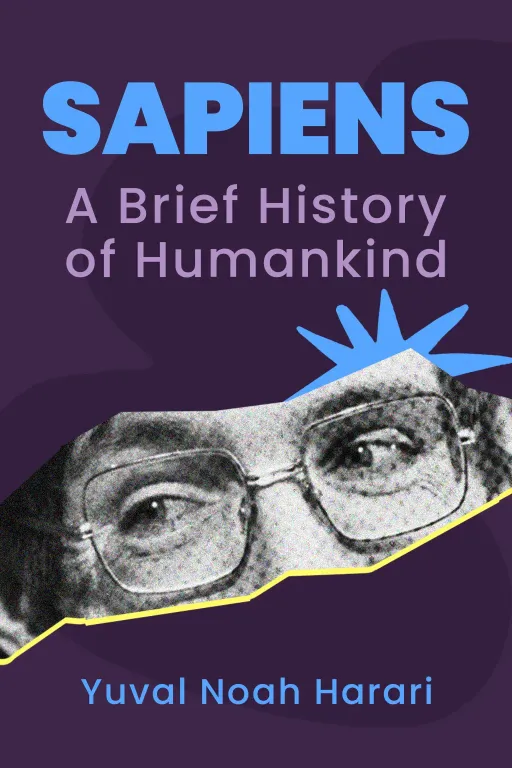
Nova: And that's exactly the blind spot we're talking about today. Because what if understanding those Punic Wars, or at least the underlying human dynamics behind them, actually helps you navigate your dinner choices, or more importantly, the larger currents of your life and the world? Today we’re diving into that profound idea, drawing wisdom from two incredible books: "Sapiens: A Brief History of Humankind" by Yuval Noah Harari and "The Lessons of History" by Will and Ariel Durant.
Atlas: Oh, both absolute powerhouses! Harari’s "Sapiens" started as a university course that just exploded into a global phenomenon, selling millions and sparking conversations everywhere because it completely reframed how we think about human progress.
Nova: Exactly. And the Durants, on the other hand, spent five decades writing their monumental "Story of Civilization" before distilling all that wisdom into their concise, almost poetic "Lessons of History." What both these works do, in their own unique ways, is show us why neglecting history is a huge disservice to our present and future.
The Blind Spot – Why We Underestimate History
SECTION
Nova: So, let's talk about this "blind spot." It's that feeling we all get, right? Caught in the daily grind, dealing with immediate problems, forgetting that today's challenges are often just echoes of yesterday's solutions, or sometimes, yesterday's unresolved issues.
Atlas: Oh, I totally know that feeling. Especially as a parent, you’re just trying to get through the day, establish healthy routines for a newborn, support your family’s well-being. It feels like there’s no time to zoom out and look at… ancient history.
Nova: And that’s incredibly relatable. But the paradox is, that proactive nature you have, that desire for foresight, actually thrives on looking the immediate. True foresight requires understanding the deep currents of history that shape our world. Without that, we're just reacting, constantly putting out fires, instead of anticipating where the next one might spark.
Atlas: Wait, but aren't some problems genuinely new? Like the rapid advancements in AI, or the complexities of climate change? You can't tell me Julius Caesar had a historical precedent for ChatGPT.
Nova: That’s a great question, Atlas. And you’re right, the change. We don't have direct parallels for every new technology. But the often remain strikingly similar. Think about the fear and excitement around the printing press, or the industrial revolution. The concerns about job displacement, the spread of misinformation, the societal upheaval—those are echoes we can trace. Or the human tendency to overexploit resources, which we see in ancient deforestation or overfishing, just on a different scale now.
Atlas: So, it’s like a ship captain who only looks at the waves directly in front of their bow, but completely ignores the massive ocean currents pulling them off course.
Nova: Precisely! And that captain is going to be constantly surprised, constantly reacting. But the captain who understands the currents, the long-term weather patterns, the historical trade routes—that's the one who can truly anticipate and navigate. Understanding this blind spot helps us shift from a reactive mindset to a truly proactive one, allowing us to prepare rather than just respond. It’s about not underestimating the subtle, slow-moving forces that are always at play.
Shared Fictions & Cyclical Patterns
SECTION
Nova: And that leads us perfectly to how books like "Sapiens" and "The Lessons of History" pull back the curtain on this blind spot, giving us those tools for deeper understanding. Harari, in "Sapiens," makes this incredibly powerful argument that human history isn't just about biology or technology. It's driven by our unique ability to create and believe in what he calls "shared fictions."
Atlas: Shared fictions? So, like, collective make-believe?
Nova: Exactly! Things like nations, money, religions, human rights, corporations. These aren't tangible, physical things in nature. A dollar bill is just a piece of paper, but we collectively agree it has immense value. A nation is an imaginary community, but we fight and die for it. These powerful, shared myths allow millions of strangers to cooperate and build complex societies.
Atlas: Wow. So, the entire world runs on stories we collectively agree on? That sounds a bit… fragile, but also incredibly powerful. Like, if enough people stop believing in the story of money, it just… stops working. How does that connect to what we’re experiencing today?
Nova: It’s everything! When we understand that our economic systems, our political structures, our social hierarchies are built on these shared fictions, we gain immense clarity. We see how deeply ingrained our current systems are, not because they're inherently "natural," but because we've been telling and believing these stories for centuries. And this is where the Durants, in "The Lessons of History," offer a brilliant complement.
Atlas: Okay, tell me more.
Nova: They spent a lifetime studying history, distilling centuries of human experience into concise observations on politics, economics, and human nature. And what they reveal are these recurring patterns. They suggest that while the of these shared fictions change, the —the desire for power, the need for community, the fear of scarcity, the pursuit of progress—remain strikingly similar across eras.
Atlas: So, we keep playing out the same human dramas, just with different costumes and stage sets? That’s a perfect way to put it! Like, the internet might be new, but the human impulse to connect, or to spread gossip, or to seek validation online, that's as old as the village square.
Nova: Absolutely. Think about the cycles of empire building, or economic booms and busts, or even the rise and fall of particular ideologies. The Durants show us these patterns repeating, not identically, but with uncanny echoes. Understanding this fundamentally shifts your view from a linear progression—where we just keep getting "better" or "more advanced"—to a cyclical understanding. It reveals the deep roots of present-day issues, making them less bewildering and more comprehensible.
Atlas: That makes me wonder, then, if this cyclical view makes us feel powerless, like we’re just doomed to repeat the past, or more empowered because we can recognize the patterns?
Nova: I think it's the latter, Atlas. It's incredibly empowering. It's not about being stuck in an endless loop, but about recognizing the playbook. If you know the patterns, you can anticipate the next moves. You can see how the current trends, whether it's a particular political movement or a new economic theory, are actually playing out a historical lineage. It allows us to be proactive strategists, rather than just reactive spectators.
Synthesis & Takeaways
SECTION
Nova: So, when we combine Harari’s insight into shared fictions with the Durants’ observations on cyclical patterns, we get this incredible "long zoom" perspective. It’s not just about knowing dates and names; it’s about understanding the underlying operating system of human civilization.
Atlas: And for someone who is deeply reflective, who values foresight and foundational well-being, this isn't just academic, is it? This 'long zoom' perspective feels like a crucial tool for making better, more informed decisions for their family and their future.
Nova: Exactly. Because true foresight, that proactive preparation you seek, doesn't come from guessing about tomorrow. It comes from deeply understanding yesterday. It's about tracing the historical lineage of current trends, anticipating emergent patterns, and not underestimating the power of those deep currents that are always flowing beneath the surface of our daily lives.
Atlas: That makes so much sense. It's about seeing the forest, not just the trees. So, I have a deep question for all our listeners out there, a question that connects directly to this idea: If history is a series of emergent patterns, which current trend are underestimating because you haven't traced its historical lineage?
Nova: That’s a fantastic challenge, Atlas. And if you want to dive deeper into those patterns and fictions, pick up "Sapiens" by Yuval Noah Harari or "The Lessons of History" by Will and Ariel Durant. They’ll change how you see everything.
Atlas: Absolutely. Thanks for joining us today!
Nova: This is Aibrary. Congratulations on your growth!