

The Echoes of Time: Why History Repeats Itself (and How to Break the Cycle)
Golden Hook & Introduction
SECTION
Nova: You know, Atlas, we often talk about progress, about how far humanity has come. We have AI, space tourism, instant global communication. But sometimes, doesn't it feel like despite all these leaps forward, we're still stuck on the same old human problems, just with fancier gadgets?
Atlas: Oh man, Nova, that resonates so deeply. It’s like we upgrade the operating system, but the core bugs just keep migrating to the new version. You see headlines today, and you can almost feel the historical echo, can't you? It’s frustrating.
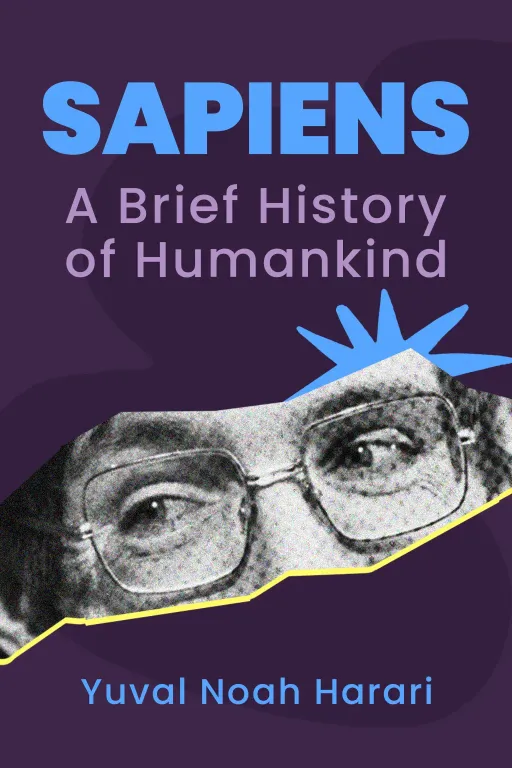
Nova: Absolutely. And that feeling is exactly what sparked the insights in "The Echoes of Time: Why History Repeats Itself," our latest deep dive. This isn't a book in the traditional sense, but more of a synthesis of profound historical thought, heavily inspired by giants like Yuval Noah Harari's "Sapiens" and Will and Ariel Durant's monumental "The Lessons of History."
Atlas: Those are some heavy hitters. Harari's "Sapiens" completely reframed how many people look at human history, tracing our entire journey. And the Durants, if I recall, spent decades distilling centuries of human experience into concise, powerful insights. What a task!
Nova: Exactly. The Durants, a husband-and-wife duo, literally dedicated their lives to chronicling civilization, and their "Lessons" is this incredible distillation of wisdom. Harari, on the other hand, gives us this sweeping, almost alien perspective on what it means to be human. Together, they provide an incredible lens for what we're talking about today: our collective "blind spot."
Deep Dive into Core Topic 1: The Blind Spot: Why We Keep Repeating History
SECTION
Atlas: Our blind spot? I like that framing. We try to learn from the past, don't we? History classes, documentaries… but you're saying there's something fundamental we're missing?
Nova: There is. Think of it like this: if you're driving a car at high speed, your focus is naturally on the road directly in front of you. You're reacting to the immediate obstacles, the urgent present. But if you only ever look five feet ahead, you'll miss the sweeping curves, the mountain passes, the overall direction of the journey. That's our blind spot. The urgency of current events makes it incredibly hard to pull back and see the deep historical patterns shaping our behavior and institutions.
Atlas: So it’s not just a lack of knowledge, but almost a cognitive trap? We’re wired to focus on the immediate, and that prevents us from seeing the meta-narrative?
Nova: Precisely. And this is where Harari's work is so illuminating. He demonstrates how our very ability to cooperate on a massive scale, what he calls "collective fictions"—things like nations, money, religions, human rights—are incredibly powerful. They allow us to build societies, but they also create shared realities that can inadvertently blind us to underlying, persistent historical forces. These fictions, while evolving in their specifics, consistently shape human interaction, leading to predictable patterns of power, conflict, and societal organization that echo through time. The technology changes, but the fundamental human drama often remains the same.
Atlas: So, it's not just forgetting, it's almost like we're to miss it because of how our societies are built on these shared stories? That's a powerful idea. Can you give an example of a "collective fiction" that consistently leads to a pattern, even across vast stretches of time?
Nova: Absolutely. Consider the rise and fall of empires. The "collective fiction" here is often the idea of national or cultural supremacy, the inherent right to expand and dominate. Whether it's ancient Rome, the Mongol Empire, or more modern colonial powers, the belief in their own exceptionalism fuels expansion. This inevitably leads to predictable cycles of conquest, resistance, overextension, and eventual decline. The weapons change, the ideologies shift, but the underlying pattern of a dominant power, fueled by a collective belief in its own destiny, pushing boundaries until it collapses under its own weight or external pressure, echoes consistently throughout history. It's a pattern driven by human ambition and collective belief, regardless of the specific flag or empire.
Deep Dive into Core Topic 2: Echoes and Interventions: Learning from Historical Patterns
SECTION
Atlas: That’s a really sobering thought, that these underlying fictions can drive such predictable, cyclical outcomes. So if that's the blind spot, how do we start to see? How do we use history to our advantage, rather than just being swept along by its currents?
Nova: This is where the Durants come in, offering a masterful distillation. They weren't just chroniclers; they were pattern-recognizers. They observed recurring themes like war, religion, economics, and social change across centuries. Their monumental work, "The Lessons of History," essentially says: "While the costumes change, the play often remains the same." They show that much of what we face today, from political polarization to economic anxieties, has profound historical precedent.
Atlas: Okay, so what are some of these "recurring themes" that the Durants highlighted that we see playing out right now? Like, what current societal trends do you believe are most likely to repeat past mistakes, based on their work? I'm genuinely curious about how this contextualizes today's world.
Nova: A prime example is the cycle of wealth inequality and social unrest. The Durants documented periods throughout history where extreme concentrations of wealth, where a small percentage of the population controlled the vast majority of resources, inevitably led to significant social upheaval, sometimes even revolution. We see anxieties about this today, with ongoing debates about economic disparities and their potential societal impacts. It's not about specific tax policies, but the fundamental human response to perceived injustice and lack of opportunity that consistently emerges when wealth becomes too concentrated. They saw this pattern play out repeatedly, from ancient Rome to revolutionary France.
Atlas: That's a bit chilling, honestly. If we recognize a pattern of rising inequality, for instance, what's the "intervention"? How do we "break the cycle" when these historical forces feel so massive and inevitable? The purposeful seeker in me wants to know: what can we actually?
Nova: That's the critical question, and the Durants offer a nuanced answer. They argue that "progress" isn't automatic; it requires conscious effort. The intervention starts with awareness – recognizing the pattern before it reaches a destructive crescendo. It's not about stopping history, but about steering it. They show that in previous cycles, societies often found ways to temporarily alleviate these pressures through social reforms, redistribution policies, or expanding access to education and opportunity. It's about learning from those past "solutions" that bought time, reduced suffering, and allowed for a period of relative stability, rather than waiting for the cycle to violently correct itself. It’s about leveraging that critical context for decision-making now.
Synthesis & Takeaways
SECTION
Nova: So, the blind spot is real, but these historical giants give us the lens. They show us that while the surface details of our world might be entirely new, the underlying human desires, fears, and collective behaviors that drive large-scale historical patterns are incredibly persistent.
Atlas: It sounds like the real power isn't just knowing history, but understanding the that make it repeat. It's about seeing the humanity in the patterns, not just the dates or the names. That’s a profound shift in perspective.
Nova: Exactly. The enduring lesson is that while technology advances, fundamental human drivers and societal structures often echo throughout history. Breaking the cycle isn't about perfectly predicting the future, but about understanding the past's persistent influence on our present choices. It's about gaining critical context for decision-making. It offers a framework for analysis, helping us to ask better questions about what's unfolding around us.
Atlas: For anyone feeling overwhelmed by the relentless pace of current events, this perspective offers both a grounding and a powerful call to action. It’s not about doom and gloom, but about empowerment through understanding. We can choose to look for those echoes, to understand the deeper currents, and perhaps, to steer our course more wisely.
Nova: Precisely. And for those who crave unique insights, enjoy challenging conventional thinking, and seek intellectual inspiration, picking up a work like Harari's "Sapiens" or the Durants' "The Lessons of History" isn't just reading; it's arming yourself with a deeper understanding of the world and your place within its ongoing story. It’s about cultivating that broader historical view that is so essential.
Atlas: That's a fantastic thought to leave us with. What a journey through time and perspective!
Nova: This is Aibrary. Congratulations on your growth!