

The Echo Trap: Why History Repeats and How to Break the Cycle
Golden Hook & Introduction
SECTION
Nova: Atlas, I have a challenge for you. Five words. Describe the feeling when you realize you're making the exact same mistake your historical heroes did.
Atlas: Uh... "Oh no, not this again!"
Nova: Exactly! That gut punch of recognition, that feeling of 'haven't we been here before?' Today, we're diving into a fascinating concept from a book called "The Echo Trap: Why History Repeats and How to Break the Cycle." And it's a concept that draws on some truly monumental thinkers.
Atlas: Oh, I like that. So, we're not just talking about history class, are we? This sounds like it’s going to get much deeper.
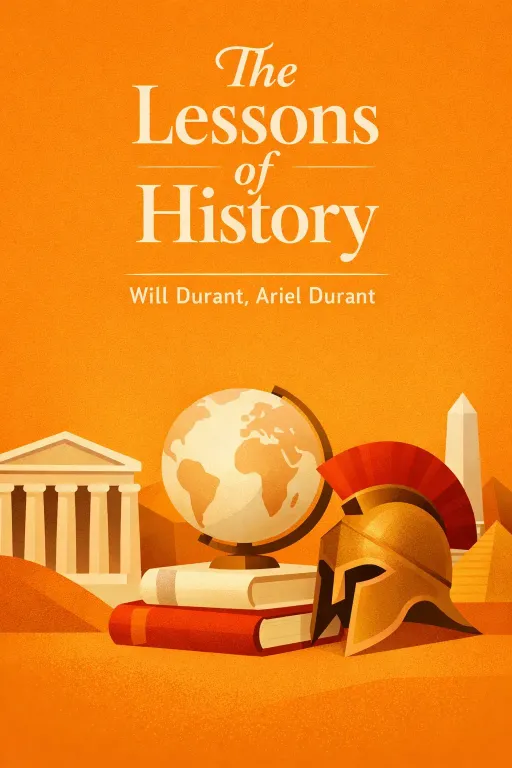
Nova: Much deeper. This book, "The Echo Trap," really distills insights from intellectual giants like Will and Ariel Durant, whose "The Lessons of History" was the culmination of their entire multi-volume, Pulitzer Prize-winning magnum opus. And it also pulls from Yuval Noah Harari, whose "Sapiens" became a global phenomenon, completely reframing how millions looked at human history. These authors, despite their differing scopes, both offer profoundly acclaimed insights into the enduring patterns of humanity.
Atlas: So you’re saying we have the wisdom of the ages, condensed, to help us avoid stepping on the same rakes? I mean, I’m all for learning from the past, but sometimes it feels like history is just… old news, right? We’re different now. We have tech. We’re smarter.
Nova: That’s exactly the "blind spot" we need to talk about, Atlas. It’s what "The Echo Trap" highlights as our first major hurdle.
The Blind Spot: Why We Keep Repeating History
SECTION
Nova: Think about it: sometimes, we get so caught up in the minute details of today – the latest app, the trending topic, the immediate crisis – that we completely miss the larger, slower currents of time. We overlook these deep, underlying forces that are constantly shaping our present and, frankly, our future.
Atlas: You mean like, we’re so busy staring at our phones that we don’t see the tsunami forming on the horizon?
Nova: Precisely. And the book argues that ignoring these historical currents, this "blind spot," leads us to repeat old mistakes. It makes it incredibly difficult to build something genuinely new and lasting, because we’re constantly rebuilding on shaky foundations we haven't properly examined.
Atlas: But aren’t we always learning and progressing? I mean, every generation thinks they're smarter than the last. We have more information, more tools. Isn't that progress?
Nova: That’s a great point, but progress in technology or information doesn’t automatically translate to progress in human behavior or societal structure. Consider the classic example of economic bubbles. We've seen them throughout history, right? From the Dutch tulip mania in the 17th century, where a single bulb could cost more than a house, to the dot-com bubble of the late 90s, and then the housing crisis just a decade later.
Atlas: Oh man, I know that feeling. The "everyone's getting rich, I don't want to miss out" feeling.
Nova: Exactly. The specifics change – flowers, internet companies, real estate – but the underlying human behavior, that intoxicating mix of speculation, irrational exuberance, and the fear of missing out, remains remarkably consistent. The cause is often a combination of easily accessible credit and collective delusion that "this time it's different." The process involves prices skyrocketing detached from any intrinsic value, fueled by herd mentality. And the outcome? An inevitable crash, widespread financial loss, and often, social unrest.
Atlas: So it's like we're upgrading the stage, but the play itself is still the same old tragedy or comedy, just with new costumes?
Nova: A perfect analogy, Atlas! We think we’re innovating, but often we’re just re-enacting. The cost of this historical amnesia is immense. We waste resources, time, and human potential constantly fixing problems that have been solved—or at least understood—generations ago, simply because we failed to recognize the echo.
The Shift: How Understanding History Empowers Us
SECTION
Nova: But it's not all doom and gloom. This is where "The Echo Trap" makes its crucial point about "The Shift." It's about moving from that blind spot to true insight. This is where thinkers like the Durants and Harari become our guides.
Atlas: Hold on, "consistent human nature"? That sounds a bit fatalistic. Are you saying we're doomed to repeat everything? And what about Harari's "shared fictions"? That sounds like a whole other level of complexity.
Nova: Not fatalistic at all, Atlas. The Durants, in "The Lessons of History," argue that while the details of civilizations change, human nature and fundamental societal patterns remain remarkably consistent across millennia. They observed enduring themes – from power dynamics and the cycles of war and peace, to economic booms and busts, and even the ebb and flow of morality and religion.
Atlas: Can you give an example of one of these "enduring themes" that still plays out today?
Nova: Absolutely. Think about the political cycles throughout history: the pendulum swing between centralized power and individual liberty, or the rise and fall of empires driven by similar patterns of expansion, overreach, and eventual decline. These aren't random events, but often follow predictable patterns of human ambition, resource management, and societal cohesion. By observing these deep, consistent themes, the Durants suggest we gain a profound advantage in navigating current events, seeing them not as isolated incidents, but as part of a larger, ongoing narrative.
Atlas: So the Durants show us the unchanging stage. But then you mentioned Harari and "shared fictions." That sounds like it complicates things.
Nova: It does, but in an incredibly empowering way. Harari, in "Sapiens," shows how much of our species' trajectory has been shaped by what he calls "shared fictions" or "collective beliefs." Things like money, nations, religions, even human rights – these are not objective realities, but powerful stories we collectively agree to believe. They exist because we believe in them.
Atlas: Wait, so money isn't real? My bank account is a shared fiction?
Nova: In a sense, yes! Its value comes from our collective agreement, not from inherent physical properties. The same applies to the concept of a nation or a corporation. Harari's brilliance is in helping us recognize these constructed realities. And understanding them is the key to "The Shift."
Atlas: So, the Durants show us the unchanging human stage, and Harari shows us that we're both the actors the set designers, and we can actually change the scenery if we realize it's not real?
Nova: A brilliant analogy, Atlas! It’s about moving from passively reacting to events – like an actor just reading lines – to actively understanding their historical roots and potential future implications. Recognizing these shared fictions allows us to question assumptions we didn’t even know we had. It gives us the power to imagine new possibilities, to step outside the script, rather than being trapped by it. It’s about agency, about conscious creation instead of unconscious repetition.
Synthesis & Takeaways
SECTION
Nova: So, bringing it all together, "The Echo Trap" suggests that truly understanding history isn't just about remembering dates. It's about recognizing that "blind spot" where we miss the deep, underlying patterns, and then making "the shift" by applying the insights of thinkers like the Durants and Harari to gain perspective and agency.
Atlas: This really hits home, especially for anyone navigating complex challenges in their own lives or work. It’s easy to get tunnel vision. So what's the one thing listeners can do today to start seeing these echoes instead of just stumbling into them?
Nova: The book leaves us with a powerful, deep question, Atlas, and I think it’s the perfect place to start: "What current challenge in your life or work might be an echo of a historical pattern you haven't yet recognized?"
Atlas: Wow. That's a powerful challenge. Instead of just reacting to the next problem, we can pause and ask, "Where have I seen this script before? What historical pattern might be playing out here?" It transforms a problem into a puzzle, and gives us a new lens.
Nova: Absolutely. It's about cultivating that historical awareness, that ability to zoom out and see the larger currents. We'd love to hear your thoughts on this, what echoes have you recognized in your own life or work? Share your insights with the Aibrary community.
Atlas: That sounds like a conversation worth having.
Nova: It always is.
Nova: This is Aibrary. Congratulations on your growth!