

Architecting Change: Insights from Visionary Leaders
Golden Hook & Introduction
SECTION
Nova: You know, Atlas, sometimes I wonder if history is just one big cosmic prank, always repeating itself, daring us to notice.
Atlas: Whoa, Nova, that’s a deep dive right out of the gate! Are we talking about Groundhog Day on a global scale? Because frankly, some Mondays feel exactly like that.
Nova: More like a multi-millennial Groundhog Day, but with higher stakes than just reliving a bad date. Today, we're wrestling with two titans of thought who basically hand us the cheat codes to understanding both our own minds and the sweep of human civilization.
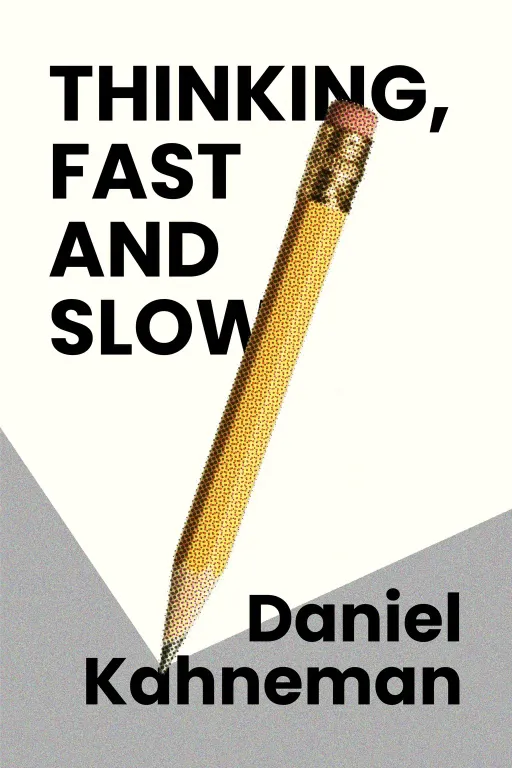
Atlas: Oh, I like that. Cheat codes for humanity. You're talking about Daniel Kahneman’s "Thinking, Fast and Slow" and the absolute epic "The Lessons of History" by Will and Ariel Durant, right? Kahneman, the Nobel laureate who basically mapped our cognitive quirks, and the Durants, who distilled of human drama into a little over a hundred pages. It’s like getting the micro and macro lenses for existence all at once.
Nova: Exactly! Kahneman, a psychologist who won the Nobel Prize in Economic Sciences, which is a fascinating tidbit in itself, shows us the inner workings of our decision-making. He literally changed how we understand human rationality. And the Durants, a husband and wife historian duo who spent over fifty years writing the monumental "Story of Civilization," then condensed all that wisdom into this concise masterpiece. It’s a work that challenges you to see patterns where you thought there was only chaos.
Atlas: It’s interesting how "Thinking, Fast and Slow" became this massive bestseller, even though it's dense with psychological research. It just shows how hungry people are to understand why they do what they do. And "Lessons of History," despite being written decades ago, still feels eerily relevant. It’s like they saw the future by looking at the past.
The Two Systems of Thought
SECTION
Nova: They absolutely did. And that brings us to our first core topic: understanding the two distinct systems that drive our thinking. Kahneman, in his seminal work, introduces us to System 1 and System 2. Atlas, can you give us the quick and dirty on what these two systems are all about?
Atlas: Oh, I can absolutely give you the quick and dirty, because my System 1 is all about quick and dirty! System 1 is our gut reaction, our intuition. It’s fast, automatic, emotional, and often unconscious. It’s what tells you a scene is scary or an answer is obvious. It’s the reflex, the snap judgment.
Nova: Like when you see a picture of a snarling dog, and you instantly feel a jolt of fear without consciously processing "that's a dog, it's snarling, it might bite." That's System 1 in action. It's brilliant for survival, but not always for accuracy.
Atlas: Right! And then you have System 2. This is the slow, deliberate, effortful, logical side of our brain. It’s what you engage when you’re solving a complex math problem, or filling out your tax returns, or trying to understand why your smart speaker just told you a joke in Portuguese.
Nova: Or, more relevant to our listeners, when you're trying to refine your strategic decision-making in a high-stakes environment. System 2 is what allows for critical thinking, planning, and conscious choice. Kahneman's work really highlights that we we operate primarily with System 2, but in reality, System 1 is running the show most of the time, often without us even realizing it.
Atlas: That’s kind of terrifying, actually. So, you’re saying that while we’re busy congratulating ourselves on our brilliant System 2 analysis, our System 1 is over there in the corner, pulling all the puppet strings? It’s like we have a super-intelligent, but incredibly lazy, roommate in our heads.
Nova: Precisely. And this lazy roommate, System 1, is prone to a whole host of biases. Availability bias, confirmation bias, anchoring effects… the list goes on. These aren't character flaws; they're inherent shortcuts our brains take to conserve energy.
Atlas: Give me an example. For someone who’s trying to architect change, who’s looking at the big picture and connecting historical threads, how does this System 1/System 2 interplay actually trip them up?
Nova: Let's consider a leader trying to implement a new company-wide policy. Their System 1 might jump to conclusions based on their past successes or failures, or the most recent, vivid anecdote they heard. Perhaps they had a highly successful project with a similar approach last year, so their System 1 immediately flags the new policy as "good" and "already proven."
Atlas: So they see a pattern where there isn't necessarily one, or they ignore crucial differences.
Nova: Exactly. Their System 1 might latch onto that positive association, leading them to overlook potential pitfalls or dismiss dissenting opinions too quickly. A System 2 leader would force themselves to slow down. They would actively seek out counter-evidence, run rigorous analyses, and engage in critical debate, even if it feels uncomfortable or goes against their initial "gut feeling." They'd be asking, "What are the variables here? How is this truly different from last year's project?"
Atlas: That makes sense. It’s not about eliminating System 1, because that’s impossible and probably undesirable, but it’s about recognizing its influence and consciously engaging System 2 when the stakes are high. For someone driven to build a better future, understanding this internal architecture is foundational.
The Enduring Lessons of History
SECTION
Nova: It absolutely is. And that leads us to our second core topic, which provides the macro lens to Kahneman's micro: the enduring lessons revealed by "The Lessons of History." The Durants took their half-century of historical study—truly a monumental undertaking—and condensed it into this incredibly insightful, compact book.
Atlas: It’s amazing they could do that. That’s like taking the entire Library of Congress and summarizing it on a napkin. What’s one of the most striking lessons they reveal that our listeners should absolutely be aware of?
Nova: One of their most profound insights is about the cyclical nature of history, particularly regarding human nature. They argue that while the technological and social landscapes change dramatically, human nature itself remains remarkably constant. We are still driven by the same fundamental desires, fears, and ambitions as our ancestors.
Atlas: So, the costumes change, the technology advances, but the core script of human behavior is pretty much the same? That’s both comforting and a little depressing. It means we're still falling for the same old tricks.
Nova: Well, it means we fall for the same old tricks, but it also means we can learn from past successes. The Durants highlight that throughout history, power tends to concentrate, wealth tends to redistribute, and civilizations rise and fall, often due to the same patterns of human behavior: greed, ambition, innovation, and decay.
Atlas: Give me a historical example from "The Lessons of History" that really illustrates this enduring human nature. Something that would resonate with someone trying to implement change today.
Nova: The Durants emphasize the constant struggle between individual liberty and social order. Throughout history, societies have swung like a pendulum between periods of excessive freedom leading to chaos, and excessive order leading to tyranny. Think about the Roman Republic's slow decline into empire. The individual liberties and fierce independence that initially made Rome strong eventually led to internal strife, civil wars, and a yearning for stability, which Augustus then provided through authoritarian rule.
Atlas: So, the very thing that made them great also contained the seeds of their eventual transformation. And the desire for order, for security, can easily morph into a willingness to sacrifice freedom. That’s a powerful lesson for any leader, especially one trying to navigate complex interactions and guide innovation with integrity.
Nova: Absolutely. A leader looking to architect change today, whether it's in a company or a community, must understand that these fundamental human desires for freedom and security are always at play. Push too hard for radical change without addressing the need for stability, and you risk a backlash. Focus only on order, and you stifle innovation and individual spirit. The challenge is finding that delicate balance, a lesson that societies have grappled with for millennia.
Atlas: It's like the Durants are saying, "Don't just look at the headlines; look at the deep currents." And those currents are shaped by human nature, which Kahneman helps us dissect at the individual level.
Synthesis & Takeaways
SECTION
Nova: Precisely. The deep question we posed for our listeners was: how might you refine your approach to strategic decision-making to better account for both immediate human biases and long-term historical forces? What these two books together give us is a powerful framework. Kahneman teaches us to distrust our gut reactions when the stakes are high, to actively engage System 2, to seek out data that contradicts our assumptions, and to understand the psychological levers at play in ourselves and others.
Atlas: And the Durants give you the wisdom of ages, showing you that the struggles you face today, the patterns of power, wealth, and human behavior, they've all played out before, just with different names and faces. It’s about recognizing the enduring truths and avoiding past pitfalls.
Nova: They provide the ultimate contextual approach. If you're a visionary who connects historical threads to present challenges, these insights allow you to see beyond the immediate noise of the present and understand the deeper currents. It suggests that true impactful change isn't just about clever ideas; it's about deeply understanding the human element at both the individual psychological level and the grand sweep of history.
Atlas: So, for our listeners who are constantly seeking to understand complex interactions and guide innovation with integrity, this isn't just academic. It’s a call to arms for more deliberate, historically informed, and psychologically aware leadership. It’s about making consistent, small, disciplined choices to engage System 2, and to learn from the countless choices made by those who came before us.
Nova: It's about knowing yourself and knowing history, because the more you understand both, the better equipped you are to truly architect a better future. The journey of consistent small wins, as our listener's growth recommendation suggests, starts with that deliberate choice to engage with these profound insights.
Atlas: What a powerful combination. It really frames leadership not just as knowing to do, but understanding people, including yourself, do what they do, and how those actions fit into a much larger, older story.
Nova: Absolutely. And that understanding is the ultimate competitive advantage for driving meaningful change.
Atlas: This is Aibrary. Congratulations on your growth!