The Growth Trap: Why More Effort Doesn't Always Mean More Progress.
7 minGolden Hook & Introduction
SECTION
Nova: What if I told you that the very thing you're told will guarantee your success – relentless, unyielding effort – is actually the biggest trap holding you back?
Atlas: Whoa. Hold on. That sounds… almost heretical, especially in the startup world. I imagine a lot of our listeners, particularly those building 0-1 growth strategies, feel that pressure to just keep pushing, to 'hustle harder.' Are you saying that's wrong?
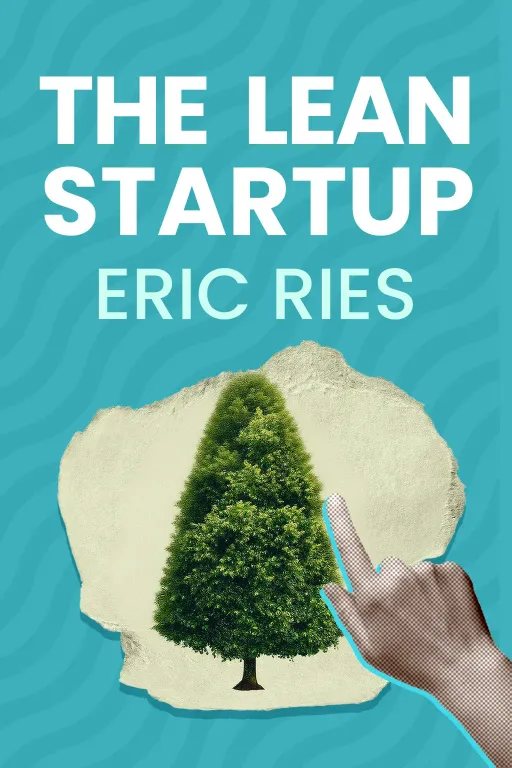
Nova: Not wrong, Atlas, but often tragically misdirected. Today, we're diving deep into what we call 'The Growth Trap': why more effort doesn't always mean more progress. It's a concept brilliantly articulated in foundational texts like by Eric Ries and by Ash Maurya. Ries, himself a former entrepreneur, developed many of these ideas from his own rollercoaster ride of failures and successes in the tech world. He sought to bring scientific rigor to the often chaotic process of building new ventures. Maurya then took these concepts and distilled them into an even more actionable, step-by-step guide for founders.
Atlas: Okay, so these aren't just academic theories. These are battle-tested strategies from people who've been in the trenches. But how does this apply to someone in an AI native edtech startup, trying to build something completely new, where the pressure to move fast and capture market share is immense?
The Illusion of Effort-Based Growth & The Burnout Trap
SECTION
Nova: Exactly. That's the crux of the growth trap. Many of us operate under the cold, hard belief that sheer effort growth. We see a problem, we throw more hours, more money, more people at it, assuming that eventually, something will stick. It’s like digging a massive, deep hole because you’re convinced the treasure is down there, without ever pausing to check if you’re even in the right spot. You just keep digging, exhausting yourself, and sometimes, you end up with a very impressive, very deep, very empty hole.
Atlas: So you're saying my 'hustle' culture might actually be hurting us? That sounds rough, but I can definitely relate to the exhaustion. What’s a good example of this playing out in the real world?
Nova: Think of a startup, let's call it 'LearnSphere,' pouring millions into developing a cutting-edge AI tutor that personalizes learning paths. They spent a year in stealth mode, convinced their algorithm was revolutionary. The team worked 80-hour weeks, fueled by caffeine and the belief they were building the future. They launched with a huge PR splash, only to find… lukewarm adoption. Students found the AI's personality off-putting, or it focused on the wrong subjects, or the interface was too complex.
Atlas: Oh, I've been there. Honestly, that’s the nightmare scenario for anyone building a new product, especially in a competitive space like edtech. All that effort, all that passion, just… fizzles.
Nova: Exactly. They burned through their seed funding, the team was completely burnt out, and they had to pivot dramatically, essentially starting from scratch. Their mistake wasn't a lack of effort, it was a lack of. They built something nobody truly wanted, or at least not in the way they built it.
Atlas: But wait, looking at this from a high-growth startup perspective, isn't experimentation a luxury we can't afford? How do you know you're digging in the wrong place you've dug the whole hole? Like, before you've spent all that time and money?
Iterative Learning as the True Engine of Growth & Tactical Insights
SECTION
Nova: That's precisely where Eric Ries and Ash Maurya come in. They say, stop digging one massive hole, and instead, dig a thousand tiny test holes. Their core idea is 'iterative learning.' It's about rapidly experimenting and getting feedback, what Ries calls the 'Build-Measure-Learn' loop. Don't build the entire AI tutor; build the simplest, smallest version that lets you test your riskiest assumption.
Atlas: Okay, so basically you're saying, stop guessing what users want and actually ask them, but in a structured, almost scientific way? What exactly does 'validated learning' mean in practice for, say, an edtech company trying a new AI feature? Can you give an example?
Nova: Absolutely. Instead of LearnSphere building the full AI tutor, they could have started with a "concierge MVP." That's a Minimum Viable Product where the 'AI' is actually a human behind the curtain. They could have offered a "personalized study plan" service, manually creating those plans for a small group of students. Or, even simpler, they could have designed a landing page describing the AI feature, with a clear call to action like 'Sign Up for Early Access' or 'Pre-order Now.'
Atlas: Oh, I see! So if hardly anyone signs up for the landing page, they've validated that there isn't enough interest they've written a single line of AI code. That makes sense! It’s like trying a new recipe: you don't cook a five-course meal for 20 people without tasting a tiny bit first, right?
Nova: Exactly! Or, if people sign up but then consistently drop off when they try the 'concierge' version, it tells you the they have is real, but your isn't quite right. That's validated learning: learning what customers actually want, and are willing to pay for, with the least amount of effort and resources. Ash Maurya, in, gives you the practical steps to apply these principles, from identifying the riskiest assumptions to designing those tiny experiments. It's about achieving product-market fit by listening to the market, not just building in a vacuum.
Atlas: That's actually really empowering. It offers a way to navigate that startup pressure with far less risk and burnout. It makes me wonder, what's the absolute smallest, most immediate thing someone can do to start this iterative process, especially if they're feeling overwhelmed by the sheer scale of building something from scratch?
Synthesis & Takeaways
SECTION
Nova: The power of these insights is that they fundamentally solve the problem of inefficient growth by providing a structured approach to validate ideas and conserve precious resources. It's about understanding that true growth isn't about pushing harder; it's about learning faster and smarter. It's about being agile enough to course-correct before you’ve invested too much time, too much money, and too much emotional energy into something that won't work.
Atlas: I imagine a lot of our listeners, especially those building 0-1 strategies in fast-paced environments, feel that pressure to just keep pushing. This approach offers a way to navigate that pressure with far less risk and burnout. It’s about taking control, not just pushing a boulder uphill.
Nova: Absolutely. And the tiny step you can take today, right now? Identify one assumption you hold about your current growth strategy. Just one. Then, design the smallest possible experiment to test whether it holds true. It could be a simple survey, a quick interview, a landing page, or even a manual process. Just start small, learn, and iterate.
Atlas: That’s a great way to put it. It’s about being deliberate and intelligent with your valuable time and energy.
Nova: This is Aibrary. Congratulations on your growth!