The Growth Trap: Why More Effort Doesn't Always Mean More Progress.
8 minGolden Hook & Introduction
SECTION
Nova: Working harder may actually make you productive. In fact, it might be the biggest trap holding back your growth.
Atlas: Hold on, Nova. Are you really saying that all those late nights, all that grinding... it's actually counterproductive? That's going to hit hard for anyone trying to build something from scratch, especially in a fast-paced environment.
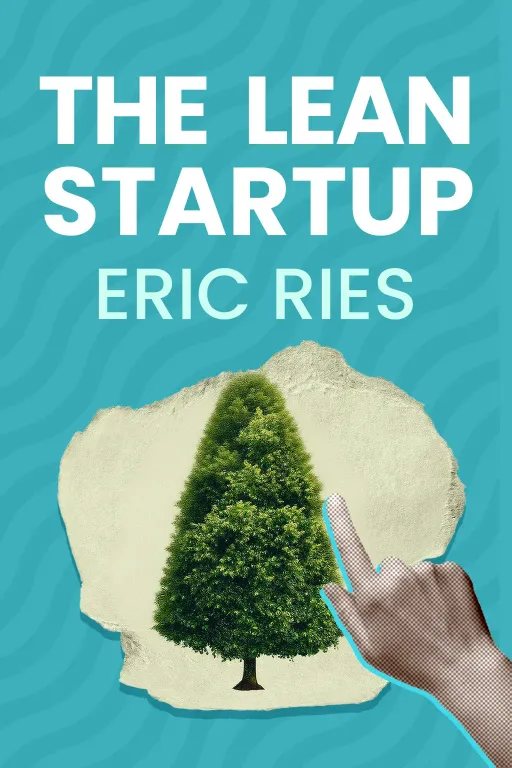
Nova: Absolutely, Atlas. Today we're dissecting a fascinating concept that challenges the very foundation of how many of us pursue success. We're drawing heavily from foundational work like 'The Lean Startup' by Eric Ries and 'Running Lean' by Ash Maurya.
Atlas: Both Ries and Maurya became household names in the startup world by offering a radical departure from traditional business planning, advocating for scientific experimentation over gut feelings. So, we're talking about why just pushing harder isn't enough, and what the smarter path.
Nova: Exactly. We're diving into 'The Growth Trap: Why More Effort Doesn't Always Mean More Progress.' First, we'll explore why that relentless 'hustle' often backfires, especially in dynamic tech environments. Then, we'll uncover how a structured, 'lean' approach to validation and learning can truly redefine progress for any new venture.
The Illusion of Effort-Based Growth
SECTION
Nova: You know, it's a cold, hard fact: many of us are wired to believe that sheer effort guarantees growth. We see a problem, we throw bodies and hours at it, expecting breakthroughs. But in the breakneck speed of startups, particularly in AI where things change daily, burning out rarely leads to those breakthroughs.
Atlas: Oh, I know that feeling. I imagine a lot of our listeners, especially those managing growth in new tech, feel that pressure. The idea that if you just work harder, the results will magically appear. But what's the real cost of that mindset?
Nova: The real cost is colossal waste. Imagine an AI edtech startup, let's call them 'LearnBot.' Their team of brilliant engineers and educators noticed a gap in personalized learning for high schoolers. Their assumption? That students needed an AI tutor that could adapt to every single learning style and subject simultaneously.
Atlas: Sounds ambitious. And probably expensive.
Nova: Extremely. The founders, driven by passion and that 'more effort' mantra, poured everything into building a colossal platform. They spent months, late nights, weekends, developing complex algorithms, designing beautiful UIs, integrating every feature they could dream of. They were busy, working harder than ever. The energy in the office was electric, fueled by the belief they were building the next big thing.
Atlas: So, they were building, building, building. But were they... measuring or learning?
Nova: Precisely. They were in a building frenzy. They launched with a huge fanfare, convinced their sheer effort would translate into instant adoption. But the reality was brutal. Students found the platform overwhelming; teachers said it was too complex to integrate. The personalized features, while technically brilliant, weren't solving the core problems students were facing. Users churned almost immediately. The team, utterly exhausted, found themselves with a sophisticated product nobody truly wanted, and a dwindling bank account.
Atlas: Wow. That's kind of heartbreaking. All that passion, all that effort, just... wasted. So, the trap isn't that they weren't working hard enough, it's that they were working hard on the things.
Nova: Exactly. Their relentless pushing was based on an unvalidated assumption about what users needed. They built a mansion when users just wanted a sturdy tent. This kind of "build it and they will come" mentality, fueled by the belief that effort alone is enough, is a direct path to burnout and failure. It's why so many brilliant ideas, and brilliant people, crash and burn.
Validated Learning as the Engine of True Progress
SECTION
Atlas: So, if brute force isn't the answer, what the smart path for a 'LearnBot' that's trying to avoid that kind of devastating failure? What's the alternative to just pouring endless effort into a black hole?
Nova: This is where the insights from Eric Ries's 'The Lean Startup' and Ash Maurya's 'Running Lean' become absolute lifelines. They fundamentally solve the problem of inefficient growth by providing a structured approach to validate ideas and conserve precious resources.
Atlas: Okay, so, what's Ries's big idea then? I've heard 'Build-Measure-Learn' thrown around a lot, but what does it really mean in practice?
Nova: Ries argues that continuous innovation requires rapid experimentation and validated learning. He's talking about a cycle: you a minimum viable product - the smallest thing you can create to test an assumption. Then you how users interact with it, gathering real data. And finally, you from that data, deciding whether to pivot or persevere.
Atlas: So, it's like a scientific method for startups. Instead of just guessing, you're actually testing your hypotheses. But how does Maurya build on that?
Nova: Maurya takes Ries's principles and makes them incredibly practical. He emphasizes identifying the core problem you're trying to solve, testing solutions quickly, and measuring what matters – not just vanity metrics. For our 'LearnBot' example, applying a lean approach would look completely different.
Atlas: Give me an example. How would 'Lean LearnBot' avoid the trap of 'Effort-Based Failure'?
Nova: Instead of building an all-encompassing AI tutor initially, Lean LearnBot would have started with a tiny step. Their biggest assumption was that students needed help in subjects. A lean approach would be to identify one high-stakes subject – say, calculus – and one specific pain point, like understanding derivatives.
Atlas: Okay, so they're narrowing the focus. What's the smallest experiment they could run?
Nova: They wouldn't build an AI. They might create a simple chatbot interface, even powered by a human on the backend pretending to be an AI, offering quick explanations and practice problems for derivatives. They would then measure engagement: Are students asking questions? Are they completing the practice? Are they actually grasping the concept better?
Atlas: That's fascinating. So, they're not even building the full AI, they're just testing if the of an AI-assisted derivative tutor is valuable.
Nova: Exactly! They build the smallest possible thing to get validated learning. If students found that basic chatbot incredibly helpful for derivatives, they'd consider investing more in AI for that specific problem. If it flopped, they'd pivot without having burned millions. Maurya's strength is showing you how to define those problems, design those tests, and measure the right things to achieve product-market fit with minimal waste.
Atlas: That makes me wonder about the implication for growth leaders. When you're building 0-1 strategies, it's easy to feel like you have to have all the answers and build everything at once. This sounds like it's saying, "Don't try to solve all problems; find the most critical one and test it small."
Nova: That's a perfect summary. It's about conserving precious resources – time, money, and team energy – by making sure you're building something someone actually needs. It's the difference between blindly digging a hundred shallow holes hoping to find water, and scientifically identifying where water is most likely to be, and then digging one deep well.
Synthesis & Takeaways
SECTION
Nova: So, what we're really talking about today is fundamentally shifting our perspective from 'how much effort are we putting in?' to 'how much validated learning are we generating?' The growth trap isn't working hard; it's working hard on the things because we haven't taken the time to truly learn what works.
Atlas: Absolutely. For anyone immersed in the world of AI startups, where the pace is relentless and the stakes are incredibly high, this isn't just theory. It's a survival guide. It's about moving with speed, yes, but with intention, with data, and with a constant feedback loop.
Nova: And the tiny step for our listeners, the immediate action they can take, is to identify just one assumption they hold about their current growth strategy. Maybe it's about a feature your users 'need,' or a marketing channel that 'must work.' Then, design the smallest possible experiment to test whether that assumption holds true. Don't build the whole product; build the minimum viable test.
Atlas: That's a great way to put it. It’s about being smart with your effort, not just being busy. It sounds like a path to genuine progress, and less burnout.
Nova: Precisely.
Atlas: This is Aibrary. Congratulations on your growth!