Stop Guessing, Start Building: The Lean Approach to Product-Market Fit
8 minGolden Hook & Introduction
SECTION
Nova: Atlas, imagine this: You've poured your heart, soul, and maybe even your life savings into a brilliant idea. You've spent years building it, perfecting every detail, only for it to launch and... crickets. Or worse, outright rejection. What does that feel like?
Atlas: Oh man, that's the entrepreneur's worst nightmare, right? Like building a magnificent sandcastle, brick by painstaking brick, only to watch the tide come in and wash it all away. Pure devastation. It's the ultimate 'what if?' that keeps so many people from even starting.
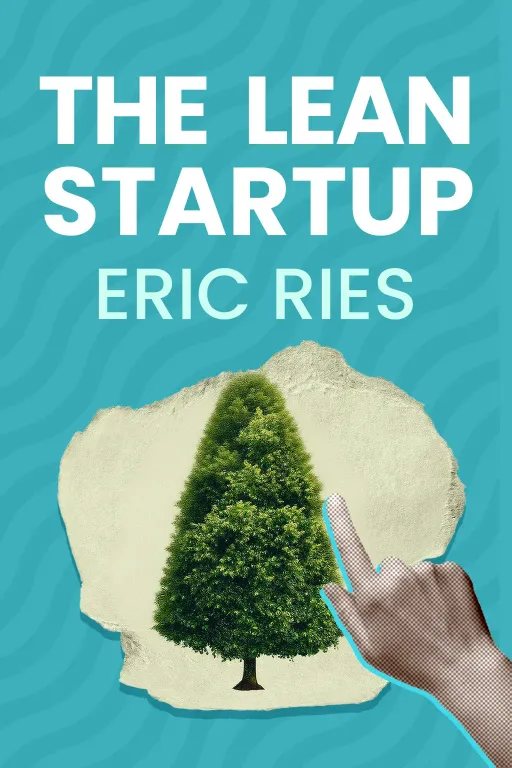
Nova: Exactly! And that nightmare, that feeling of building something nobody truly needs, is exactly what Eric Ries, the author of, aims to prevent. Ries himself faced this brutal reality. He started several companies, one of which, despite having a sophisticated product, failed spectacularly. That experience wasn't just a setback; it was a profound learning moment that reshaped his entire understanding of innovation. His book, which became a global phenomenon, really codified a new, more agile approach to how we bring ideas to life.
Atlas: So it's not just theory, it's born from the trenches of actual failure. That gives it a lot more weight.
Nova: Absolutely. And building on Ries's foundational work, we also have Ash Maurya, who, with his book, gives us the practical blueprint for taking those concepts and actually executing them. Together, these insights fundamentally shift how you approach product development, turning uncertainty into a structured learning process.
The Lean Startup Philosophy: Validated Learning and MVPs
SECTION
Nova: So, let's start with the cold, hard fact: many great ideas, even brilliant ones, fail because they build things people don't truly need. Think of it like this: a chef spends years perfecting a single, incredibly complex dish, using rare ingredients and intricate techniques. They finally open their restaurant, confident it will be a hit, only to find out their customers actually just wanted a really good, simple burger. All that effort, all that passion, wasted.
Atlas: That’s going to resonate with anyone who’s ever poured their energy into something, whether it’s a product, a project, or even a relationship, only to find out they were completely off target. It’s like climbing the wrong mountain.
Nova: Precisely. And Ries argues for continuous innovation through what he calls "validated learning." Instead of the chef spending years on that one dish, they should have made a few simple appetizers, put them out, watched what people ate, and asked for feedback. This leads to the concept of the Minimum Viable Product, or MVP.
Atlas: Ah, the MVP. Everyone talks about it, but I imagine a lot of people misunderstand it. What exactly do you mean by 'minimal'? Isn't there a risk of building something so basic it turns people off or doesn't demonstrate your full vision?
Nova: That’s a brilliant question, and it hits at the heart of the common misconception. An MVP isn't about building a shoddy product. It's the smallest possible thing you can build that allows you to start the process of validated learning. Think of it less as a stripped-down car and more like a skateboard if you're trying to prove the concept of personal transportation. The goal isn't to be a complete solution, but to test your core assumptions with the least amount of effort and development time.
Atlas: Like, you're not building the whole car, you're just trying to see if people even want to move around on wheels in the first place?
Nova: Exactly! Dropbox is a classic example. Before they built their entire file-syncing infrastructure, their founder, Drew Houston, created a simple video demonstrating how it would work. That video their MVP. It didn't involve any complex backend code, but it proved there was immense demand for the problem it solved. The sign-up list exploded. That saved them years of development on a product that might have been rejected otherwise.
Atlas: Wow. So, instead of guessing, you're essentially running mini-experiments in the real world. That turns product development into almost a scientific process.
Nova: That’s the beauty of it. It’s the Build-Measure-Learn feedback loop. You build your MVP, you measure how users interact with it, and then you learn from that data to decide whether to pivot or persevere. It's about constant iteration, not one grand, risky launch.
Running Lean: Practical Experimentation and Assumption Testing
SECTION
Nova: Ries gave us the 'why,' the philosophical shift. But for many, the question then becomes, 'Okay, I get it, but do I actually do this? Where do I even start?' And that's where Ash Maurya, with his book, comes in. He's like the master craftsman showing you the exact tools and techniques to implement validated learning.
Atlas: That makes sense. It’s one thing to understand the concept, but translating that into actionable steps can be a whole other challenge. So, what’s Maurya’s big contribution to this?
Nova: Maurya takes Ries's concepts and provides a practical framework, emphasizing identifying your "riskiest assumptions" first. Most people, when starting a new venture, have a hundred assumptions: 'Customers will love this feature,' 'They'll pay this price,' 'We can acquire them cheaply.' Maurya says, don't try to test everything at once. Identify the one or two assumptions that, if wrong, would completely sink your entire idea.
Atlas: Hold on. How do you even know what your riskiest assumption? Most people probably think they know, but they're often wrong about what truly matters. Isn't that part of the problem?
Nova: That's the critical insight! It requires a mental shift. Your riskiest assumption isn't necessarily the hardest technical problem. It might be something as simple as, 'Do people even care about this problem enough to pay for a solution?' Or, 'Will they use it in the way we envision?' Maurya provides tools, like a structured way to map out your business model, that helps you visualize all your assumptions. Then, you prioritize them by risk and uncertainty.
Atlas: So you're not just guessing what to test; you're systematically breaking down your entire business idea into testable hypotheses. Give me an example of how someone might test a 'riskiest assumption.'
Nova: Absolutely. Let's say you're building an app that helps people manage their personal finances. Your biggest assumption might be that people are actually to manually input all their spending data, or that they a new app with their financial details. Instead of building the entire app, you could create a simple landing page describing the app, and ask people to sign up for early access while also asking a few key questions about their current financial habits and their willingness to share data. You measure the conversion rate, the responses to your questions, and you learn if your core assumptions about user behavior and trust are valid.
Atlas: That’s a bit like market research, but more active, more iterative. You're not just asking what people they'll do; you're putting a tiny, low-cost version of your product in front of them and seeing what they do.
Nova: Exactly. It's about getting out of the building and into the minds and behaviors of your potential customers. This approach fundamentally shifts how you approach product development, turning uncertainty into a structured learning process. It's less about having all the answers upfront and more about designing your way to discover them.
Synthesis & Takeaways
SECTION
Nova: So, when you combine Ries's overarching philosophy of validated learning with Maurya's practical, systematic approach to testing assumptions, you get a potent toolkit. It's about replacing wishful thinking with empirical data, and replacing massive, risky launches with rapid, iterative learning cycles.
Atlas: It’s a profound shift in mindset, really. It moves you from being an inventor who hopes people want what you've built, to being a problem-solver who continuously learns what people truly need. It's about humility in creation, admitting you don't have all the answers, and letting the market guide you.
Nova: And that's the deep insight here. This isn't just about building better products; it’s about cultivating a mindset of continuous learning, resilience, and humility in any endeavor. It’s about designing your way to discovery, rather than hoping for genius. It's about acknowledging that most initial ideas are flawed, and that's okay, as long as you're set up to learn and adapt quickly.
Atlas: So, for our listeners, what's a tiny step they could take this week, right now, to stop guessing and start building?
Nova: Identify the biggest unknown for your current idea, project, or even a personal goal. Then, design a tiny experiment to test just that one unknown this week. It doesn't have to be perfect; it just needs to get you a real answer.
Atlas: That's actually really inspiring. It takes the pressure off 'getting it right' and puts it on 'learning quickly.' I love that.
Nova: Me too. And that's what makes this approach so powerful.
Nova: This is Aibrary. Congratulations on your growth!