Stop Guessing, Start Building: The Guide to Entrepreneurial Clarity
7 minGolden Hook & Introduction
SECTION
Nova: Most people think the riskiest thing you can do when starting a new venture is to fail. But what if the risk isn't failing, but spending years perfecting something nobody actually wants?
Atlas: Whoa, that’s a flip. So, you’re saying the biggest entrepreneurial trap isn't inadequacy, but overpreparation?
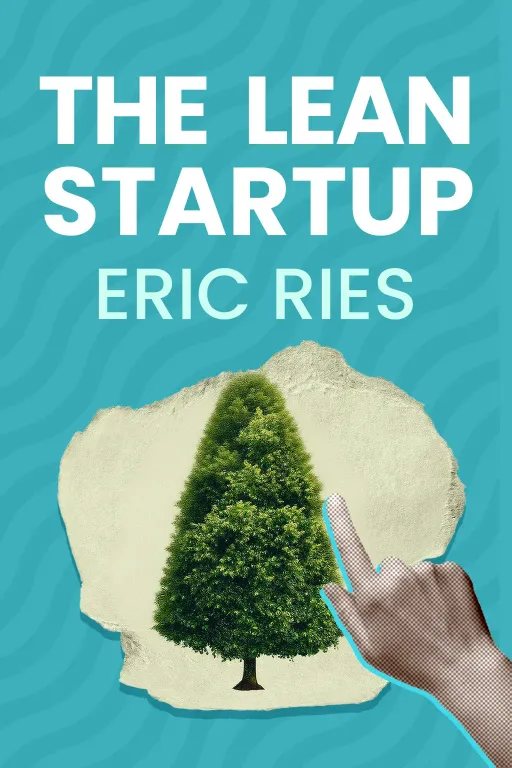
Nova: Exactly. And today, we're tackling that question head-on with insights from. While not a single book, it synthesizes the wisdom of giants like Eric Ries, whose concept revolutionized how Silicon Valley approaches innovation, and Alexander Osterwalder and Yves Pigneur, whose Business Model Canvas became a global standard for strategic planning in just a few years. These aren't just academic theories; they're the battle-tested blueprints for successful ventures across the globe.
Atlas: That sounds like exactly what many of our listeners, who are looking for new career paths or feeling stuck in their current ones, need to hear. How do we stop guessing and start building?
Nova: We start by understanding the cold, hard truth: starting something new feels like a leap into the unknown. But you don't have to get stuck in endless planning, fearing failure. You can build and learn at the same time, reducing risk as you go.
The Peril of Over-Planning and the Power of the MVP
SECTION
Nova: This brings us to our first big idea: the peril of over-planning. Many aspiring entrepreneurs, especially those with a visionary spirit, get caught in 'analysis paralysis.' They want everything perfect before launch. But Eric Ries, with 'The Lean Startup,' flipped that on its head. He argues for building a Minimum Viable Product – an MVP.
Atlas: An MVP? So, like, a half-baked idea you throw out there?
Nova: Not half-baked, but strategically minimal. Think of it this way: a car manufacturer doesn't build a full car to test if people want transportation. They might start with a skateboard, then a bicycle, then a motorcycle. Each step is an MVP, testing a core assumption. Ries's whole methodology is about a 'build-measure-learn' feedback loop. You build the smallest thing you can, put it in front of real users, measure their reaction, and then learn what to do next.
Atlas: Oh, I like that! So it’s like, instead of trying to predict the future, you're just gently nudging it in the right direction. For someone looking to master new domains, this feels less like a gamble and more like a controlled experiment.
Nova: Exactly. Take the example of Dropbox. Before they built any complex syncing software, the founder, Drew Houston, made a simple three-minute video demonstrating how Dropbox work. He posted it online, and within hours, tens of thousands of people signed up for a service that didn't even exist yet! That video was their MVP. It proved there was massive demand, preventing them from wasting years building something no one wanted.
Atlas: That’s incredible! So, the MVP isn’t just about saving time; it's about validating your riskiest assumptions with minimal effort. But what about those who aren't building tech products? What if you're offering a service, or a new approach to something?
Nova: The principle holds. A coach might offer a free 15-minute consultation as an MVP to test if their unique coaching style resonates. A caterer might host a small tasting event for a new menu concept. It's about finding the smallest possible unit of value you can deliver to get real feedback, reducing the huge financial and emotional risk of a full-scale launch. This approach empowers you to move forward, even when the path ahead feels uncertain, making that leap into the unknown far less daunting.
The Business Model Canvas: A Visual Compass for Entrepreneurial Clarity
SECTION
Nova: And that naturally leads us to the second key idea, which often acts as a counterpoint to the 'just build it' mentality: getting clarity without getting stuck. This is where Alexander Osterwalder and Yves Pigneur's Business Model Canvas comes in.
Atlas: Okay, so once I've got the MVP mindset, how do I even know what to build first? I imagine a lot of our listeners, who value building connections and practical impact, might feel overwhelmed by the sheer number of moving parts in a new venture.
Nova: Absolutely. The Canvas is a visual tool that helps you map out your entire business idea on a single page. It breaks your business down into nine essential building blocks: customer segments, value propositions, channels, customer relationships, revenue streams, key resources, key activities, key partnerships, and cost structure. It's like having a blueprint before you even start digging.
Atlas: In other words, it's not just a fancy diagram; it's a way to see how all the pieces fit together, and more importantly, where the biggest unknowns are?
Nova: Precisely. Let's say you have an idea for a new online platform connecting local artisans with customers. Before the Canvas, you might just jump into building the platform. With the Canvas, you'd ask: Who are my? What am I offering them? How will I build? Who are my —the local artisans themselves? And crucially, what are my?
Atlas: Ah, the riskiest assumption! So it helps you identify what needs an MVP the most. It sounds like a way to apply that iterative learning even at the planning stage.
Nova: Exactly! It fundamentally shifts you from endless, abstract planning to iterative, validated learning. You might realize your riskiest assumption isn't whether people want to buy artisan goods online, but whether artisans are willing to pay for your platform. That insight, gained on paper with sticky notes, saves you building a whole platform only to find out your supply side is broken. It allows you to focus your energy and resources where they will have the most impact.
Atlas: That’s a great example. It's like using an X-ray to find the weak spot before you start building the entire house. For someone seeking to lead with empathy and build a robust support system, understanding these connections visually must be incredibly powerful. It also helps in networking intentionally, because you know exactly who your key partners and customers are from the start.
Synthesis & Takeaways
SECTION
Nova: So, what we're really talking about here is a fundamental shift in entrepreneurial mindset. It's about moving away from the fear of the unknown, from guessing, and towards a system of informed, iterative building.
Atlas: It’s about embracing the journey of exploration, seeing uncertainty as opportunity, just like our aspiring entrepreneurs are trying to do. Instead of a grand, terrifying leap, it becomes a series of smaller, validated steps.
Nova: Exactly. My tiny step for our listeners this week is to take your current career path or new venture idea, and map it out using a simple Business Model Canvas. You can find templates online. Then, identify your single riskiest assumption. What's the one thing that, if it turns out to be wrong, completely blows up your idea?
Atlas: And once you've identified that riskiest assumption, you've got a clear target for your first, smallest, most focused MVP. It's about building clarity and reducing risk, not by avoiding action, but by taking smart, measured action.
Nova: Precisely. It's about building that entrepreneurial resilience, step by tiny step. So, what's your riskiest assumption? Think about it.
Atlas: Think about it, and then don't just think – test it. That’s a powerful call to action. Thanks, Nova, this has been incredibly insightful.
Nova: My pleasure, Atlas. It's always a journey into clarity with you.
Atlas: This is Aibrary. Congratulations on your growth!