Build for Tomorrow: Why Antifragility is Your Ultimate Design Principle
10 minGolden Hook & Introduction
SECTION
Nova: What if everything you've been taught about stability, about building things to last, is fundamentally flawed? What if the very act of trying to make things robust is actually making them brittle?
Atlas: Whoa, that's a bold claim, Nova. Are you saying our pursuit of safety is actually making us weaker? Because that sounds… counter-intuitive, to say the least, especially for anyone trying to build something innovative in a chaotic market.
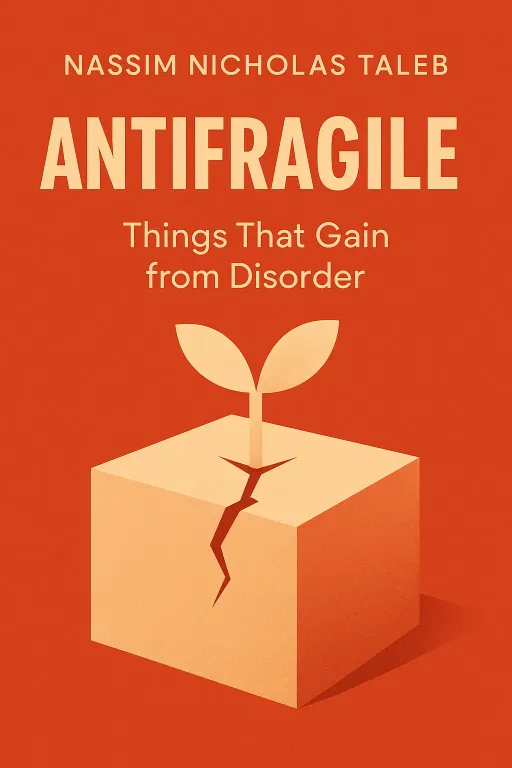
Nova: Absolutely, Atlas. And it's the central premise behind a concept that’s truly revolutionized how some of the sharpest minds approach design, business, and even personal growth. Today, we're diving into the powerful idea of antifragility, a term coined by the brilliant Nassim Nicholas Taleb in his seminal work, "Antifragile."
Atlas: Ah, Taleb! The former options trader and risk analyst. I remember hearing that he developed these ideas from his real-world experience navigating unpredictable financial markets. That certainly gives his theories a unique, hard-won credibility. He's not just theorizing from an ivory tower.
Nova: Exactly! His insights come from the trenches of extreme uncertainty. And the concept of antifragility is crucial for anyone who, like many of our listeners, is trying to innovate, disrupt, and build something sustainable in a world that seems to throw a new curveball every other week. We’re going to explore how you can not just survive, but actively thrive and grow stronger in the face of constant change and uncertainty.
Atlas: Right, because 'surviving' just sounds like holding on for dear life. I’m certainly not trying to just 'survive' the next market shift; I want to benefit from it. So, how is this different from just being… resilient? I thought resilience was the holy grail.
Beyond Resilience: Understanding Antifragility
SECTION
Nova: That’s the critical distinction, Atlas. And it’s where Taleb really challenges our conventional thinking. Most people think about robustness or resilience. A robust system resists damage; it stays the same. Think of a strong, unyielding wall. It can withstand a lot, but if the force is too great, it shatters.
Atlas: Okay, a wall. Makes sense. It's built to change.
Nova: Then there's resilience. A resilient system bounces back to its original state after a shock. Imagine a rubber ball. You squeeze it, it deforms, but then it springs back to its original shape. It handles stress, but it doesn't fundamentally change or improve from it. It just recovers.
Atlas: I see. So, you get hit, you recover. That’s what most of us aim for, right? To get back up when we fall.
Nova: Precisely. But antifragility is an entirely different beast. An antifragile system doesn't just resist or recover; it from disorder, volatility, and stressors. It gets stronger, smarter, or better because it’s exposed to challenges. It’s like the mythical Hydra, where cutting off a head only makes two more grow in its place. Or, a more relatable example: your muscles.
Atlas: My muscles? How are they antifragile?
Nova: When you lift weights, you're intentionally putting stress on your muscle fibers. You're creating tiny tears, micro-damage. If you were merely robust, your muscles would just resist the weight without changing. If you were resilient, they'd recover to their previous strength. But because your muscles are antifragile, they don't just recover; they repair themselves to be than they were before the stress. They gain from disorder.
Atlas: Wow. So, building something 'safe' and 'protected' might actually make it unable to grow? Because it's never exposed to the stressors that would make it stronger? That's a mind-bending thought for anyone trying to build a stable system. It implies that too much stability can lead to fragility.
Nova: It absolutely does. Taleb argues that by shielding things from small shocks, we make them vulnerable to catastrophic large ones. Think about forest fires. If you suppress all small fires for decades, you end up with an enormous buildup of fuel, and when a fire eventually breaks out, it's devastating. A truly antifragile forest would have small, controlled burns that clear out underbrush, making the overall ecosystem healthier and more resistant to a major inferno.
Atlas: So, it's not about avoiding all risk, but about embracing the right kind of risk, the kind that makes you stronger. That sounds like a powerful competitive advantage for anyone trying to scale a new idea, especially when the market is constantly shifting.
Building for Disorder: Practical Antifragile Strategies
SECTION
Nova: That question about businesses and systems leads us perfectly into the practical side of this. If we accept that disorder is inevitable, how do we design for it? How do we build systems that don't just survive, but actively gain from the chaos? This is where we can look at methodologies like Eric Ries' "Lean Startup."
Atlas: The Lean Startup. That’s a cornerstone for so many disruptors and architects in the tech world. But how does it fit into antifragility? I always thought of it as a way to be efficient and avoid wasting resources.
Nova: It’s precisely because it’s efficient embracing uncertainty that it’s antifragile. The core principles of the Lean Startup – build-measure-learn, rapid iteration, validated learning – are all about deliberately exposing your product or idea to small, manageable stressors: market feedback and user data. Instead of trying to perfect a product in a vacuum and then launching it, hoping it works, you release a Minimum Viable Product, or MVP.
Atlas: Right, get it out there fast, even if it's not perfect.
Nova: Exactly. And then you measure how users interact with it, learn from that data – which often involves unexpected feedback or outright "failures" – and then rapidly iterate. Each piece of feedback, each unexpected user behavior, each "failure" of a feature, isn't a setback; it's a data point that makes your product smarter, stronger, and more aligned with actual market needs. You're gaining from disorder, from the unpredictability of user behavior.
Atlas: So, instead of trying to predict the future and build a perfect product, we build a system that gets smarter it encounters the unpredictable? That sounds like the ultimate competitive advantage for anyone trying to disrupt a market or scale a new idea. You’re essentially turning potential weaknesses into learning opportunities.
Nova: Think of it like this: a traditional business plan is like trying to build a perfectly robust bridge without ever testing its materials. A Lean Startup approach is like building small sections, testing them for weaknesses, learning from the stress, and then using that knowledge to build the next section even stronger. Each small "failure" makes the overall structure more robust, and ultimately, antifragile.
Atlas: Can you give me a concrete example of a company that embodies this? Someone who really pivoted based on unexpected market stressors and came out stronger?
Nova: Absolutely. Consider Instagram. It didn't start as Instagram. It began as an app called Burbn, which was a location-based check-in app, similar to Foursquare, but with gaming elements. It had a photo-sharing feature, but it was just one of many.
Atlas: Burbn? I've never even heard of it.
Nova: Most people haven't! But the founders noticed something critical: users weren't engaging with the check-in features or the gaming. What they doing, disproportionately, was sharing photos. They saw this unexpected user behavior, this "disorder" in their original plan, not as a failure of Burbn, but as a signal. They learned from it.
Atlas: So, they didn't stubbornly stick to their original vision. They embraced the feedback.
Nova: Precisely. They stripped away almost everything else and focused solely on photo sharing, adding filters and social features. That pivot, that willingness to let go of their initial robust plan and gain from the unexpected "stressor" of user disinterest, transformed Burbn into Instagram, which, of course, went on to become a global phenomenon. It’s a perfect illustration of how benefiting from disorder creates immense value.
Atlas: That’s a fantastic example. But what about the personal side? For founders, for leaders, for anyone trying to build something new, constant feedback and pivoting can be exhausting. How do you build personal antifragility? Because that "Founder Resilience" is a huge part of sustainable growth.
Nova: That’s a crucial point, Atlas, and it highlights that antifragility isn't just about systems; it's a mindset. For individuals, personal antifragility comes from embracing challenges as opportunities for growth, not just threats to be avoided. It means having a bias towards action and learning, rather than paralysis by analysis. It’s about cultivating a mindset where mistakes aren't failures, but valuable data points that make you smarter and more capable for the next challenge.
Synthesis & Takeaways
SECTION
Nova: So, ultimately, antifragility is about shifting our perspective. It’s moving from trying to predict the unpredictable, which is often a fool's errand, to designing ourselves and our systems to from that unpredictability. It’s an intelligent exposure to risk.
Atlas: It sounds like it's about actively seeking out those small, manageable stressors, learning from them, and letting them make us stronger, not just as systems and projects, but as individuals. It’s about building a muscle for growth out of chaos.
Nova: Exactly. And the profound insight here is that true strength isn't found in avoiding all shocks, but in cultivating the capacity to grow from them. The most innovative and impactful ventures aren't those that perfectly predict the future, but those that are designed to evolve and improve with every unexpected turn.
Atlas: That really resonates. It’s a call to action for anyone who wants to build something meaningful. So, for our listeners today, what's one tiny step they can take to start building for tomorrow?
Nova: I'd say, identify one area in your current project or routine that you can intentionally make 'antifragile.' Think about it: how can that area actually from unexpected events or small stresses? Don't just protect it; design it to gain from disorder.
Atlas: I love that. It turns a potential threat into a growth opportunity. Share your ideas with us. We'd love to hear how you're embracing the antifragile mindset.
Nova: Absolutely. Keep building, keep learning, and keep growing stronger from everything the world throws your way.
Atlas: This is Aibrary. Congratulations on your growth!