

The Lean Brand Engine: Building Your Media Presence with Validated Learning
Golden Hook & Introduction
SECTION
Atlas: Picture this. You spend a month designing the perfect website. You write ten brilliant, insightful articles for your blog. You craft the perfect launch announcement. You hit publish… and you hear crickets. Nothing. That silence is the sound of wasted effort.
Camila Escarlet: It’s a sound that I think every new entrepreneur, especially in media or marketing, is terrified of. There's this immense pressure to launch with something big and flawless, but the risk of it landing in a void is just… paralyzing. You spend all this time polishing, and for what?
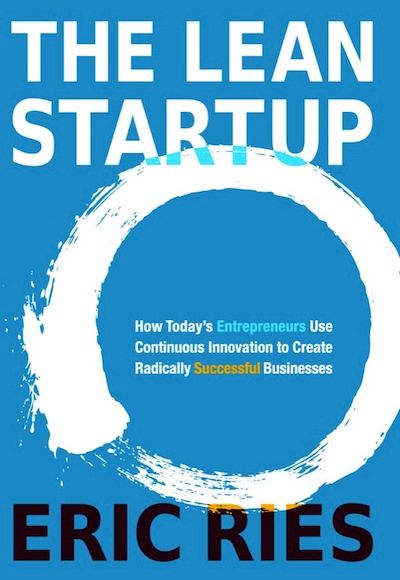
Atlas: Exactly. But what if that entire approach is wrong? What if the goal isn't a perfect launch, but a messy, fast, launch? That's the radical idea behind Eric Ries's book,, and today we're going to show why it's the most important book a modern marketer or brand-builder can read.
Camila Escarlet: I’m excited. As someone building a business in the media space, I'm always looking for better frameworks, and the idea of applying startup principles to content seems incredibly powerful.
Atlas: It is. And we'll dive deep into this from two perspectives. First, we'll redefine the 'Minimum Viable Product' for anyone building a brand or creating content. Forget software; think brand assets.
Camila Escarlet: Okay, I’m intrigued.
Atlas: Then, we'll unpack the powerful 'Build-Measure-Learn' feedback loop and show you how to use it as your personal content strategy engine. By the end of this, you'll have a system to stop guessing and start knowing what your audience wants.
Deep Dive into Core Topic 1: The Minimum Viable Brand Asset
SECTION
Atlas: Alright, let's start with that first idea: the Minimum Viable Product, or MVP. Most people hear MVP and think of a clunky, barely-working app. Forget that. An MVP, at its core, is an experiment. It's the smallest, fastest thing you can build to test a fundamental business hypothesis.
Camila Escarlet: So it’s not about the product itself, but about testing an idea?
Atlas: Precisely. The classic story from the book is Zappos. In 1999, the founder, Nick Swinmurn, had a hypothesis: people would be willing to buy shoes online. Now, the traditional way to test this would be to build a massive inventory, lease a warehouse, create a complex e-commerce site… a multi-million dollar gamble.
Camila Escarlet: Which is exactly the "build it and they will come" model we just talked about. The one that so often fails.
Atlas: Right. Instead, Swinmurn ran an experiment. He went to local shoe stores, took pictures of their shoes, and posted them on a super simple website. He didn't own a single shoe. When an order came in, he would physically go to the store, buy the shoes at full retail price, and mail them to the customer.
Camila Escarlet: Wow. So he was losing money on every sale.
Atlas: In the short term, yes! But what he was was infinitely more valuable. He was getting validated learning. He proved, with minimal investment, that his core hypothesis was true. People buy shoes online. The crappy website and the manual fulfillment process—that was his MVP. It wasn't designed to make a profit; it was designed to answer a question.
Camila Escarlet: Okay, that clicks for me on a deep level. As an analytical person, I love that. It reframes the goal. So, if I'm applying this to my world—media and marketing—my core hypothesis isn't "will people buy shoes?" It's something like, "Will VPs of Corporate Communication care about my unique analysis of digital PR trends?"
Atlas: Exactly! Now, what's the MVP for that?
Camila Escarlet: Well, the traditional route would be to build a whole consulting website, launch a multi-episode podcast series, maybe write an e-book. The Zappos equivalent of building the warehouse.
Atlas: Don't do it. What's the smallest, fastest test?
Camila Escarlet: Following this logic... it would be a single, well-researched, maybe 500-word LinkedIn post. One that presents my core, controversial idea and is targeted at that specific audience. The post itself is the MVP. The "product" is the idea, and the post is the experiment to see if anyone "buys" it with a meaningful comment, a share, or a direct message.
Atlas: Now you've got it. You're not testing your ability to write or produce a podcast. You're testing if the market wants your. That's a much cheaper and faster experiment. You're decoupling the idea from the execution.
Camila Escarlet: This is liberating. It removes the ego and the fear of perfection. The goal isn't to create a masterpiece. The goal is to learn. It’s a shift from being an artist to being a scientist.
Deep Dive into Core Topic 2: The Content Feedback Loop
SECTION
Atlas: And that scientific mindset leads us perfectly to our second topic. Launching your MVP—your LinkedIn post—isn't the end. It's the beginning. This is where the engine of the Lean Startup kicks in: the Build-Measure-Learn feedback loop.
Camila Escarlet: The engine that drives you forward after the initial test.
Atlas: Correct. It's a simple, three-step process. First, you. You built the MVP, your post. You put it out there. Step one is done.
Camila Escarlet: Okay, easy enough.
Atlas: Now comes the most critical part:. This is where almost everyone goes wrong. They measure what Ries calls "vanity metrics." Things like page views, impressions, or total number of likes. They feel good, but they don't tell you anything useful.
Camila Escarlet: They don't lead to actionable insights. I can get a thousand likes on a post, but if none of them are from my target audience—those VPs of Communication—then the metric is meaningless for my business goal. It’s just a dopamine hit.
Atlas: You nailed it. That's the trap. Instead, you need to measure. For your post, that might be: How many comments did you get from people with "VP of Comms" in their title? How many new followers fit your target profile? How many people DMed you asking a follow-up question? Those are signals of genuine interest from the right people.
Camila Escarlet: So you define the success metric you launch the experiment. The measurement is tied directly back to the original hypothesis.
Atlas: Yes! And once you have that real data, you get to the final step:. The learning isn't "My post did well." The learning is "My analysis of digital PR trends resonated specifically with senior leaders in the tech industry, but my point about internal newsletters was ignored." That is validated learning. It's a concrete fact about your audience that you can now use to make a decision.
Camila Escarlet: And that decision is what to do next. This is where it connects to scaling a brand. I don't have to guess what my next ten articles should be about. The data from my first experiment tells me to double down on digital PR for tech and forget about internal newsletters for now.
Atlas: You're building a system. You take your learning, and it informs the next cycle. Maybe your next MVP is a short video expanding on that one popular point. You build it, you measure the engagement from the same target audience, and you learn something new. Each cycle gets you smarter and sharpens your focus.
Camila Escarlet: This turns content creation from a constant, draining grind of "what do I post today?" into a logical, iterative process. It's a system for finding product-market fit for your ideas. For a personal brand, that's everything. It's how you build authority and trust without wasting years shouting into the void.
Atlas: And it gives you permission to be wrong! If your post gets zero traction from your target audience, that's not a failure. It's a successful experiment! You just learned, for the cost of a few hours, that your hypothesis was wrong. Now you can "pivot"—test a new hypothesis—without having wasted months building a whole podcast around the wrong idea.
Synthesis & Takeaways
SECTION
Atlas: So let's bring this all together. The core message of for anyone in media, marketing, or communication is this: Stop building cathedrals in the dark. Stop trying to create the perfect, finished product based on your own assumptions.
Camila Escarlet: Instead, start with a single brick—your Minimum Viable Product. A blog post, a tweet thread, a short video. Something small that tests one critical assumption.
Atlas: Then, use the feedback from that brick to decide where to place the next one. That's the Build-Measure-Learn loop. Measure what matters—actionable metrics, not vanity metrics. Learn what your audience truly values. And repeat. Each cycle makes your creation stronger, more focused, and more valuable.
Camila Escarlet: You know, what this really does is it changes your entire relationship with failure. The goal is no longer to avoid being wrong. The goal is to find out you are wrong, as quickly and cheaply as possible. For a new entrepreneur working with limited time and money, that mindset isn't just helpful—it's a survival mechanism. It replaces fear with curiosity.
Atlas: Perfectly said. It’s about the speed of learning. So, the challenge for everyone listening, and for you, Camila, is this: What is the single most important assumption your brand, your project, or your career is built on right now?
Camila Escarlet: That's a powerful question.
Atlas: And once you have it, ask yourself: What is the absolute smallest, fastest, cheapest thing I can do to get real data on whether that assumption is true? Don't plan it for next quarter. Do it now. That's how you start building a lean brand engine.