

The Lean Startup: Iterative Product Development & Problem-Solving
Golden Hook & Introduction
SECTION
Nova: What if everything you thought you knew about building a successful product was fundamentally flawed? What if the very act of planning too much was the biggest obstacle to innovation?
Atlas: Whoa, that’s a bold statement right out of the gate, Nova. For anyone who’s spent years meticulously crafting strategies and roadmaps, that feels almost… heretical. Are you suggesting we just wing it?
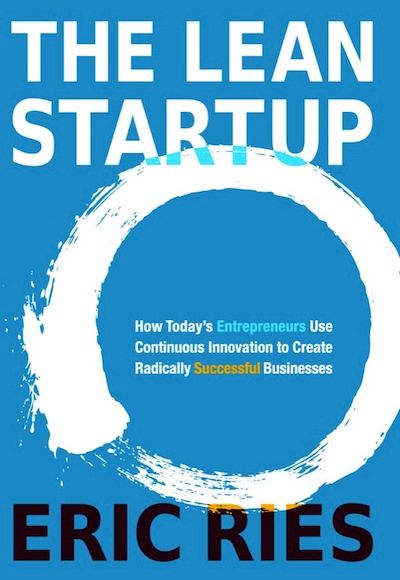
Nova: Absolutely not winging it, Atlas. Quite the opposite, actually. Today, we’re diving into a methodology that’s transformed how companies, from tiny startups to global enterprises, approach innovation and problem-solving: “The Lean Startup: How Today's Entrepreneurs Use Continuous Innovation to Create Radically Successful Businesses” by Eric Ries.
Atlas: Ah, Ries! I’ve heard the name, but I confess I haven't delved into the book specifically. What makes his approach so revolutionary, especially for those of us who value precision and foundational knowledge?
Nova: What’s fascinating is that Ries, a serial entrepreneur himself, actually developed this entire methodology after experiencing a spectacular failure with one of his own startups, Catalyst. He poured years into building what he thought was a brilliant product, only to find no one wanted it. That personal crucible of failure and subsequent deep reflection led him to codify an approach that’s now a global phenomenon, really shaping how we think about product development and growth. It’s not just a book; it’s a movement.
Atlas: That’s a powerful origin story. It resonates with anyone who’s ever poured their heart into something that just didn't land. It feels like he’s speaking directly to the need for real impact, not just effort. So, how does this "Lean Startup" concept actually work? Where do we begin to unravel its core?
Nova: Well, at its very heart, the Lean Startup is powered by something Ries calls "validated learning," and it's driven by a continuous feedback loop: Build, Measure, Learn. Forget the old model of building a massive product in secret for months or years, only to launch it and hope for the best.
Deep Dive into Core Topic 1: The Build-Measure-Learn Loop
SECTION
Nova: Instead, the Build-Measure-Learn loop says: build the absolute smallest thing you can to test a core assumption, measure the results of that experiment, and then learn from the data to decide your next step – whether to pivot your strategy or persevere with your current direction. It’s about replacing guesswork with empirical data.
Atlas: Okay, so it’s like a scientific method for business. But for someone who’s used to detailed project plans and clear deliverables, this "build small, measure, learn" sounds a bit… chaotic. How does this iterative loop prevent you from just constantly chasing your tail or building something that’s never truly complete?
Nova: That’s a brilliant question, and it gets to the core of why "validated learning" is so crucial. It’s not about building small; it’s about building the small thing to test a. You’re not just iterating for iteration’s sake. You’re iterating to learn if you’re actually solving a problem customers care about. Take Dropbox, for example.
Atlas: Dropbox? The cloud storage giant? How does their story fit into a "build-measure-learn" loop? They seem like a company that just… succeeded.
Nova: Exactly! Most people just see the success. But in 2007, before Dropbox even had a working product, founder Drew Houston wanted to solve the problem of syncing files across multiple computers. He knew building the complex backend technology would take months, if not years. So, instead of building the product first, he created a simple, three-minute video demonstrating what Dropbox do.
Atlas: A video? That was his "build"?
Nova: Precisely. His hypothesis was: "People want seamless cloud file synchronization." The video was his minimum viable product, his smallest experiment. He posted it online, and the waitlist for the non-existent product exploded from 5,000 to 75,000 people overnight. That wasn't just feedback; that was validated learning. It proved there was immense demand he wrote a single line of code for the complex syncing engine.
Atlas: That’s incredible. So he measured the sign-ups, and learned there was a massive market. That’s a very elegant way to mitigate risk and ensure impact from day one. It completely reframes what "building" means. It’s not about the code; it’s about the. How does a concept like that translate to a large organization with existing products and complex funnels? It feels like it would be hard to pivot a supertanker.
Deep Dive into Core Topic 2: Minimum Viable Product (MVP)
SECTION
Nova: It’s a challenge, but it’s entirely possible. And that naturally leads us to the second key idea we need to talk about, which is directly tied to that "build" phase: the Minimum Viable Product, or MVP. It's the smallest possible experiment you can run to test your most critical assumption, just like Drew Houston’s video.
Atlas: Okay, so the MVP isn't just a stripped-down version of your final product. It's a strategic experiment. But what defines "minimum" without making it useless? For a strategist, the idea of intentionally releasing something "minimal" could be a hard sell, especially if it feels incomplete. How do you convince stakeholders that a "tiny step" is better than a grand launch?
Nova: You convince them by focusing on the, not the. An MVP isn't about having fewer features; it's about having features to validate a core hypothesis and gather feedback. It’s about speed and iteration, not perfection. Think of Zappos.
Atlas: Zappos? The online shoe retailer known for incredible customer service? How did they start with an MVP?
Nova: When Zappos founder Nick Swinmurn started, his core hypothesis was: "People will buy shoes online." In the late 90s, that was a pretty radical idea. People wanted to try shoes on. Instead of building a massive e-commerce platform and buying tons of inventory, his MVP was incredibly simple. He went to local shoe stores, took pictures of their inventory, and then posted those pictures online.
Atlas: He didn't even own the shoes?
Nova: Not at first. When a customer ordered a pair from his rudimentary website, he’d go to the store, buy the shoes at full retail price, and ship them directly to the customer. He essentially used local stores as his inventory warehouse. His "product" was barely a business, but it was enough to test his core assumption.
Atlas: That’s brilliant. He validated market demand without any significant upfront capital risk. He measured whether people would click "buy" and learned that yes, there was a market for online shoe sales. That’s a true tiny step that yielded massive validated learning. So, for our listeners, the architects and strategists, how can they embed this "build-measure-learn" feedback loop and this MVP mindset into their team's daily operations? I mean, how do you make this a habit, not just a one-off experiment?
Nova: It starts with shifting the mindset from "build a perfect product" to "run an experiment to learn." Every new feature, every new initiative, can be framed as an experiment with a clear hypothesis. Teams need to define what success looks like they build, and that success is often measured in validated learning, not just features shipped.
Atlas: That aligns perfectly with the "deep question" of ensuring every effort drives validated user value. It’s about creating a culture where learning from small failures is celebrated as progress, rather than seen as a setback. It’s empowering teams to be scientists, not just builders.
Synthesis & Takeaways
SECTION
Nova: Exactly. The Lean Startup isn't just about launching faster; it's about launching smarter. It’s about creating a continuous cycle of innovation, where every iteration brings you closer to what customers truly value. It’s about minimizing waste and maximizing impact, which for a visionary, strategist, or architect, is everything. This methodology fundamentally changes how you think about problem-solving, moving from predictive planning to adaptive learning.
Atlas: It’s a powerful reframing. It takes the pressure off having all the answers upfront and puts it on asking the right questions and designing smart experiments. It’s about trusting your intuition, but then rigorously testing it with real-world data. It empowers teams to own the learning process, which is critical for anyone looking to optimize complex systems and foster innovation.
Nova: So, for your next big idea, or even your next small feature, define one key hypothesis you want to test. What’s the riskiest assumption you’re making? Then, design the smallest possible experiment, your MVP, to get real-world data. Launch it, measure the results, and let that validated learning inform your very next step.
Atlas: It truly is about making every step a learning opportunity, ensuring that even the smallest action contributes to a larger, more impactful vision. It’s a way to build with purpose and learn with precision.
Nova: This is Aibrary. Congratulations on your growth!