

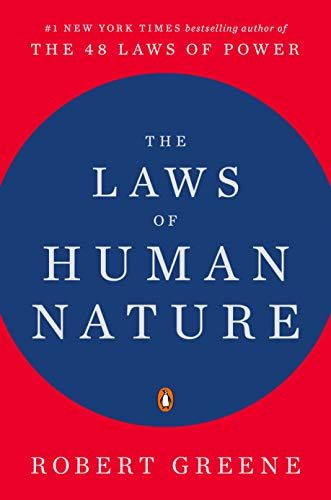
The Laws of Human Nature
Introduction
Nova: Have you ever looked back at a decision you made and thought, what on earth was I thinking? Or maybe you have that one friend who keeps dating the exact same type of person, even though it ends in disaster every single time. It is like there is this invisible script running in the background of our lives, and we are just the actors following the lines without even knowing it.
Nova: That is exactly what Robert Greene argues in his massive book, The Laws of Human Nature. He spent six years researching this, and he basically says that we are all governed by these deep-seated biological and psychological forces. He calls them laws because, in his view, they are as predictable as gravity. If you do not understand them, you are basically flying blind through your social and professional life.
Nova: It is definitely deeper. While his earlier work like The 48 Laws of Power was about outward strategy, this is about inward mastery. It is about looking in the mirror and realizing that the person you understand the least is actually yourself. Today, we are going to dive into some of the most powerful laws he outlines and see if we can actually learn to read the room, and ourselves, a little better.
Key Insight 1: The Law of Irrationality
The Emotional Puppet Master
Nova: Let us start with what Greene calls the Master Law, which is the Law of Irrationality. He makes a pretty bold claim right out of the gate: he says that no human being is truly rational. We just like to tell ourselves we are.
Nova: Greene would say that what you are feeling is actually just a calm emotion, not necessarily pure reason. He uses this incredible historical example of Pericles, the great leader of Athens. Back in the 5th century BC, Athens was constantly on the brink of war and internal chaos. While everyone else was screaming for immediate action or panicking about the latest threat, Pericles would literally retreat to his home to think.
Nova: In a way, yes. He understood that when we are in the grip of an emotion, like fear or anger, our brains literally change. We lose the ability to see the long-term consequences. Pericles trained himself to never make a decision in the heat of the moment. He called it the Inner Athena. He wanted to reach a state where his mind was like a calm sea, reflecting things as they actually were, not how his fears painted them.
Nova: That is the perfect example! Greene says that our emotions are like a horse, and our reason is the rider. The horse has all the energy and power, but without the rider, it just runs wild. Most of us think we are the rider, but we are actually just being dragged along by the horse. To be rational, you have to recognize your biases. Like the confirmation bias, where you only look for info that proves you are right, or the conviction bias, where you think because you feel something strongly, it must be true.
Nova: Exactly. Greene suggests that the first step to rationality is simply admitting you are irrational. Once you accept that your emotions are coloring your vision, you can start to question them. You start to look at the evidence instead of the feeling. It is about creating that gap between the impulse and the action.
Key Insight 2: The Law of Role-Playing
The Social Stage
Nova: Now, once you have started to master your own internal world, Greene says you have to look at the masks everyone else is wearing. This is the Law of Role-Playing. He argues that we are all essentially actors on a stage.
Nova: But are you really? Think about it. You probably do not use the same vocabulary or body language with your grandmother that you do with your best friend. Greene says this is not necessarily a bad thing; it is a social necessity. We wear masks to fit in, to protect ourselves, and to navigate different hierarchies. The danger is when we forget that other people are wearing masks too.
Nova: Greene points to the work of Milton Erickson, a famous psychiatrist who was a master at reading non-verbal cues. Erickson had polio as a teenager and was paralyzed for a time, so he spent months just watching his family members interact. He noticed that people would say one thing with their mouths, but their bodies would tell a completely different story.
Nova: Precisely. Greene says we need to become observers of these micro-expressions. He talks about the fake smile versus the real smile. A real smile involves the muscles around the eyes, the Duchenne smile. A fake one is just the mouth. He also talks about the direction of people's feet or the way they lean. If someone is talking to you but their feet are pointing toward the exit, they are mentally already gone.
Nova: It is more about empathy. If you can see that someone is acting aggressive because they are actually feeling insecure or defensive, you can change your approach. Instead of fighting back, you can reassure them. It is about seeing the reality of the person, not the performance they are putting on. He also suggests that we should be more conscious of our own masks. If you want to be a leader, you have to project a certain level of confidence and calm, even if you are nervous inside.
Key Insight 3: The Law of Compulsive Behavior
The Blueprint of Character
Nova: This next one is a bit heavier. It is the Law of Compulsive Behavior. Greene has this famous line: Character is fate. He believes that our character is formed very early in life, and unless we work incredibly hard to change it, we are doomed to repeat the same patterns over and over.
Nova: Not necessarily, but Greene argues that under pressure, we always revert to our core character. He uses the example of Howard Hughes, the famous billionaire. Hughes was incredibly successful, but he had this deep-seated need for total control that stemmed from his childhood with an overprotective mother. As he got older and the stakes got higher, that need for control turned into full-blown paranoia and isolation.
Nova: Exactly. Greene says that when you are looking at people to work with or date, you should not look at their charm or their resume. You should look at their patterns. Do they always blame others when things go wrong? Do they have a history of leaving jobs on bad terms? These are not one-off events; they are symptoms of their character.
Nova: Exactly. And more importantly, look at your own patterns. Greene suggests looking back at your life and identifying your own compulsions. Maybe you always self-sabotage right when you are about to succeed. Or maybe you always pick fights with people in authority. Once you identify the pattern, you can start to catch yourself before you do it again. It is about moving from being a compulsive person to a conscious one.
Nova: That is why Greene emphasizes the idea of the Shadow. This is a concept from Carl Jung. The Shadow is the part of ourselves that we find unacceptable, so we push it down into our subconscious. But it does not go away; it just leaks out in weird ways, like through passive-aggressive comments or sudden outbursts of anger. Greene says we have to integrate our shadow. We have to acknowledge that we have a dark side, and by doing that, we actually gain more control over it.
Key Insight 4: The Law of Envy
The Green-Eyed Monster
Nova: Let us talk about something that nobody likes to admit they feel: envy. Greene calls this the Law of Envy. He says that as social animals, we are constantly comparing ourselves to others. It is wired into our DNA.
Nova: Greene argues it is one of the most destructive forces in human nature because it is so hidden. People rarely admit they are envious. Instead, they disguise it as moral outrage or criticism. If someone is doing better than us, we find reasons to dislike them. We say they got lucky, or they are actually a bad person, or their success is unearned.
Nova: Right. And Greene warns that if you are successful, you have to be very careful about triggering envy in others. He suggests downplaying your achievements and showing your flaws. If you seem too perfect, people will subconsciously want to pull you down. He calls it the tall poppy syndrome. The poppy that grows the tallest is the one that gets its head cut off.
Nova: It is about being strategic. Share the credit. Admit to your struggles. Make people feel like your success is something they can share in, rather than something that makes them look bad by comparison. But on the flip side, when you feel envy yourself, Greene says you should use it as a signal. Instead of resenting the person, ask yourself what they have that you want, and then use that as motivation to improve yourself.
Nova: Precisely. He also talks about the Law of Shortsightedness, which is related. We get so caught up in these immediate feelings of envy or anger that we lose sight of the big picture. We react to the moment rather than the trend. Greene encourages us to develop what he calls the long-term perspective. Ask yourself: will this matter in five years? Usually, the answer is no.
Conclusion
Nova: We have covered a lot of ground today, from the ancient wisdom of Pericles to the tragic compulsions of Howard Hughes. Robert Greene's The Laws of Human Nature is a massive book, but the core message is simple: the more you understand the hidden forces driving human behavior, the more freedom you have to choose your own path.
Nova: That is a great way to put it. Greene's ultimate goal is for us to reach what he calls the Cosmic Perspective. It is the ability to see ourselves and others as part of a much larger, complex web of life. When you understand why people act the way they do, you stop taking things so personally. You become more patient, more empathetic, and ultimately, more effective.
Nova: Exactly. Pay attention to the patterns, not the promises. And remember, the work of understanding human nature never really ends. It is a lifelong journey of discovery.
Nova: I am glad to hear it. If you want to dive deeper, the book is full of even more laws and fascinating historical stories. But for now, just try to notice one of these laws in action today. You might be surprised by what you see.
Nova: This is Aibrary. Congratulations on your growth!