

The Engineer of Influence: Decoding Human Nature for Student Leadership
Golden Hook & Introduction
SECTION
Shakespeare: Imagine this. You've just spent eight hours perfecting a fluid dynamics equation. Every variable is accounted for, the logic is flawless, the system is predictable. Then, you walk into a team meeting for a project you lead, and the entire thing implodes over a disagreement about a font choice. The logic is gone. The system is chaotic. Why? Because the laws that govern machines are not the laws that govern people. And for any leader, especially one grounded in the world of logic and reason, this is the great, frustrating, and essential puzzle to solve.
Abas Udoh: That font choice argument? I think I had that exact meeting last week. It’s painfully familiar. You build this perfect structure in your head, a logical path from A to B, and then a human element comes in and it just… goes sideways.
Shakespeare: Precisely. And that is the grand stage for our discussion today. We're exploring that very puzzle with a special guest who lives at this exact intersection of logic and leadership. With us is Abas Udoh, a Mechanical Engineering undergraduate student and a passionate leader in her university community, advocating for students and for women in STEM. Welcome, Abas.
Abas Udoh: Thanks for having me. I'm excited. As an INTP, my brain is wired to look for systems and patterns, so the idea that there might be 'laws' to human nature, a kind of operating manual for people, is incredibly appealing. Even if it's messier than thermodynamics.
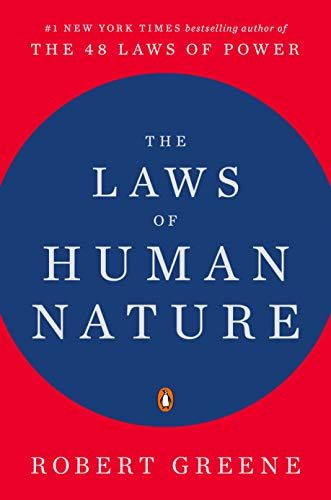
Shakespeare: Ah, a perfect way to put it! And our manual for today is Robert Greene's masterwork, "The Laws of Human Nature." We're going to use it as our guide. Today we'll dive deep into this from two perspectives. First, we'll explore the 'First Principle' of leadership: mastering your own internal, emotional state. Then, we'll discuss how to use that foundation to master the 'User Interface' of leadership: decoding the people around you with radical empathy.
Deep Dive into Core Topic 1: The First Principle: Mastering Your Internal State
SECTION
Shakespeare: Let us begin, then, with the most volatile element in any equation: ourselves. Greene's very first law, the foundation for all others, is what he calls the Law of Irrationality. He makes a bold claim: we are not the rational, thinking creatures we believe ourselves to be. Instead, we are creatures of emotion, first and foremost.
Abas Udoh: That's a tough pill to swallow, especially for someone who prides themselves on logic.
Shakespeare: It is! Greene paints a picture of us constantly living with a kind of low-grade emotional fever. Our mood, our feelings, our deep-seated insecurities—they perpetually color our thinking, like a lens we can't take off. And then, something happens. Someone says the wrong thing, a project fails, we get a bad grade... and that low-grade fever spikes. He calls these 'trigger points.' A present event connects to some past pain or insecurity, and we react with a force that is completely out of proportion to the situation. We become, in that moment, profoundly irrational.
Abas Udoh: So, it's not just that we have emotions. It's that they are the default operating system, and our 'rational' mind is more like an app we occasionally run on top of it.
Shakespeare: A brilliant way to frame it! And as a leader, if you don't know your own operating system, how can you possibly hope to lead? As someone who deals in precision and logic, Abas, how does this idea of a constant 'emotional fever' sit with you?
Abas Udoh: It’s like trying to take a precise measurement with an instrument that you know has a built-in calibration error. You can't just ignore it; you have to account for it. The challenge is, with people, that error isn't a constant value. It fluctuates. It’s a dynamic variable. So the first step is just acknowledging the instrument is flawed.
Shakespeare: Precisely! And Greene argues the first step is to become a scientist of your own 'calibration errors.' He urges us to observe ourselves in moments of emotional high and low, to trace our overreactions back to their source, to identify our personal trigger points. Abas, you're balancing a demanding engineering curriculum with leadership roles. This must be a constant battle. How do you see this play out? For instance, after a brutal exam, how do you prevent that stress from 'infecting' a leadership decision you have to make an hour later?
Abas Udoh: Oh, absolutely. It's the core of the 'balance' challenge. You bomb a midterm, and you walk into a meeting feeling defeated and frustrated. Suddenly, you're more critical of a team member's work, you're less patient with questions, you shut down brainstorming because you just don't have the energy. It's not a rational response to the meeting itself, but the frustration needs an outlet.
Shakespeare: And the team feels that. They don't know you failed a test; they just know their leader is being harsh or dismissive.
Abas Udoh: Exactly. And that erodes trust. What I'm learning, and what this law clarifies so well, is the need to build a 'firewall' between those two parts of my life. It’s not about suppressing the emotion, but about containing it. It's about taking a moment to pause and ask, 'Am I reacting to this situation, or am I reacting to my calculus grade?' It's about running a diagnostic on myself before I engage with the team. Acknowledging, 'Okay, my emotional baseline is negative right now, I need to adjust for that.'
Shakespeare: That self-awareness, that internal diagnostic, is the very essence of a rational leader. Not someone without emotion, but someone who understands its power and accounts for its influence. It is the first and most difficult system to engineer.
Deep Dive into Core Topic 2: The User Interface: Decoding Others with Empathy
SECTION
Shakespeare: And once you begin to run that diagnostic on yourself, you gain the clarity to run it on others. This brings us to a most delicate and powerful law: Greene's take on Narcissism, and its powerful antidote, empathy.
Abas Udoh: Narcissism is a heavy word. We usually think of it as a clinical disorder.
Shakespeare: We do, but Greene presents it as a spectrum that we all exist on. He describes it as a natural phase of childhood—the world revolves around us. The process of maturing is the process of growing out of that, of learning to turn our focus outward. But many people get stuck. He describes deep narcissists as those who are like black holes of attention, but most people just have narcissistic tendencies. They are trapped in their own perspective, their own needs, their own insecurities.
Abas Udoh: So as a leader, you're constantly dealing with people at different points on this spectrum.
Shakespeare: Constantly. And the temptation is to judge them, to get frustrated by their self-absorption. But Greene's genius is to reframe the goal. The goal isn't to 'fix' them; it's to understand them. And the tool for that is empathy. But not a soft, sentimental empathy. He describes it as an analytical skill. The act of deliberately silencing your own ego, quieting your own internal monologue, to truly see and feel the world from another person's point of view. It's gathering emotional data.
Abas Udoh: I love that framing. 'Gathering emotional data.' It makes it an active process, not a passive feeling.
Shakespeare: It is. Greene posits that true empathy is an act of analysis. Abas, in your advocacy for students and particularly for women in STEM, this must be central. How do you practice this kind of analytical empathy?
Abas Udoh: It's everything. It's the difference between effective and ineffective advocacy. When I'm working to support women in engineering, for example, it's not enough for me to just project my own experiences or challenges onto everyone else. That would be my own form of narcissism, right?
Shakespeare: A perfect insight.
Abas Udoh: So I have to actively listen for the nuances. I have to gather the data. One student might be struggling with classic imposter syndrome, feeling like a fraud despite her high grades. Another might be facing a genuine lack of mentorship opportunities. A third might be dealing with subtle, dismissive comments from a professor or peers. My 'solution' or support has to be tailored to specific reality, not my general idea of the problem.
Shakespeare: So you're not just applying a one-size-fits-all solution.
Abas Udoh: You can't. It's like... in engineering, you can't use the same material to build a bridge and a circuit board. They have different properties, they're under different kinds of stress. You have to understand the specific stresses and properties of the person you're trying to support. Empathy is the material science of people.
Shakespeare: A brilliant analogy! The material science of people. So empathy lets you see the hidden structure.
Abas Udoh: Exactly. And it helps you see that what might look like 'narcissism' or self-absorption on the surface is often just a defense mechanism. A team member who constantly talks about their own achievements might be deeply insecure about their contribution. An engineer who is overly resistant to feedback on their design might be terrified of being seen as incompetent. Analytical empathy lets you see the 'why' behind the 'what.' It lets you look past the frustrating behavior and see the underlying fear or insecurity. And that's where you can actually connect and lead.
Synthesis & Takeaways
SECTION
Shakespeare: So we have a beautiful arc, a true blueprint for the engineer of influence. We begin with the Law of Irrationality—the humbling acceptance that we must first engineer our own emotional awareness. We must run diagnostics on ourselves.
Abas Udoh: Acknowledging our own 'calibration errors.'
Shakespeare: Yes. And only then, with that foundation of self-mastery, can we effectively apply the Law of Narcissism, using analytical empathy as our precision tool to understand and connect with the complex inner worlds of others.
Abas Udoh: It really comes down to a shift in perspective. As students, especially in STEM, we're trained to find the answer, to solve the problem. But with people, you can't just 'solve' them. You have to understand them. The goal isn't to make them rational; it's to work with their reality.
Shakespeare: A profound and practical distinction. As we close, Abas, what is one actionable piece of advice you'd give to another student leader listening to this, someone trying to balance it all?
Abas Udoh: I think it's something small that can have a huge impact. Before your next team meeting or a difficult conversation, don't just think about your agenda, your goals, what you want to. Spend just two minutes thinking about what the other person is. What pressures are they under from their other classes? What's their personality like? What's their 'calibration error' today? That simple shift from focusing on your own objective to focusing on their subjective state can change the entire dynamic of the interaction.
Shakespeare: A simple, powerful exercise in applied empathy. Abas Udoh, thank you for bringing such clarity and insight to these complex laws.
Abas Udoh: It was my pleasure. It’s given me a new framework to think with.
Shakespeare: For in the end, the greatest systems we can ever hope to engineer are not made of steel and wire, but of understanding, empathy, and human connection.