

Reclaiming the Coronation: How the King Jesus Gospel Rebuilds Community
Golden Hook & Introduction
SECTION
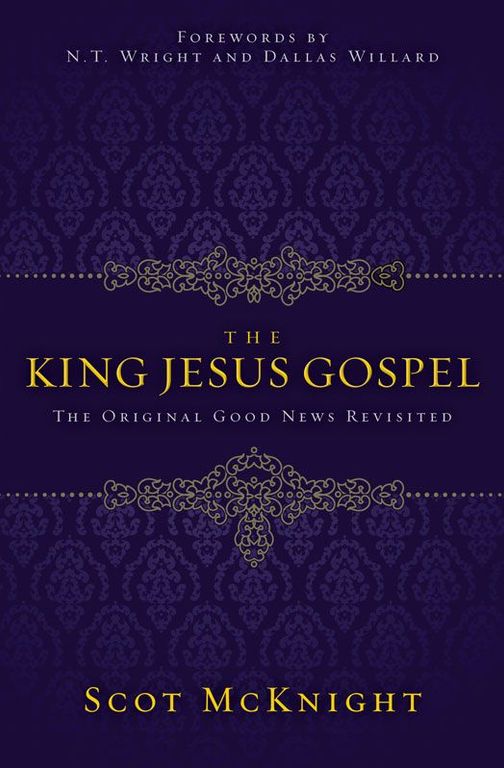
Shakespeare: Imagine a grand, sweeping tapestry, woven with the golden threads of ancient promises, suddenly reduced to a single, isolated knot. For too long, we have mistaken the doorway of salvation for the entire palace of the King! We have preached a gospel of escape rather than a gospel of enthronement. Today, we are going to dismantle this reductionist view and reclaim the majestic, sweeping narrative of Scot McKnight’s masterpiece,. We will tackle this from three distinct angles: first, we will unmask the difference between a mere "salvation culture" and a true "gospel culture"; second, we will explore how Jesus completes the epic story of Israel; and finally, we will discuss how this royal proclamation transforms how we lead, sing, and build communities from the ground up. Joining me in this royal court of ideas is Michael Richard Pratt, a dynamic youth leader and community builder from Adonkia, Sierra Leone. Welcome, Michael!
Michael: Thank you, Shakespeare. It is an absolute joy to be here with you. You know, that image of the tapestry really strikes a chord with me. In my work with the youth at Saints Equippers Ministries, and even when I'm sitting behind the drums or working with the choir, I constantly see how hungry people are for a story that is bigger than just themselves. We often teach people how to make a decision, but we forget to teach them how to live as subjects of a King. McKnight’s book challenges us to look at the whole canvas, and I’m excited to dive into what that means for our communities.
Shakespeare: Ah, beautifully put! The drums of heaven beat for a larger story, indeed. Let us strike the first chord of our discourse.
Deep Dive into Core Topic 1
SECTION
Shakespeare: McKnight introduces a startling, almost scandalous distinction. He argues that we have conflated the "gospel" with the "plan of salvation." We have taken the glorious, multi-act drama of Scripture and condensed it into a four-step formula to secure a ticket to heaven. He calls this the creation of a "salvation culture" rather than a "gospel culture." In a salvation culture, the focus is entirely on the transaction—the moment of rescue. But in a gospel culture, the focus is on the Person—Jesus the Messiah, the Lord of all. Michael, as someone who guides young minds and hearts, how does this distinction resonate with your own leadership journey?
Michael: It resonates deeply, Shakespeare. In youth ministry, it is incredibly easy to fall into the trap of running a "salvation culture." We measure success by numbers, by how many hands go up at the end of a sermon, or how many people say a specific prayer. But McKnight points out that in the New Testament, particularly in 1 Corinthians 15, the gospel is defined as the story of Jesus—His life, death, resurrection, and exaltation—according to the Scriptures. When we reduce that to just a mechanism for personal salvation, we accidentally create a culture of consumers rather than disciples.
Shakespeare: Yes! We offer them a life insurance policy when we should be inviting them to a coronation! It is a tragedy of theatrical proportions. We focus so much on the prologue of rescue that we miss the entire play of the Kingdom.
Michael: Exactly. And the danger of that is spiritual stagnation. If the "gospel" is only about how I get saved, then once I am saved, the story is essentially over for me. I just wait for heaven. But if the gospel is about Jesus being King, then my salvation is actually the beginning of my enlistment into His service. It changes the question from "What do I get from God?" to "How do I serve the King in my community?" In Adonkia, we don't just need people who have made a decision; we need people who are committed to the long, disciplined work of community transformation. We need disciples, not just converts.
Shakespeare: You speak of discipline, like the steady, unwavering tempo of a master drummer keeping the band in perfect unison. McKnight notes that when we preach only the plan of salvation, we end up with "salvationists" who do not know how to follow. To truly disciple, we must tell the story of the King. How do you see this playing out in the creative and practical spaces of your ministry, like the choir or promotional design?
Michael: It changes the entire narrative of why we do what we do. Take the choir, for instance. If we are operating in a salvation culture, music is just a tool to manipulate emotions to get people to make a decision. But in a gospel culture, our music is an act of allegiance. We are singing the praises of the reigning King! The Mission Choir Festival isn't just an event to draw a crowd; it’s a public declaration of the King's beauty and authority. When I design promotional materials, I’m not just trying to market a program; I’m trying to visually represent the dignity and majesty of the Kingdom we represent. It elevates everything from a mere task to a sacred duty.
Shakespeare: A symphony of service! You paint a picture where every beat of the drum and every note sung is a declaration of fealty to the Sovereign. This is the essence of a gospel culture—it is participatory, communal, and deeply creative.
Deep Dive into Core Topic 2
SECTION
Shakespeare: Let us journey deeper into the forest of this theology. McKnight asserts that the gospel cannot be understood apart from the story of Israel. Jesus did not arrive in a vacuum; He came as the climax of a long, messy, and beautiful history. He is the resolution to Israel's unresolved drama. He is the true King who succeeds where David failed, the one who brings the exile to an end. To preach the gospel is to tell the story of how Jesus completes Israel's story. Why is this historical and narrative connection so vital for us today, Michael?
Michael: Because without the story of Israel, the story of Jesus loses its structural integrity. It becomes a floating, abstract idea rather than a historically grounded reality. McKnight emphasizes that Jesus is the "Messiah," which is a deeply political and historical title. It means the anointed King of Israel. When we strip Jesus of His Jewish context, we turn Him into a generic savior figure who exists merely to solve our personal, existential problems. But when we see Him as the fulfillment of Israel's story, we realize that God has been working out a massive, historical plan to redeem the entire creation.
Shakespeare: Indeed! It is the difference between a solitary actor reciting a monologue on a bare stage, and a massive ensemble cast performing a historical epic. The monologue may touch the heart, but the epic changes how we view the world!
Michael: Yes, and that epic scale is what gives us hope. When I look at the challenges we face in Sierra Leone—economic difficulties, the need for strong leadership, the desire to uplift our youth—I need a gospel that is robust enough to handle systemic issues. If the gospel is just about my personal soul going to heaven, it doesn't offer much hope for the physical, social, and economic realities of Adonkia. But if the gospel is about King Jesus reclaiming His rightful rule over all creation, then our work to develop people, to build clean communities, and to mentor young leaders is directly connected to the King’s agenda. We are working to bring our community into alignment with His Kingdom.
Shakespeare: Oh, hear the trumpets sound! You are speaking of a theology that has feet, a theology that walks the dusty roads of Adonkia and rolls up its sleeves. McKnight argues that the early church did not just preach a message of personal forgiveness; they announced a new world order. "Jesus is Lord" was a direct challenge to "Caesar is Lord." It was a public, political, and cosmic claim.
Michael: Exactly. And as a leader, that requires a massive shift in humility. If I am the hero of my own salvation story, then ministry can easily become about my platform, my public speaking skills, or my programs. But if the story is about King Jesus, then I am just a herald. My job is to point others to Him. It forces me to lead with humility, to be consistently present for my community, and to focus on developing people rather than just building my own reputation. It’s about making His name famous, not mine.
Shakespeare: A herald indeed, blowing the horn of the true Monarch! And yet, to be a good herald, one must speak clearly and with conviction. You mentioned your desire to steadily improve your public speaking as you advance in leadership. How does this "King Jesus" narrative shape the way you want to speak to your peers?
Michael: It gives me a much more compelling message to deliver. Instead of standing before the youth and offering them a list of rules to follow or a guilt trip about their personal failures, I get to invite them into an adventure. I get to tell them: "There is a King who has conquered death, who is actively restoring the world, and He wants you to be a part of His royal administration." That is a message that inspires action. It demands discipline, vision, and commitment. It speaks to their desire to be part of something revolutionary.
Synthesis & Takeaways
SECTION
Shakespeare: What a breathtaking vista we have climbed today! We have seen how the narrow path of a "salvation culture" can widen into the glorious, paved highway of a "gospel culture." We have watched the story of Israel find its triumphant resolution in the coronation of Jesus the Messiah. And we have heard how this royal truth echoes in the drums, the songs, and the leadership of a community in Sierra Leone. Michael, as we prepare to close our royal audience today, what is the one golden key, the singular takeaway you want our listeners to carry with them?
Michael: I want people to realize that the gospel is not just a transaction to get us into heaven; it is an invitation to live under the reign of King Jesus right now. If you are a leader, a musician, a student, or a builder, your work is not separate from your faith. When we proclaim Jesus as King, we are saying that every square inch of our lives and our communities belongs to Him. My challenge to everyone listening is to look at your own sphere of influence—your church, your workplace, your neighborhood—and ask: "How can I live today in a way that shows Jesus is the rightful King of this place?"
Shakespeare: A noble challenge to end our quest! Let the drums roll, let the choir sing, and let the truth of the King echo in every heart. Go forth, dear listeners, not merely as those who have been rescued, but as loyal subjects of the reigning Monarch. Thank you, Michael, for sharing your profound wisdom and your heart for service with us today.
Michael: Thank you, Shakespeare. It has been an honor. Let us keep playing our part in His grand story.
Shakespeare: And until our next dramatic encounter, keep the story alive, and let the King reign!