

Beyond the Hype: Building Sustainable Innovation in Real Estate, Not Just Disruption
Golden Hook & Introduction
SECTION
Nova: Atlas, I want to play a quick game. Give me your five-word review of the word "disruption" in the context of business. Ready? Go.
Atlas: Oh, okay. Let's see… "Trendy, loud, often, quickly, gone."
Nova: Hmm, "Trendy, loud, often, quickly, gone." That’s… surprisingly accurate for a lot of what we see. My five words would be: "Necessary, misunderstood, challenging, foundational, enduring."
Atlas: "Foundational, enduring"? That’s a bold take, especially when so much of what we hear is about rapid change and breaking things. Are you saying we've got disruption all wrong?
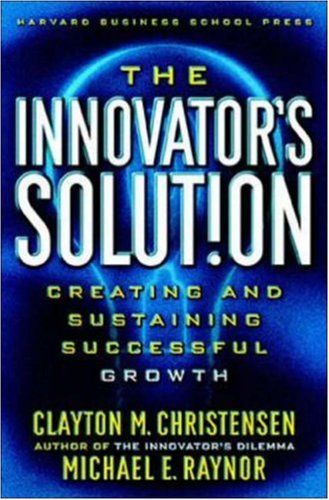
Nova: I think we often miss the deeper truth about it. Today, we're diving into how to build sustainable innovation in real estate, not just fleeting disruption. We’re going beyond the hype to understand what truly creates lasting value. And we're going to lean heavily on two titans of business thinking: "The Innovator's Solution" by Clayton M. Christensen and Michael E. Raynor, and Jim Collins' "Good to Great."
Atlas: Excellent choices. Christensen's work, especially, feels like required reading for anyone trying to navigate rapid technological shifts.
Nova: Absolutely. And what's particularly fascinating about Christensen is his unique background. He wasn't just an academic; he was a Rhodes Scholar, an accomplished competitive tennis player, and had a deep grounding in economics. This blend gave him a really practical, almost athletic approach to understanding how markets actually evolve and how innovation truly takes hold. He didn't just theorize; he dissected.
Atlas: That makes sense. It’s not just about abstract ideas, but how they play out in the real world. And in real estate, where the stakes are so high and the cycles can be long, understanding how to build something that lasts is paramount.
The Ephemeral Nature of Disruption vs. Sustainable Innovation
SECTION
Nova: Exactly. So, let’s talk about that distinction, Atlas. Because so many innovations burn bright, like a supernova, then just… fizzle out. They’re disruptive in the sense they shake things up, but they don't create new markets or withstand competitive pressures. They're like a flashy gadget that quickly becomes obsolete.
Atlas: I see that all the time. Everyone wants to be the next big thing, especially in proptech. But what specifically makes an innovation just a flash in the pan, versus something truly sustainable and market-making in real estate? For someone with strategic foresight, driven by impact, what should they be looking for?
Nova: Well, let's paint a picture. Imagine a startup, let's call it "UrbanFlow." They launched with incredible fanfare, right? Slick app, AI-powered algorithms to predict optimal property investments, a blockchain-backed ledger for instant transactions—the whole nine yards. Their pitch was all about "disrupting the archaic real estate industry."
Atlas: Sounds like every pitch deck I've ever seen. High on tech, low on… what?
Nova: Exactly. UrbanFlow raised hundreds of millions. They were everywhere. The initial buzz was deafening. They acquired a ton of users who were excited by the promise of instant, frictionless transactions and superior returns. The problem? They focused almost entirely on optimizing processes and capturing market share from traditional players. They made things marginally faster, slightly cheaper, but they didn't create a of real estate transaction or open up a of real estate investors.
Atlas: So, they were just a better mousetrap, not a new way to catch mice.
Nova: Precisely. They were disruptive in a competitive sense, but not. They attracted sophisticated investors who were already in the game, just looking for an edge. But they didn't bring in first-time buyers who felt priced out, or small-scale investors who thought real estate was too complex, or entirely new categories of property ownership. When a competitor came along offering similar tech with slightly better terms, UrbanFlow’s user base started to erode. They had built a beautiful, efficient system, but it was built on sand, because they hadn't cultivated a new value network. They hadn't created a segment of the market that simply didn't exist before. The hype burned bright, but the foundation wasn't there. Within five years, UrbanFlow was acquired for pennies on the dollar, their "disruption" a footnote.
Atlas: Wow. So, it's not enough to just be faster or cheaper than the incumbent. You have to actually or. It’s almost like they were playing checkers while the market was moving to chess.
Nova: Exactly. And Christensen's work, particularly in "The Innovator's Solution," really hammers this home. True disruptive innovation creates new markets, makes products and services accessible and affordable to a much broader population, or solves problems for a segment of the population that was previously unserved. It’s about creating an entirely new value network, not just fighting over the existing one.
Atlas: For strategists in real estate, especially those looking to make a lasting impact, that’s a critical distinction. It means asking, "Are we just moving dollars around, or are we truly creating new economic activity, new opportunities for people who couldn't participate before?"
Frameworks for Enduring Real Estate Leadership
SECTION
Nova: So if simply "disrupting" isn't enough, what it take to build something that lasts? How do you move beyond that initial spark to enduring leadership and value creation?
Atlas: That's the million-dollar question, especially for those of us trying to lead complex deals and build for the future. It’s one thing to have a great idea; it’s another to build a company that can execute it consistently and adapt for decades.
Nova: This is where "The Innovator's Solution" and "Good to Great" become incredibly powerful together. Christensen gives us the roadmap for and those truly market-creating innovations. He talks about understanding customer jobs-to-be-done, and how to structure your business to serve those jobs, even if it means cannibalizing your own existing products. It’s about being willing to destroy your old model to create a better new one.
Atlas: That's a huge ask for established real estate firms. It implies a willingness to take risks and challenge their own successful formulas. How does that connect with Jim Collins' idea of "disciplined thought and action"?
Nova: It's the perfect complement. Collins, in "Good to Great," studied companies that achieved sustained greatness, transcending their rivals for decades. He found they weren't necessarily the most innovative in terms of flashy ideas, but they excelled at what he called "disciplined thought" and "disciplined action." This means having a clear, unwavering vision—what he calls the "Hedgehog Concept"—and then executing on it with extreme discipline, consistency, and a culture of continuous improvement.
Atlas: So, Christensen provides the compass for to innovate, and Collins provides the engine for to keep moving in that direction, year after year, through all sorts of market shifts.
Nova: Precisely. Let's look at a contrasting example to our UrbanFlow, a hypothetical real estate company we'll call "TerraForm Developments." TerraForm started as a traditional developer, but they saw the writing on the wall for urban density and sustainable living decades ago. Instead of just building more suburban sprawl, they started investing heavily in urban infill projects, often in overlooked neighborhoods, focusing on mixed-use developments that integrated residential, retail, and green spaces.
Atlas: That sounds like a long-term play, not a quick flip.
Nova: Exactly. They applied Christensen's principles by identifying unmet "jobs-to-be-done"—people wanting to live closer to work, wanting walkability, wanting community, but without the exorbitant costs of prime downtown areas. They didn't just build apartments; they built integrated communities. Then, they layered on Collins' "Good to Great" principles. They had a "Level 5 Leader" who prioritized the company's long-term success over personal ego. They had a "culture of discipline" where they rigorously evaluated every project for its community impact and long-term sustainability, not just its immediate profit margin.
Atlas: So, they were disciplined in their thought—their Hedgehog Concept was clear: sustainable, community-focused urban infill. And disciplined in their action, meaning they consistently executed that vision even when it was harder or less immediately profitable than other options.
Nova: That’s it. They built a reputation for quality and foresight. When the market shifted towards greater environmental awareness and demand for integrated living, TerraForm was already light years ahead. They weren't scrambling to adapt; they were leading the charge. They cultivated a culture where innovation wasn't a separate department, but embedded in every decision—from material sourcing to community engagement. They created new market segments, like the eco-conscious urban dweller who prioritizes walkability over car ownership, and they continue to thrive, adapting and evolving, because their foundation is built on both disruptive market creation and disciplined execution.
Atlas: That’s a powerful illustration. It’s not just about having a new idea, but about the organizational muscle to see it through, to create a new market, and then to sustain that market leadership. It really drives home that point about cultivating executive presence and leading with empathy, because you’re asking people to buy into a long-term vision that might not have immediate gratification.
Synthesis & Takeaways
SECTION
Nova: So, in essence, true innovation in real estate isn't about being the loudest or the flashiest. It's about being foundational. It’s about creating new value networks, not just fighting over existing ones. It’s about having the strategic foresight to see the "jobs-to-be-done" that no one else is serving, and then the disciplined thought and action to build a company that can serve those jobs for decades.
Atlas: It’s about building a legacy, not just a quick win. And for anyone in real estate who’s passionate about progress and people, and who wants to create lasting value, the question becomes: Is your current innovative project merely disruptive, or does it also create a new, sustainable market for future growth? Are you building something that will stand the test of time, or just making a temporary splash?
Nova: A question worth pondering deeply. Because the real impact comes from what endures.
Atlas: Absolutely. That's a powerful thought to leave our listeners with.
Nova: This is Aibrary. Congratulations on your growth!