

Unlocking Innovation: Cultivating Creativity for Breakthroughs
Golden Hook & Introduction
SECTION
Nova: You know, Atlas, there’s this prevailing myth out there that innovation is some kind of lightning strike, this sudden, brilliant flash of genius that hits a lone inventor in a garage.
Atlas: Oh, I love that idea, the lone wolf innovator, fueled by coffee and sheer willpower, emerging from the wilderness with the next big disruption. It’s a very romantic image, right? For anyone with an ambitious mindset, it’s certainly appealing.
Nova: Absolutely, it's a great story. But what if I told you that the real magic, the repeatable, sustainable kind of innovation, isn't about the individual genius at all? It's about meticulously cultivated environments, deliberate systems, and even embracing failure.
Atlas: Hold on, so you're saying my grand plan to lock myself in a room with a whiteboard and emerge with world-changing ideas might be... inefficient? That's going to resonate with anyone who is trying to optimize their processes.
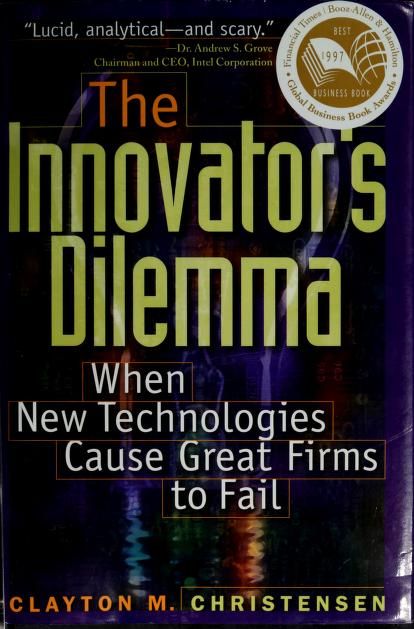
Nova: Well, let's just say it could be optimized. And that's exactly what we're dissecting today, through two foundational texts. We're diving into Clayton M. Christensen's groundbreaking work, "The Innovator's Dilemma," and then we're going behind the scenes with Ed Catmull and Amy Wallace in "Creativity, Inc.," which chronicles the culture of Pixar.
Atlas: Those are two heavy-hitters. Christensen's book, for instance, famously started as his doctoral dissertation at Harvard Business School. It literally redefined how we think about market disruption and how even the most successful companies can stumble. It’s not just theory; it’s a framework that’s been applied and debated in boardrooms globally since its publication.
Nova: Exactly, and "Creativity, Inc." gives us that incredible insider look at Pixar, a company that consistently churns out both artistic masterpieces and commercial blockbusters. It's not just a feel-good story; it's a deep dive into the practicalities of building a creative powerhouse. The core of our podcast today is really an exploration of how to cultivate creativity for breakthroughs, and how to protect those breakthroughs once they start to emerge. Today we'll dive deep into this from two perspectives. First, we'll explore how established success can paradoxically blind us to the next big thing, then we'll discuss how to actually build a culture where those breakthroughs aren't just allowed, but systematically encouraged.
The Innovator's Dilemma – Success as a Trap
SECTION
Atlas: Okay, Nova, let's start with "The Innovator's Dilemma." The title itself sounds like a paradox. How can innovation, something inherently good, be a dilemma?
Nova: It's brilliant, really. Christensen's insight, which emerged from meticulous research into industries like disk drives and excavators, is that successful companies often fail precisely they do everything right. They listen to their customers, invest in improving their existing products, and focus on maximizing profits from their current business model.
Atlas: That sounds like a textbook example of strategic planning and optimization. As someone who drives impact, that's literally what I aim for. So, what's the catch?
Nova: The catch is disruptive innovation. These aren't just better versions of existing products; they're usually simpler, cheaper, or more convenient, and initially, they perform worse on traditional metrics. They start in niche markets, often dismissed by established players because their current, most valuable customers don't want them.
Atlas: Wait, so a company that's thriving, serving its customers perfectly, is essentially digging its own grave by ignoring these seemingly inferior products? Give me an example. How does that play out in the real world?
Nova: Think about the steel industry. Integrated steel mills, these massive, complex operations, were producing high-quality steel for demanding applications. They were efficient, profitable, and focused on their best customers. Along came mini-mills, which initially produced lower-quality rebar for construction. The big mills looked at them and thought, "That's not for us. Our customers demand premium steel."
Atlas: So, the big players saw the mini-mills as a minor threat, or not a threat at all, because they weren't competing for the same high-end customers.
Nova: Exactly. But here's the crucial part: the mini-mills steadily improved. They innovated, found ways to increase quality, and moved upmarket, eventually encroaching on the traditional mills' territory. By the time the established players realized what was happening, it was often too late. Their cost structures, their organizational cultures, even their shareholder expectations, were all geared towards the old way of doing things.
Atlas: That’s fascinating. It’s like their very success created a blind spot. They were so focused on optimizing the present that they couldn't see the future coming. For ambitious leaders, that's a chilling thought. You're constantly striving for growth and impact, but if you're not careful, that drive can lead you down the wrong path.
Nova: It’s a systemic issue, not a personal failing. Christensen showed that the dilemma isn't about managers making bad decisions; it's about rational decisions made within a framework that prioritizes existing customers and profitability. It's about resource allocation processes that naturally divert investment away from unproven, low-margin disruptive technologies.
Atlas: So, the lesson here for any strategic operator is that sometimes, what looks like efficiency and customer focus can actually be a trap. You have to actively look for those tiny, seemingly insignificant innovations on the fringes.
Nova: Precisely. It challenges that conventional wisdom that says "always listen to your customer." Sometimes, the customer you have yet, the one who doesn't even know what they need, is where the real future lies. And it's not just about technology; it's about business models, new markets, and entirely new ways of creating value. It forces you to ask: how can you systematically encourage a culture of experimentation and learning from failure within your team or organization to drive continuous innovation?
Creativity, Inc. – Building the Breakthrough Culture
SECTION
Nova: Which naturally brings us to "Creativity, Inc." If Christensen tells us established companies struggle with disruption, Catmull and Wallace show us to build an organization that can not only survive but thrive on continuous creative breakthroughs.
Atlas: Pixar is legendary for that, consistently pushing the boundaries of animation and storytelling. But "creativity" can sound so fuzzy, like something you can't really manage.
Nova: That’s where Catmull’s insights are so powerful. He argues that creativity isn't about individual genius; it's about building a system that allows smart people to collaborate and solve problems effectively. It’s about creating an environment where risk-taking is encouraged, failure is seen as a learning opportunity, and candor is paramount.
Atlas: Okay, so how do they actually that at Pixar? What are some of their practical principles for building this kind of culture?
Nova: One of their core ideas is the "Braintrust." It's a group of experienced filmmakers who meet regularly to review projects in progress. The key is that the Braintrust offers candid, unvarnished feedback, but they have no authority to changes. The director of the film is free to accept or reject their advice.
Atlas: That’s a fascinating distinction. So, it's not a top-down critique where the boss tells you what to do. It’s a peer group offering genuine, constructive criticism without the fear of being overruled. I can see how that would foster psychological safety.
Nova: Exactly. It's about separating the idea from the person. The feedback is about the, not the. This builds trust and encourages people to bring their imperfect, early-stage ideas forward without fear of judgment. Another crucial principle is embracing "failure early and often." They don't try to make things perfect from day one. Instead, they iterate rapidly, make mistakes, learn from them, and pivot.
Atlas: So, it's like a scientific experiment. You hypothesize, you test, you learn, you refine. For someone who optimizes processes, that sounds incredibly efficient for creative endeavors. You’re not wasting time polishing something that’s fundamentally flawed.
Nova: Right. They understand that making a truly great film is inherently messy. There are going to be plot holes, character issues, and technical challenges. Their process is designed to uncover those problems as quickly as possible, not to bury them. Catmull talks about the importance of "unleashing the creative beast," which means empowering individuals and teams to solve problems without micromanagement.
Atlas: That's a huge shift from the traditional corporate structure where decisions often get bogged down in hierarchy. It sounds like they're building a culture where people feel ownership and are genuinely invested in finding solutions, not just following orders.
Nova: And it’s not just about grand projects. Even in daily work, they emphasize the importance of psychological safety. This means people feel comfortable speaking up, admitting mistakes, and challenging assumptions without fear of negative repercussions. It’s about open communication, not just about ideas, but about problems.
Atlas: So, if Christensen warns us about the dangers of success-driven complacency, Catmull offers a blueprint for how to continuously reinvent and stay ahead. It’s about building a culture that actively seeks out and cultivates those disruptive, creative sparks. For any visionary aiming for growth, understanding these dynamics is crucial. It's not just about having a great idea; it's about building the soil for great ideas to grow in.
Synthesis & Takeaways
SECTION
Nova: So, bringing these two powerful perspectives together, what emerges is a really profound understanding of innovation. It's not just about brilliant individuals; it’s about the systems and cultures we create.
Atlas: It’s almost like "The Innovator's Dilemma" highlights the systemic traps that can stifle innovation, even in successful organizations, while "Creativity, Inc." provides the antidote: a deliberate, human-centered approach to fostering it.
Nova: Exactly. Christensen essentially says, "Beware of the very things that made you successful, because they can blind you to the future." And Catmull comes in and says, "Here's how you build an organizational immune system that embraces change and cultivates new ideas, even if they initially seem imperfect."
Atlas: For our listeners who are aiming to be strategic operators and impact drivers, this is incredibly valuable. It’s not just about seeing the bigger picture, it’s about the bigger picture, and then having the resilience to adapt when that picture starts to shift. It’s about embracing the journey and seeing each step, even failure, as a lesson.
Nova: And that's the core of it. Innovation isn't a destination; it’s a continuous process of learning, adapting, and creating. It requires a mindset that's open to disruption, even self-disruption, and a culture that values psychological safety, candid feedback, and constant experimentation. It’s about understanding that the biggest threat to future growth often comes from the very things that brought you success today.
Atlas: So, the next time you look at a process that feels stagnant, don't just optimize it within its current framework. Ask yourself: what’s the disruptive, unconventional approach here? What's the tiny step I can take that might seem impractical now, but could lead to a breakthrough down the line?
Nova: Challenge the status quo, even if that status quo is your own success. That's the real secret to unlocking sustained innovation.
Atlas: That’s a powerful call to action. It’s about moving beyond just managing to truly optimizing and driving impact by fundamentally rethinking how we foster creativity.
Nova: Absolutely. This is Aibrary. Congratulations on your growth!