

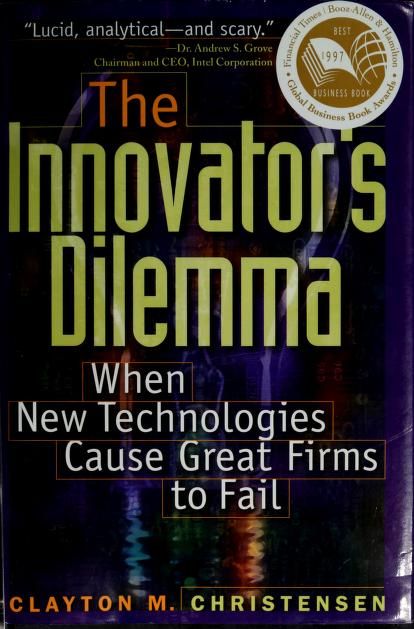
The Architecture of Disruptive Innovation
Golden Hook & Introduction
SECTION
Nova: Quick, Atlas, what's the first thing that comes to mind when I say "disruptive innovation"?
Atlas: Oh, easy. That's when a new, flashy tech company swoops in and completely demolishes the old guard, right? Like Blockbuster versus Netflix.
Nova: Exactly! And that's precisely the common misconception we need to dismantle today. Many people think it’s just about being better or faster, but the profound framework of disruptive innovation itself paints a much more subtle, yet powerful, picture.
Atlas: So, you're saying my go-to example of Netflix isn't quite the full story?
Nova: It's a fantastic example, but the and of its disruption are often misunderstood. Today, we're diving deep into the profound framework of disruptive innovation itself, a concept that has reshaped entire industries and redefined how we think about progress. What's fascinating is how often this idea is misunderstood, even by those who claim to be innovators. It's not just about being first; it's about a very specific kind of systemic shift.
Atlas: That makes me wonder, if it's not just about being "better," what it then? For our listeners who are constantly analyzing new market opportunities and building efficient systems, getting this right is absolutely critical for scalable success.
Understanding Disruptive Innovation: Beyond the Hype
SECTION
Nova: That’s the core question, isn't it? The traditional view of innovation, what we call "sustaining innovation," is about making good products better. Think of a smartphone manufacturer releasing a new model with a faster processor or a crisper camera. That’s improving for existing, demanding customers.
Atlas: Right, constantly optimizing, pushing the boundaries of performance. That’s what most companies strive for.
Nova: Precisely. Disruptive innovation, however, often starts at the of the market, or creates a market entirely. It introduces a product or service that is initially simpler, cheaper, or more convenient, and often, by traditional metrics, to existing offerings.
Atlas: Wait, inferior? That sounds counterintuitive. Why would something inferior win?
Nova: Because it serves an underserved or ignored segment of the market. Think about Netflix again. When it started, it wasn't about streaming high-definition content to your smart TV. It was about mailing DVDs, eliminating late fees, and offering a broader selection than your local Blockbuster. For many, that convenience, even with the delay of mail, was a vastly superior solution to Blockbuster's limited inventory and punitive fee structure.
Atlas: So it wasn't competing directly on "picture quality in an instant" initially. It was competing on "no late fees and vast selection delivered to my mailbox."
Nova: Exactly! It appealed to customers who found Blockbuster too expensive or inconvenient. The incumbents, like Blockbuster, looked at Netflix’s early model and thought, "Who wants to wait for a DVD in the mail? That’s not for our core, high-margin customers." They dismissed it because it didn't fit their established profit model or customer demands.
Atlas: I see. It's like a tiny seed that grows into a giant tree, but it doesn't start by trying to out-compete the biggest tree in the forest directly. It finds its own patch of soil where no one else is looking.
Nova: A perfect analogy. This "seed" then iteratively improves, moving upscale, eventually meeting and then exceeding the performance demanded by mainstream customers. By that point, it’s often too late for the incumbent to respond effectively. They're caught in their own "architecture," designed for sustaining innovation, not disruption.
Building the Architecture for Disruption: Internal vs. External
SECTION
Atlas: That makes sense, but it also sounds incredibly difficult for an established company to pull off. It's like asking a battleship to become a speedboat.
Nova: That’s a great way to put it, Atlas. The architecture of disruptive innovation isn't just about the product; it's about the organizational structure, resource allocation, and leadership mindset that either enables or stifles it. Large, successful companies are designed to do what they do best: serve their existing customers with existing products, making them better. Their processes, values, and profit formulas are all tuned for sustaining innovation.
Atlas: For our listeners who are builders and strategists, how do you even begin to allocate resources for something that looks like a bad investment initially, something that might even cannibalize your core business?
Nova: That’s the crux of the architectural challenge. One common approach is to create separate, autonomous units – often called "skunkworks" or spin-off ventures. These units are intentionally isolated from the parent company's profit pressures and customer demands. They have their own cost structures, their own metrics for success, and the freedom to fail and iterate quickly.
Atlas: So, rather than forcing a square peg into a round hole, you build a new hole?
Nova: Precisely. Think about how IBM initially handled its personal computer division. It was set up almost as a separate entity, deliberately distanced from the corporate bureaucracy, allowing it to move fast and embrace a different business model. Had they tried to integrate it fully into their existing mainframe business, it likely would have been smothered by the demands of their high-margin, enterprise customers.
Atlas: That's a powerful example. It means leadership has to actively these nascent disruptive ventures from the very forces that make the main company successful.
Nova: Absolutely. It requires patient capital, a willingness to accept lower margins initially, and a leadership team with the foresight to understand that today's small, "inferior" market might be tomorrow's dominant one. It’s about building efficient systems that allow for both types of innovation to thrive, even if they operate under different rules.
The Mindset and Strategic Implications for Growth
SECTION
Nova: This brings us to the human element, the mindset required not just to understand disruption, but to truly embrace it and build for scalable success. It’s about cultivating what the user profile highlighted: an embrace of iterative learning and a drive for growth.
Atlas: That sounds great on paper, but in a world driven by quarterly results, how do you convince shareholders or a board to embrace 'iterative learning' when it might mean short-term losses or diverting resources from proven revenue streams? That’s a huge strategic challenge for any visionary leader.
Nova: It's a monumental challenge, and it’s why many established companies fail to disrupt themselves. The strategic implication is that leadership must have a clear vision for the future, one that transcends current market demands. They need to articulate the long-term risk of disrupting, which is often far greater than the short-term risk of investing in something small and uncertain. It requires a profound clarity about where value will be created in the future.
Atlas: So, it's not just about building better products, but building for finding and fostering those products, even if they start small. It’s about creating an internal culture that sees change as an opportunity, not just a threat.
Nova: Exactly. It's about empowering the builders to experiment, giving the strategists the space to explore new market entries without immediate pressure to hit blockbuster numbers, and fostering a visionary outlook that can identify those overlooked opportunities. The "architecture" isn't just structural; it's also cultural and intellectual. It’s about being willing to learn, adapt, and pivot constantly.
Synthesis & Takeaways
SECTION
Nova: So, what we’ve really unpacked today is that disruptive innovation is a process, not an event. It’s driven by specific market dynamics, often overlooked by incumbents, and it demands unique organizational and leadership responses. It's about seeing the potential in the overlooked, the value in the initially "inferior."
Atlas: It sounds like the real challenge isn't just seeing the future, but having the courage and the to build toward it, even when it feels counterintuitive or threatens your current success. It’s a call to leadership to create spaces where radical growth can actually take root.
Nova: Absolutely. It’s a continuous evolution, a constant re-evaluation of what customers truly value and how new technologies can deliver that value in simpler, more accessible ways.
Atlas: For anyone who's a strategist, a builder, or a visionary, the lesson here is clear: don't just innovate; innovate disruptively, and build the systems to support that radical growth. What's one small step our listeners can take this week to start thinking disruptively in their own context?
Nova: I'd say, take 30 minutes to observe a part of your industry or customer base that is currently underserved or unhappy with existing solutions. Look for the "good enough" or "too expensive" problems, and ask yourself how a simpler, cheaper, or more convenient offering could address it.
Atlas: Fantastic. It’s about cultivating that disruptive vision, one small, iterative step at a time.
Nova: Absolutely. And that's a wrap for today.
Atlas: This is Aibrary. Congratulations on your growth!