

Disruptive Systems and Future Tech
Golden Hook & Introduction
SECTION
Atlas: Nova, what's one business book that makes you feel like you've been doing everything wrong, even when you thought you were doing everything right?
Nova: Oh, Atlas, that's easy. It's the one that tells you your very best practices, the ones that earned you all your success, are actually your biggest blind spots when the world changes. It’s like being a champion sprinter who’s suddenly asked to swim a marathon. Your running skills are phenomenal, but completely irrelevant.
Atlas: Wow. That's a gut punch of a concept. It sounds like a formula for existential dread for any successful company.
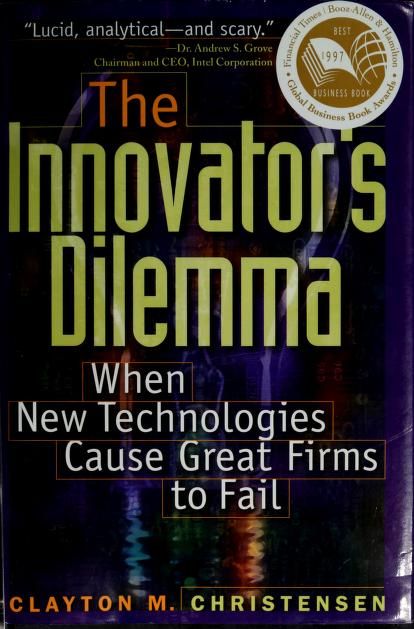
Nova: Well, it’s also a blueprint for understanding the future. Today, we’re dissecting that very idea by diving into "The Innovator's Dilemma" by Clayton Christensen. He was a brilliant Harvard Business School professor who revolutionized how we think about technological change, and his work, almost 30 years old, remains incredibly relevant.
Atlas: Christensen. Right. I remember hearing about his work on disruptive innovation. It’s one of those ideas that’s almost become a buzzword, but I suspect its true depth often gets lost.
Nova: Absolutely. And that’s what we’re here to uncover. Because understanding this dilemma isn't just academic; it’s fundamental for anyone trying to build a secure future, or master new tech skills.
The Innovator's Dilemma: Why Good Companies Fail
SECTION
Nova: So, let's start with the core concept: disruptive technology. Christensen observed that successful, well-managed companies—the ones doing everything right—often fail when faced with new technical paradigms. It’s a paradox.
Atlas: Wait, so you're saying doing things well can actually be a bad thing? That feels incredibly counter-intuitive for anyone trying to grow a business, or even just trying to be a top performer in their field. It goes against everything we're taught about excellence.
Nova: It does, doesn't it? The key lies in understanding the two types of innovation: sustaining and disruptive. Sustaining innovation improves existing products along dimensions that current customers value. Think of a better, faster, more efficient car. Disruptive innovation, however, introduces a different set of attributes, often initially inferior by traditional metrics, but cheaper, simpler, or more convenient.
Atlas: Okay, so a disruptive technology starts off looking kind of… unimpressive? Like, why would anyone bother?
Nova: Precisely. Let's take the classic example Christensen used: the disk drive industry. In the 1970s and 80s, established companies like Seagate and IBM were focused on making larger, higher-capacity, faster disk drives for their most profitable customers: mainframe and minicomputer manufacturers. These customers needed top-tier performance and were willing to pay for it.
Atlas: That makes perfect sense. Listen to your customers, make better products, get paid more. Standard business practice.
Nova: Exactly. But then, smaller, newer companies started introducing 5.25-inch disk drives. These were much smaller, lower capacity, and slower than the 8-inch or 14-inch drives the incumbents were selling. Their existing, high-end customers didn't want them. They were "not good enough."
Atlas: So the big players ignored them. Why would they bother with a smaller, less profitable product that their main customer base wasn't asking for? It sounds like a distraction.
Nova: That's the dilemma. The established companies had rational reasons to dismiss these smaller drives. The profit margins were lower, the market was tiny, and their existing customers weren't interested. Their internal processes, their financial models, their very corporate culture was geared towards serving their high-margin, high-performance segment. Investing in these "inferior" drives would have alienated their best customers and diluted their profitability.
Atlas: Okay, so the big players ignore the small market because it's not profitable enough, and then suddenly, that small market becomes the market. It’s like watching a train coming, but you're so focused on the tracks you’re on, you don't see the new junction forming right next to you.
Nova: And what happened? The 5.25-inch drives eventually improved rapidly. They became "good enough" for the minicomputer market, then the desktop PC market, and later, the 3.5-inch drives did the same for laptops. Each time, a new, smaller form factor emerged, initially ignored, then rapidly improved to displace the older technology. The incumbents, despite their superior technology and resources, struggled to adapt because their organizational structures and investment processes were designed to existing markets, not them.
Atlas: That's actually really profound. It makes me wonder, for our listeners in tech, or even those considering mastering new tech skills, how do you even a disruptive technology when it looks so unappealing at first? It seems like it requires a completely different mindset than just optimizing what's already there.
Nova: It absolutely does. It requires recognizing that disruptive technologies often create entirely new value networks or customer segments. They don't just improve existing solutions; they solve a problem for a different kind of customer, or in a different context, that the incumbents aren't even looking at. It's about seeing the potential not just the current performance.
Zero to One: Thiel's Blueprint for Monopolies and Vertical Progress
SECTION
Nova: And that naturally leads us to a completely different, almost contrarian, perspective on building the future, one that says: don't just avoid disruption, something entirely new. We're talking about Peter Thiel's "Zero to One."
Atlas: Oh, Thiel. The PayPal co-founder, venture capitalist, famously contrarian. He’s known for some pretty provocative statements. I’m curious how his "zero to one" idea connects to Christensen's "dilemma." Are they even talking about the same thing, or are they operating on completely different planes?
Nova: They are definitely talking about different aspects of innovation, but they offer complementary insights. Christensen explains established companies struggle with newness. Thiel explains to that newness. His core argument is that true progress comes from vertical innovation—going from zero to one, meaning creating something entirely new. Horizontal progress, or going from one to N, is just copying or improving existing things.
Atlas: So, Christensen says good companies fail because they can't adapt to new tech, and Thiel says don't even play that game, just build a new game where you're the only player. It sounds like he's almost saying, "Why compete when you can dominate?"
Nova: He explicitly says, "Competition is for losers." His philosophy is about building monopolies, not by being evil, but by creating unique value that no one else can replicate. He identifies four characteristics of a monopoly: proprietary technology, network effects, economies of scale, and branding.
Atlas: That's a bold claim, especially in an era where everyone preaches fierce competition. But how does this "zero to one" concept manifest in the real world? Give me an example of something that truly went from zero to one.
Nova: Think about Google. When it first emerged, it wasn't just a slightly better search engine. It was a fundamentally different approach to organizing the world's information, with a proprietary algorithm that was vastly superior. It created a near-monopoly in search because it offered something genuinely new and better, not just an incremental improvement over AltaVista or Yahoo. That proprietary technology created a moat.
Atlas: That's a great example. For our listeners who are aspiring architects, trying to build something lasting, or even just building financial literacy for their future, the idea of "proprietary technology" as a differentiator must really resonate. How does one even thinking "zero to one" instead of just trying to make an existing product 10% better? It feels like a massive leap.
Nova: It does. Thiel suggests asking four key questions when building a new venture. First, the engineering challenge: can you create breakthrough technology instead of incremental improvements? Second, the timing: is this the right time to start this particular business? Third, the monopoly: are you starting with a big share of a small market? And fourth, the people: do you have the right team? It’s about having a bold, long-term vision, not just chasing trends. It's about building something so unique it essentially has no direct competition for a significant period.
Synthesis & Takeaways
SECTION
Nova: So, when we put these two frameworks together, we see a fascinating picture of innovation. Christensen shows us the inherent perils of incrementalism for established firms, demonstrating how even the best-run companies can stumble when faced with truly disruptive change. Thiel, on the other hand, offers a powerful playbook for new ventures, emphasizing the immense power and potential of radical, "zero to one" innovation. Both underscore the importance of looking beyond the obvious, beyond just making things a little bit better.
Atlas: That’s such a clear synthesis. It’s like, if you’re a big company, you need to be paranoid about Christensen’s dilemma and actively cultivate disruption within your own walls. But if you’re trying to something, you need Thiel’s “zero to one” mindset to avoid getting caught in the competitive grind. It’s almost like a defensive and offensive playbook for innovation, depending on where you stand.
Nova: Exactly. And that brings us back to the core takeaway from our discussion today: using these frameworks to identify which emerging technologies in fields like Electrical, Electronic, and Energy engineering are truly disruptive versus merely incremental. It's not enough to know a new technology exists; you have to understand its potential to fundamentally shift markets, or create entirely new ones.
Atlas: That's the real clarity we need. Not just what's new, but what's. It’s about protecting that time for focused learning, right? So we don’t miss the next big shift, or worse, become a victim of it.
Nova: Absolutely. It’s about cultivating that mindset that embraces the journey, understanding that true progress isn't always linear or obvious. It often starts small, looks unappealing, or completely redefines the playing field.
Atlas: I imagine a lot of our listeners, especially those driven by progress and building a secure future, are now looking at their own projects and industries through a totally new lens. Like, "Am I building a better mousetrap, or am I inventing a whole new way to catch mice?"
Nova: And that, Atlas, is the question that defines the future for the pragmatic innovator.
Atlas: Absolutely. What a powerful way to frame the future of tech and innovation.
Nova: This is Aibrary. Congratulations on your growth!