Unlocking Your Inner Game: Mastering the Mind for Peak Performance
Golden Hook & Introduction
SECTION
Nova: Mindset. Inner Game. Peak Performance. Your brain. Your rules.
Atlas: Wait, rules? I thought my brain was just a chaotic mess of self-doubt and overthinking, especially when the stakes are high.
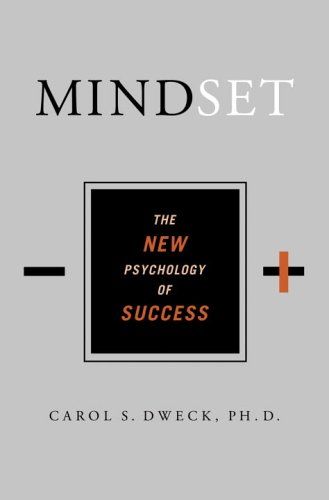
Nova: Well, Atlas, that chaotic mess is exactly what we're here to untangle today. We're diving into two incredibly powerful books: "Mindset" by the brilliant Stanford psychologist Carol Dweck, and "The Inner Game of Tennis" by the pioneering performance coach W. Timothy Gallwey.
Atlas: Oh, Dweck's "Mindset"! That book completely revolutionized how we think about intelligence and learning, didn't it? It showed that our abilities aren't just fixed traits, but something we can actively grow.
Nova: Exactly! Dweck's decades of research revealed that our fundamental belief about our own abilities profoundly shapes our entire approach to life's challenges. And Gallwey, he wasn't just a tennis coach; his work on overcoming internal interference became a bedrock of performance psychology, transcending sports to impact business, music, and personal development. His insights are surprisingly universal.
Atlas: So we’re talking about more than just hitting a ball or acing a test. We're talking about the mental architecture behind all achievement. That's a huge claim.
Nova: It is. And it’s why these two books together offer such a compelling framework for anyone striving for excellence, whether you're an athlete pushing physical limits or just navigating the daily challenges of growth.
Atlas: I'm intrigued. So, where do we start with unlocking this inner game?
The Growth Mindset: Fueling Your Potential
SECTION
Nova: We start with Dweck's core revelation: the growth mindset. She identified two fundamental mindsets people adopt: fixed and growth. Someone with a fixed mindset believes their intelligence, talents, and abilities are static. You're either good at something or you're not.
Atlas: Okay, I can definitely relate to that. The feeling of, "I'm just not a math person," or "I'm not naturally creative." It feels very comforting sometimes, like an excuse.
Nova: It can be. But that comfort comes at a cost. When you have a fixed mindset, challenges become threats. Mistakes are seen as evidence of your limitations. Effort? Well, if you have to try hard, it means you're not smart enough to begin with, right?
Atlas: That sounds like a recipe for giving up when things get tough. Like hitting a plateau in training and just thinking, "This is as good as I'm going to get."
Nova: Precisely. Now, contrast that with the growth mindset. Here, individuals believe their abilities can be developed through dedication and hard work. They see challenges as opportunities to learn, and mistakes as valuable feedback. Effort isn't a sign of weakness; it's the path to mastery.
Atlas: That’s a huge shift. So, for an aspiring athlete, instead of a tough loss meaning, "I'm not good enough," it means, "What can I learn from this to get better next time?"
Nova: Exactly. Think of it like this: Dweck’s research often involved giving children puzzles. When they succeeded, some fixed-mindset kids felt great. But when they failed, they'd often crumble, hide their scores, or even cheat. Growth-mindset kids, on the other hand, saw failure as an exciting puzzle. They'd ask for harder ones! They were literally excited by the prospect of learning.
Atlas: Wow. That's a powerful visual. So it's not about denying that some people might have natural advantages, but about believing that your effort and strategy matter more than your starting point.
Nova: Absolutely. It's not about ignoring innate talent, but recognizing that talent is just a starting point. It's the "yet." You're not good at this. That single word transforms everything. It's about turning "I can't do it" into "I can't do it."
Atlas: I love that. The "yet." It instantly reframes a dead end into a launching pad. But how do you actually cultivate that? It sounds great in theory, but when you're in the thick of a challenging situation, it's easy to default to that fixed mindset.
Nova: That's where the practice comes in. It starts with awareness: noticing when that fixed mindset voice creeps in. Then, intentionally choosing to reframe. Instead of "I failed," try "What did I learn?" Instead of "This is too hard," try "This is an opportunity to grow my skills." It’s a conscious pivot.
Atlas: That makes sense. It's like building a new mental muscle. You have to actively work it.
Mastering the Inner Game: Silencing Self-Doubt for Peak Performance
SECTION
Nova: And speaking of building mental muscles, that brings us beautifully to W. Timothy Gallwey's "The Inner Game of Tennis." Gallwey's groundbreaking insight was that in any performance, the opponent within is often more formidable than the one across the net.
Atlas: Oh man, that resonates. My inner critic has a megaphone sometimes. For anyone, especially a sensitive soul like many of our listeners, just acknowledging those feelings can feel like giving them power.
Nova: It’s true. Gallwey observed that tennis players often struggled not because of their physical technique, but because of their internal dialogue. They'd think, "Don't hit it out! Keep your eye on the ball! Don't double fault!" This conscious, judging "Self 1" was constantly interfering with the intuitive, performing "Self 2."
Atlas: So "Self 1" is the nagging coach in your head, and "Self 2" is the actual player?
Nova: Precisely. Self 1 is the conscious, verbal, judgmental self, constantly trying to control. Self 2 is the subconscious, intuitive, body-based self that actually performs. Gallwey realized that the key to peak performance, to achieving a state of 'flow,' was to quiet Self 1 and allow Self 2 to take over.
Atlas: But how do you quiet that without just... ignoring it? Because ignoring the inner critic usually just makes it shout louder, right?
Nova: Absolutely. Gallwey's method wasn't about suppression. It was about. He'd tell players to mentally note the ball's seams, or the sound it made off the racket. This redirected their conscious mind, Self 1, away from critical judgment and onto neutral, objective data.
Atlas: So if I'm on the field and I make a mistake, instead of beating myself up and thinking, "You idiot, you missed that!" I just observe the feeling of frustration, then maybe focus on the next play, or even the feeling of my feet on the ground? That sounds almost too simple.
Nova: Simple, not easy. It takes practice. Instead of saying, "Don't make that mistake again!" Self 1 is telling Self 2 what to do, which creates tension. Instead, you could internally say, "I noticed I lifted my head on that shot." Just an observation. No judgment, no self-flagellation. This allows Self 2 to naturally self-correct without interference.
Atlas: I get it. It’s like, acknowledge your feelings, use them as data, but don't let them derail you. Gently reframe setbacks as learning moments. That's a powerful tool for building mental toughness, especially for those high-pressure moments in sports or even just daily life.
Nova: It really is. Gallwey's approach helped unlock natural ability by removing the obstacles of self-doubt and overthinking. It's about trusting your innate capacity to learn and perform, and giving it the mental space to do so. It's about practicing self-compassion, not self-criticism.
Atlas: That's a huge paradigm shift for anyone who's ever felt paralyzed by perfectionism or the fear of failure. It feels less like a battle and more like a gentle guidance.
Synthesis & Takeaways
SECTION
Nova: When you bring Dweck's growth mindset and Gallwey's inner game principles together, you have an incredibly potent combination. The growth mindset provides the fundamental belief that you improve and grow, turning challenges into opportunities. The inner game then gives you the practical tools to clear the mental clutter, silence the inner critic, and allow that growth to actually manifest in your performance.
Atlas: It feels like these aren't just about sports or specific skills, but about life. Building self-confidence, navigating connections with grace, anchoring your worth internally instead of seeking external validation. It's about truly mastering the mind for peak performance in every sense.
Nova: Exactly. These aren't just abstract theories; they're frameworks to turn challenges into opportunities for profound personal development. And the small acts of self-compassion we discussed, the gentle observation, the reframing – these are the daily practices that build resilience and mental toughness.
Atlas: So, for our listeners, what's one small act of self-compassion they can practice today to start quieting that inner critic and cultivating this inner game? Something tangible and immediate.
Nova: Here’s a simple one: The next time you make a mistake, or catch yourself being overly critical, instead of dwelling on it, just pause. Gently say to yourself, "I notice that thought." Then, intentionally ask, "What can I learn from this?" It's a tiny shift, but it builds a new pathway in your brain, moving you from judgment to learning.
Atlas: "I notice that thought," followed by "What can I learn from this?" I love that. It's about acknowledging the feeling without letting it define you or derailing your performance. A perfect way to unlock your inner game.
Nova: Absolutely. This is Aibrary. Congratulations on your growth!