Stop Reacting, Start Anticipating: The Tech Leader's Guide to Future-Proofing.
Golden Hook & Introduction
SECTION
Nova: What if I told you that "keeping up" in the tech world isn't just insufficient, it's actually a recipe for obsolescence? That the faster you run to catch up, the further behind you actually fall?
Atlas: Whoa, Nova, that's a bold claim. My gut reaction is, "But isn't staying current the whole point?" You're telling me all that effort to keep pace might actually be... counterproductive?
Nova: Absolutely, Atlas. It's a paradox, really. In a world moving at warp speed, simply reacting to the latest trend leaves you perpetually playing catch-up. True leadership, true future-proofing, comes from something much deeper: anticipation. It's about shaping your path, not just following the one laid out for you.
Atlas: That makes me wonder, how do you even begin to anticipate something as chaotic and unpredictable as technological evolution? It feels like trying to predict the weather in a hurricane.
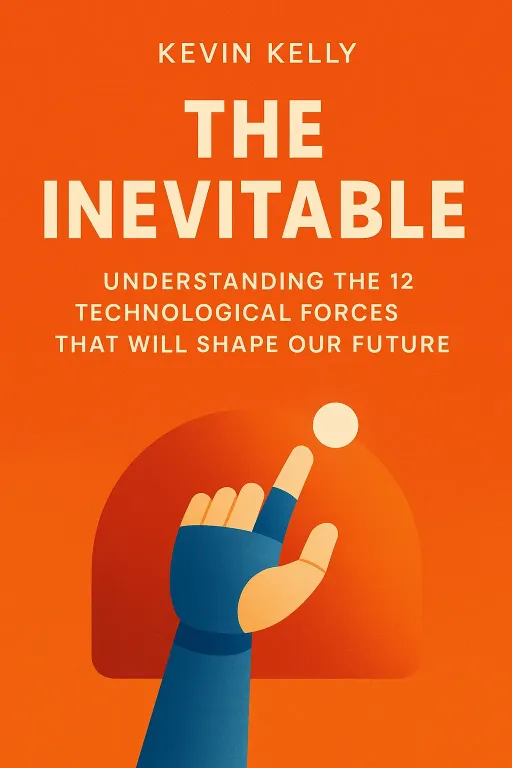
Nova: Well, that's precisely what we're diving into today, as we explore the core ideas from a fantastic piece titled "Stop Reacting, Start Anticipating: The Tech Leader's Guide to Future-Proofing." We're going to unpack insights from two monumental thinkers who offer distinct but complementary lenses on this challenge. First up, we'll look at the work of Kevin Kelly and his seminal insights into "The Inevitable" technological forces. Kelly, known for his long tenure at Wired magazine, has this almost prophetic ability to observe technology’s deep currents, not just its surface waves. He's practically built a reputation as a modern-day tech oracle.
Atlas: A tech oracle? That sounds like exactly what we need when everything feels so uncertain. But then what's the other piece of the puzzle?
Nova: The second, equally crucial, perspective comes from Clayton Christensen and his groundbreaking book, "The Innovator's Dilemma." This book isn't just some business theory; it's a critically acclaimed classic that revolutionized how we understand disruption and corporate strategy. It’s won numerous awards for its profound and enduring impact on strategic thought across industries. Together, these two intellectual powerhouses give us the tools to not just survive, but to truly thrive in an unpredictable future.
Atlas: So we have a tech oracle showing us where we're going, and a strategic genius showing us how not to trip on our own feet along the way. I'm intrigued. How do these two seemingly different ideas converge?
Unveiling 'The Inevitable': Proactive Positioning in a Tech-Driven Future
SECTION
Nova: They converge beautifully, Atlas. Let's start with Kelly. He argues that there are twelve long-term, deep trends – he calls them 'inevitable' forces – that will shape the next thirty years. These aren't fads; they're foundational shifts. Things like 'Cognifying' and 'Flowing.'
Atlas: Okay, 'Cognifying' and 'Flowing.' Those sound like buzzwords, but I trust Kelly isn't about that. What do you mean by them, and how do we even begin to see these 'inevitable' forces when daily tech changes are so rapid? It feels like trying to spot a glacier moving when you're caught in a flash flood.
Nova: That's a great analogy, because Kelly's insight is precisely about looking past the flash flood to understand the glacier. Take 'Cognifying.' It's not just about adding AI to everything; it's the inevitable trend of making everything smarter, more intelligent, more aware. Think about autonomous vehicles. They started as simple sensors, then evolved to recognize objects, then predict behavior, and now they're becoming deeply intelligent, context-aware systems that can navigate complex social situations on the road.
Atlas: But isn't that just a fancy way of saying 'AI is big'? What's the deeper insight there? Give me a non-tech example of an 'inevitable' force that feels more fundamental.
Nova: That's a fair challenge. The deeper insight is that it's not AI, but the of intelligence to every inanimate object, every process, every decision. It's the shift from dumb systems to smart systems, everywhere. For a non-tech example, let's look at 'Flowing.' This is the inevitable shift from static, fixed products to continuous, real-time streams and services. Think about music. It wasn't just a trend from CDs to digital downloads; it was an inevitable move towards music as a continuous stream, a subscription service, always updated, always flowing. You don't 'own' music anymore; you access an endless river of it.
Atlas: Oh, I see. So it's not about the specific Spotify app, it's about the fundamental way we consume media changing from discrete units to an endless current. That's a powerful distinction. So it's about looking past the next shiny gadget and seeing the fundamental shift in how we interact with the world, how things are delivered, how intelligence is embedded.
Nova: Exactly! It's about positioning your efforts where the future is, not where it currently is. If you understand 'Cognifying' is inevitable, you start thinking about how your coffee machine, your umbrella, your city infrastructure, even your education system, will become intelligent, rather than just building a slightly better coffee machine.
Atlas: That's a profound shift in perspective. It really makes you think about product development and strategy in a completely different light. It's like, don't build a faster horse, build a car, but even beyond that, understand the for faster, more efficient personal transport.
Confronting 'The Innovator's Dilemma': Why Success Can Be Your Biggest Obstacle
SECTION
Nova: Precisely. And that naturally leads us to the second key idea we need to talk about, which often acts as a critical counterpoint to what we just discussed. Because even if you see these 'inevitable' forces coming, even if you have Kelly's map of the future, it's not enough if you're stuck in old ways. This is where Clayton Christensen's "The Innovator's Dilemma" comes in, and it's a brutal, yet essential, read for anyone in leadership.
Atlas: Wait, are you saying that doing things can actually be a problem? That sounds completely counterintuitive! We're constantly told to focus on excellence, optimize, deliver for our customers.
Nova: It’s the ultimate paradox of business, Atlas. Christensen shows how successful companies, often with excellent management, frequently fail not because they do anything wrong, but precisely they do everything right. They listen to their existing customers, they invest in profitable technologies, they refine their best products. And in doing so, they miss disruptive innovations.
Atlas: Okay, that's a mind-bender. How does that even happen? Give me a concrete example, because my brain is trying to reconcile "good management leads to failure."
Nova: Think about the hard disk drive industry in the 1980s and 90s. Established companies like Seagate were incredibly good at making large, high-capacity, high-performance drives for mainframe computers – their existing, profitable customers. They listened to those customers, invested heavily in improving those drives.
Atlas: And that sounds like good business! High margins, happy customers.
Nova: Absolutely. But then a new, smaller, lower-performance 5.25-inch drive emerged, initially for a niche market: the nascent personal computer industry. These drives had worse margins, lower capacity, and weren't what Seagate's core customers wanted. So, Seagate, being a 'well-managed' company, ignored them.
Atlas: So, they focused on their bread and butter. Which, from their perspective, made perfect sense.
Nova: Exactly. But those smaller drives improved rapidly. They became good enough for PCs, then laptops, then eventually created entirely new markets. The companies that embraced these 'inferior' disruptive technologies, like Conner Peripherals, eventually overtook the established players. It wasn't that Seagate was poorly managed; they were at what they did for their market, making them blind to the future.
Atlas: So it's like a company being really good at making horse-drawn carriages, and then completely missing the automobile because it seemed inferior and slow at first? That's a brilliant analogy for it. It’s no wonder this book has received widespread acclaim for its profound implications across industries.
Nova: Precisely. Christensen's work, which has been lauded for its clarity and predictive power, revealed this pattern across numerous industries, not just tech. It's a testament to his groundbreaking insight that even the best-run companies can be blindsided if they don't consciously look for and nurture disruptive innovations.
Atlas: But for our listeners, who are often trying to innovate within existing structures, how do you even begin to fight that inertia? How do you look beyond your current success without alienating your core business? That sounds like an impossible tightrope walk.
Nova: It is a tightrope, but Christensen offers a path. He suggests that successful companies need to create separate, autonomous units to nurture disruptive innovations. These units operate with different metrics, target different customer bases, and often have different cultures. They're allowed to fail small, learn fast, and grow without the pressure of immediately satisfying the parent company's existing customers or profit expectations. It's almost like creating an internal startup that's designed to disrupt before someone else does.
Synthesis & Takeaways
SECTION
Nova: So, when you put Kelly and Christensen together, you get a powerful, almost complete picture. Kelly gives us the map of the future – the 'inevitable' forces that are shaping our world. Christensen warns us about the internal blind spots, the traps of success that can prevent us from even looking at that map, let alone acting on it. True future-proofing requires both: the vision to see where the world is going and the courage to disrupt yourself before someone else does.
Atlas: So it's not just about predicting the future, but also having the courage to build it, even if it means cannibalizing your own success. That's a powerful and frankly, a bit scary, thought. It means constantly challenging your own assumptions.
Nova: It means cultivating a mindset of 'constructive dissatisfaction' – always questioning, always looking for the next wave, even when the current one is glorious. The 'tiny step' from our reading today is so critical: identify one 'inevitable' force and consider its impact on your current projects or goals. It forces you to look beyond the immediate.
Atlas: That’s a fantastic challenge. It makes you realize how much potential disruption is hiding in plain sight. This isn't just about tech; it's about life. What’s one 'inevitable' force that's on your mind right now, Nova, that our listeners should be thinking about?
Nova: For me, it's the 'Inevitability of Interacting' – the blurring lines between physical and virtual spaces, and how we'll increasingly 'live' in blended realities, whether through augmented reality, virtual worlds, or even just smarter environments. How does that impact how we work, learn, and connect? It's a huge question.
Atlas: That’s a great one to ponder. And it really brings home the idea that these forces aren't just abstract; they're already subtly reshaping our daily existence. This isn't just about innovation; it's about understanding how the world is fundamentally changing, and then having the courage to adapt. Thanks for that, Nova.
Nova: Absolutely, Atlas. And to all our listeners, we hope this episode sparks some deep thinking about how you can stop reacting and start anticipating. We'd love to hear your thoughts on which 'inevitable' forces you're seeing, or how you're navigating your own innovator's dilemmas. Join the conversation on social media and share your insights.
Atlas: Until next time, keep looking ahead, and don't be afraid to challenge the status quo. This is Aibrary.
Nova: Congratulations on your growth!