

The index card
The 4x6 Revolution
The 4x6 Revolution
Nova: Imagine you are a University of Chicago professor named Harold Pollack. You are interviewing a financial journalist, Helaine Olen, and you make a bold claim. You say that everything a person needs to know about managing their money could actually fit on a single four-by-six index card.
Nova: Exactly! And that is what the internet thought, too. After the interview, people started emailing Harold, basically calling his bluff. They said, okay, professor, if it is so simple, show us the card. So, he grabbed a pack of his daughter's index cards, scribbled down nine rules in about two minutes, snapped a blurry photo, and posted it online.
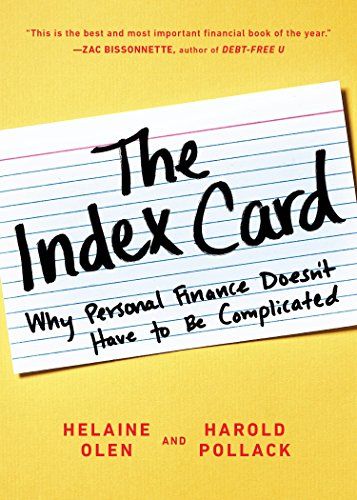
Nova: It exploded. It was everywhere from the Washington Post to Lifehacker. People were stunned because it stripped away all the jargon and the fear. That viral photo eventually became the foundation for the book we are talking about today: The Index Card: Why Personal Finance Does not Have to Be Complicated.
Nova: That is the big question we are diving into today. Helaine Olen calls it the Financial Industrial Complex. It is a massive industry that actually profits from our confusion. If you think it is complicated, you will pay them to solve it for you. But as we will see, the best path is often the most boring one.
Key Insight 1
The Financial Industrial Complex
Nova: Before we get into the actual rules on the card, we have to talk about why we feel so incompetent with money in the first place. Helaine Olen, the co-author, has spent years reporting on this. She argues that there is a deliberate effort to make finance seem like a high-stakes, complex game that only experts can play.
Nova: That is by design. Olen and Pollack point out that if the advice was just 'save money and buy index funds,' a lot of people would be out of a job. The Financial Industrial Complex needs you to believe that you need to 'beat the market' or find the next 'unicorn' stock. They sell the dream of getting rich quick to distract you from the reality of getting wealthy slowly.
Nova: Precisely. And those fees are the silent killers of wealth. The book highlights how a seemingly small one or two percent fee can eat up nearly half of your investment gains over thirty years. They call it the 'tyranny of compounding costs.'
Nova: That is why Rule Number Seven on the card is: Pay attention to fees. Avoid actively managed funds. The authors argue that most professional fund managers do not even beat the market anyway. You are essentially paying a premium for underperformance.
Nova: The very first rule is the hardest one for most people: Strive to save ten to twenty percent of your income. In the original viral photo, Harold actually wrote twenty percent, but after getting a lot of feedback from people living paycheck to paycheck, they adjusted it in the book to be more realistic.
Nova: They suggest starting small. Even if it is just one percent. The key is to make it automatic. If the money never hits your checking account, you do not miss it. They also emphasize building an emergency fund first. Without that cushion, one car repair or medical bill can wipe out all your progress and send you spiraling into debt.
Key Insight 2
The Boring Path to Wealth
Nova: Once you have that saving habit down, the next few rules on the card deal with where that money should actually go. And this is where it gets really controversial for the 'Wall Street' types. Rule Number Four: Never buy or sell individual stocks.
Nova: It does! But Harold and Helaine are very clear: you are not smarter than the market. When you buy a stock, the person on the other side of that trade is likely a professional with a supercomputer and a team of analysts. You are playing a game where the odds are heavily stacked against you.
Nova: Exactly. Rule Number Five: Buy inexpensive, well-diversified index funds. They specifically mention things like Vanguard Target Retirement funds. These funds basically own a little bit of everything. When the economy grows, you grow. You are not betting on one horse; you are betting on the whole track.
Nova: It comes back to those fees we talked about. A traditional mutual fund has a manager trying to pick winners, and they charge you for that 'expertise.' An index fund is run by a computer that just mimics an index, like the S&P 500. Because there is no high-priced manager, the fees are rock bottom. Over decades, that difference in fees can mean hundreds of thousands of dollars in your pocket instead of theirs.
Nova: That is Rule Number Three and Six. Max out your 401 or equivalent employee contribution, and maximize tax-advantaged accounts like Roth IRAs, SEPs, and 529s. This is basically the government giving you a 'buy one, get one free' deal on your savings.
Nova: It is a one hundred percent return on your money instantly. There is no other investment on earth that can guarantee that. The book really hammers home that these accounts are your best friends because they shield your growth from taxes, which is another one of those 'silent killers' of wealth.
Nova: That is exactly it. They say that if you want excitement, go to the movies. If you want to be wealthy, your investments should be about as exciting as watching paint dry.
Key Insight 3
The Fiduciary Standard and the Debt Trap
Nova: Now, even if you follow the 'boring' path, you might still feel like you need a professional to help you navigate things like estate planning or complex taxes. But Rule Number Eight is a total game-changer: Make financial advisors commit to the fiduciary standard.
Nova: It is actually the most important word in the book. A fiduciary is legally required to act in your best interest. It sounds obvious, right? But most financial advisors are actually held to a much lower 'suitability' standard.
Nova: It is! It means they can sell you a product that is 'suitable' for you, even if there is a much better, cheaper version available, simply because the more expensive one pays them a higher commission. It is like going to a doctor who prescribes the medicine that gives him the biggest kickback from the drug company, rather than the one that actually cures you.
Nova: You ask them point-blank: 'Are you a fiduciary at all times?' And you get it in writing. If they start dancing around the question or talking about 'proprietary products,' run the other way. The book suggests looking for 'fee-only' advisors who do not take commissions at all.
Nova: Rule Number Two: Pay your credit card balance in full every month. This is non-negotiable for the authors. They point out that credit card interest rates are often eighteen to twenty-five percent. If you are carrying a balance, you are essentially anti-investing.
Nova: Exactly. You are digging a hole while trying to build a tower. They also touch on student loans, distinguishing between federal and private loans. Their advice is to be aggressive with high-interest debt but to recognize that some debt, like a low-interest mortgage, is not necessarily an emergency to pay off if it means you can still save for retirement.
Key Insight 4
Real Estate and the Safety Net
Nova: Let's talk about the two rules that often surprise people because they are not just about numbers in a bank account. Rule Number Seven is about housing: Buy a home when you are financially ready. But here is the kicker—they say do not look at it as an investment.
Nova: The authors argue that for most people, a home is actually a very expensive forced savings plan. When you factor in property taxes, maintenance, insurance, and interest, the actual return on a primary residence is often lower than the stock market. They say you should buy a home because you want a place to live and you can afford the thirty percent of your income it will cost, not because you expect to get rich off it.
Nova: This is the one that got Harold Pollack the most heat. People said, 'Hey, this is a finance book, why are you talking about politics?' But Harold's reasoning is deeply personal. He and his wife took in his intellectually disabled brother-in-law after his mother-in-law passed away.
Nova: It did. He realized that no matter how many index cards you follow, life can throw things at you that are bigger than any individual savings account. Disability, long-term illness, systemic economic shifts—these are risks we cannot handle alone. He argues that things like Social Security and Medicare are actually the ultimate 'insurance policies' for all of us.
Nova: Exactly. It is about financial resilience, both personal and collective. They also mention Rule Number Eight: Insurance is for when things go wrong. They recommend term life insurance over 'whole life' or 'universal life' policies, which they describe as overpriced products that mix insurance with bad investing.
Conclusion
Nova: We have covered a lot of ground today, but at the end of the day, it all fits back on that four-by-six card. The genius of Helaine Olen and Harold Pollack's work is not that they discovered some secret formula for wealth. It is that they proved the 'secret' is that there is no secret.
Nova: That is the perfect summary. The Financial Industrial Complex wants you to feel small so you will pay them to feel big. But with these ten rules, you have the tools to take control of your own future. Start with that emergency fund, automate your savings, and remember that the best financial plan is the one you can actually stick to for thirty years.
Nova: It is a small investment that pays huge dividends. If you can master the basics on the card, you are already ahead of ninety percent of the people out there. Thank you for joining us on this deep dive into the simple, powerful world of The Index Card.
Nova: This is Aibrary. Congratulations on your growth!